EPA Administrator Lee Zelding proposing end to Obama-Biden “Clean Power Plan” and reverting back to more reasonable mercury levels set in 2012, which were amended in 2024.
The Trump administration recently announced its intention to rescind key Biden-era EPA rules that regulate greenhouse gas emissions and mercury pollution from coal and natural gas power plants that stem from the 2015 Obama “Clean Power Plan”, Biden’s “Clean Power Plan 2.0”, and the 2024 Mercury and Air Toxics Standards.
EPA Administrator Lee Zeldin stated that these regulations were seen as overly burdensome to industry and were stifling economic growth. The proposed rollback would eliminate caps on carbon dioxide emissions from existing coal plants and future natural gas plants, as well as relax limits on mercury and other toxic air pollutants.
EPA Administrator Lee Zeldin said in a news conference that Biden-era carbon pollution standards for power plants “suffocate” the economy in order to protect the environment. Zeldin, who was appointed by President Donald Trump in January, stated that the agency’s announcement was a huge step forward in energy dominance for the U.S., while promising that no power plants would emit more than they already do. Currently, the power sector accounts for a quarter of all U.S. emissions, according to the latest EPA emissions data.
The proposed repeals are two of the most consequential moves from Trump’s EPA as the administration continues dismantling Biden-era climate and clean energy policies. The reversal means that power plants that were slated to be retired will now continue running.
The agency didn’t announce any intent to rewrite regulations to replace the Biden rules on carbon emissions, which could effectively leave carbon emissions from US power plants unregulated if the proposed repeal is finalized. Zeldin announced the agency will revise the rule on mercury and other toxic air pollution, proposing to get rid of a Biden-era rule finalized last year.
Power plants are the second-biggest emitters of planet-warming pollution in the United States, making up around a quarter of the country’s climate pollution. US power plants alone contribute 3% of total global climate pollution.
By seeking to repeal the carbon rules with no replacement, the administration’s proposal is more sweeping than the power plant regulations finalized during Trump’s first term, Carrie Jenks, the executive director of Harvard Law School’s Environmental & Energy Law Program, told CNN.
It would result in aging coal plants operating for longer periods of time and allow new gas plants to be built with looser pollution restrictions, Jenks said.
“You’re starting to see coal fired power plants that were expected to retire continue to operate,” Jenks added.
Zeldin officially declared the end to the Biden era war on the American energy industry.
Dr. Lisa Patel, a pediatrician and executive director of the Medical Society Consortium on Climate & Health, called the proposals “yet another in a series of attacks” by the Trump administration on the nation’s “health, our children, our climate and the basic idea of clean air and water.”
She called it “unconscionable to think that our country would move backwards on something as common sense as protecting children from mercury and our planet from worsening hurricanes, wildfires, floods and poor air quality driven by climate change.”
“Ignoring the immense harm to public health from power plant pollution is a clear violation of the law,’’ added Manish Bapna, president and CEO of the Natural Resources Defense Council. “If EPA finalizes a slapdash effort to repeal those rules, we’ll see them in court.”
However, I am inclined to think American health would be better served by the actions being taken by Secretary of Health and Human Services Robert F. Kennedy, Jr., as well as making energy inexpensive and readily available.
Environmental fear-mongering based on pseudoscience no longer has the power it once had.
Discover more from Watts Up With That?
Subscribe to get the latest posts sent to your email.
Victoria has used more than 13 per cent of its expected gas for energy generation for the entire year in just three days as breakdowns at a coal power plant and feeble renewable generation force it to rely on the fossil fuel vilified by the Allan state government to keep the lights on.
A technical problem that reduced supply from Esso’s Longford gas plant, which is the state’s main source, became the latest hitch on Thursday, raising the risk of shortages in a system creaking under the strain of a cold snap and weather conditions unfavourable to wind and solar.
…
The situation has exposed the vulnerability of Victoria’s energy security when coal power and renewables are reduced and has triggered spikes in both gas and electricity prices.
The state’s wholesale power prices peaked at over $10,000 a megawatt-hour on Thursday morning, almost 140 times the average in the March quarter, and were forecast to top $15,000/MWh on Thursday evening. Gas prices passed $15.50 a gigajoule – almost double Monday’s level – with no easing expected until Saturday.
The problems in Victoria have triggered a war of words with the Queensland Natural Resources Minister Dale Last, who lashed out at Victoria’s “bad decisions”;
‘Bailing out bad decisions’: Queensland slams Victoria over gas supply
Victoria cannot rely on pulling more gas from Queensland to shore up an energy system pushed to the edge by a cascading set of breakdowns and concerns over the reliability of renewables, with the pipeline flowing south already at full capacity.
Queensland’s Liberal-National government remains staunchly opposed to further propping up the southern state’s energy grid, saying it doesn’t have the gas supply capacity to keep “bailing out Victoria’s bad decisions”.
…
“Queenslanders should not be penalised over unscientific decisions down south that favour ideology over economics and engineering,” he said.
“We don’t have the pipeline capacity to keep bailing out Victoria’s bad decisions. The solution to the southern state gas crisis is for the southern states to develop their gas reserves. We’re not asking them to do anything we haven’t done ourselves.”
Aside from the decision to run Victoria’s decrepit coal plants into the ground, instead of building new coal plants, one of those “bad decisions” is undoubtably green Victoria’s decision to permanently outlaw fracking of their extensive gas fields;
Enshrining Victoria’s Ban On Fracking Forever
Published:Friday, 5 March 2021
The Andrews Labor Government has listened to farmers and regional communities and banned fracking in Victoria for good, enshrining the ban in the state’s Constitution.
The Constitution Amendment (Fracking Ban) Bill 2020 has passed through the Upper House and Victoria’s Constitution will now be amended, safeguarding our regions from the threat of practices that could harm the environment.
…
Quotes attributable to Minister for Resources Jaclyn Symes
“No other government in the world has gone as far as enshrining a coal seam gas and fracking ban in their constitution – but we’re determined to make this a permanent decision.”
“We’ve listened to our rural communities who have told us they do not want the unacceptable risks that fracking brings that could impact our farming and tourism sectors.”
Victoria has some of the largest coal and gas deposits in Australia, but exploitation of these energy supplies has been retarded by the green ideology of the politicians who run Victoria.
Discover more from Watts Up With That?
Subscribe to get the latest posts sent to your email.
For those who prefer reading, below is a transcript lightly edited from the closed captions with my bolds along with some of the exhibits and added images.
Life on Earth is in crisis crop failure, social and ecological collapse, mass extinction. We have a moral duty to take action. These statements made by Extinction Rebellion reflect the climate alarmist narrative that has continued to escalate across the Western world. Hysteria over climate change can be seen throughout history, from the human sacrifices of the Aztecs to bring back rain, to the Salem witch trials to eliminate the women they blamed for crop failure during the little ice age.
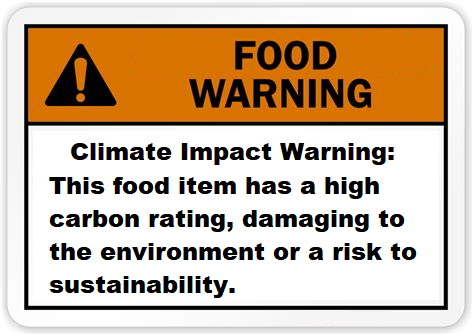
Today the climate industrial complex is funded by trillions of dollars seeking to control what we buy, eat and where we are allowed to travel, all in the name of sustainability and achieving net zero carbon emissions. This fear campaign is rooted in the belief that we will not look into the data ourselves, but instead look to the governments and to the media to tell us what is true.
Today I will demonstrate that temperatures fluctuate and are not unprecedented, and that natural disasters are not getting worse. I will also highlight the unreliability of climate data and the role of CO2. Ultimately I will present scientific evidence to show that we are not in a climate crisis.
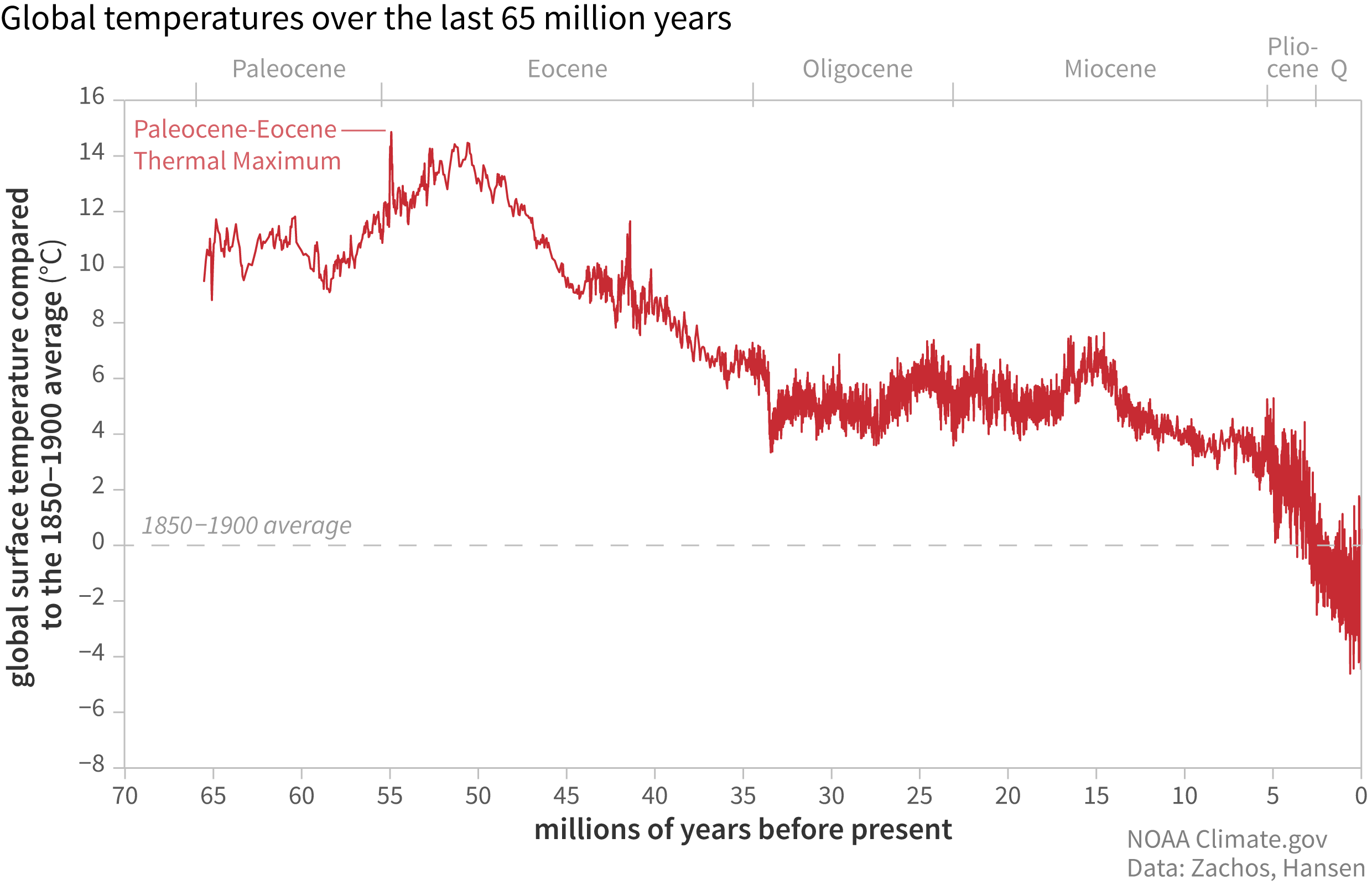
Historical temperature records indicate that we are not in the climate crisis western governments claim. We are looking at a graph of the past 65 million years from NOAA. The Earth today seems to be in a particularly cool period; in fact the Earth is still coming out of an ice age. History demonstrates that life has existed and thrived in much warmer temperatures, and that temperatures have been much higher without the human influence of industrial CO2 emissions.
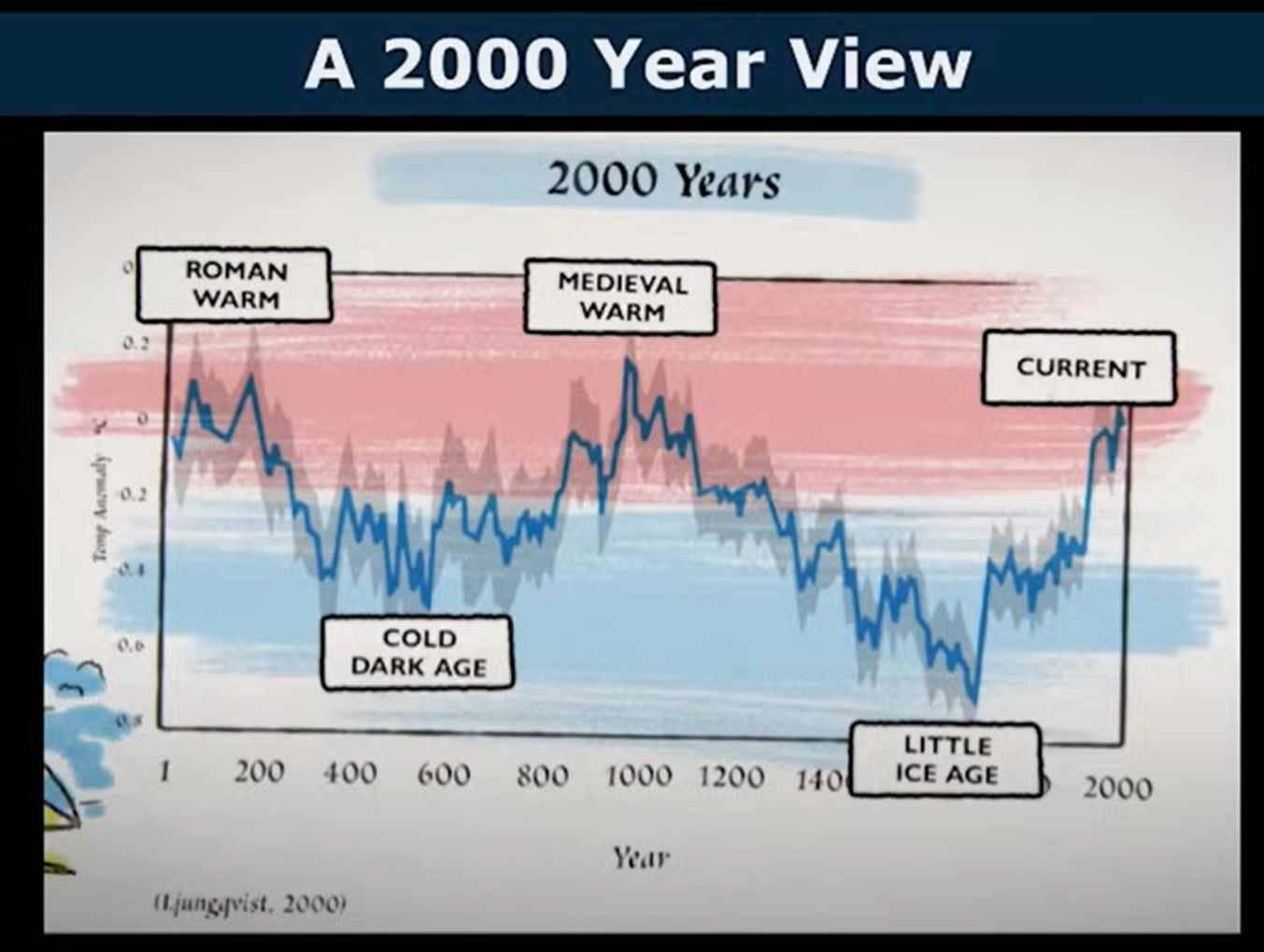
Historical temperature records indicate that the temperature of the Earth naturally fluctuates over time as it has for the past 65 million years. In just the past 2,000 years there have been two warm periods and two cold periods. The Roman warm period, also called the Roman optimum, was known as a time of prosperity. This of course goes against the entire narrative that warming threatens human life. Following the Roman warm period came the cold dark age, the medieval warm period, and the Little Ice Age. The current warming from 1800 onwards is the warming of recovery from the Little Ice Age. However temperatures are still cold compared to distant times and continue to visibly fluctuate.
Given this evidence, the claim by scientists and news pundits that 3° Fahrenheit is the end of civilization is not cause for alarm. Because it is not unprecedented and because temperatures will continue to fluctuate today. The argument for climate change is rooted in the belief that warmer weather and CO2 emissions have been causing natural disasters to become more frequent and more violent. However after studying hurricane and wildfire data, it became clear that actual activity goes against this global warming narrative.
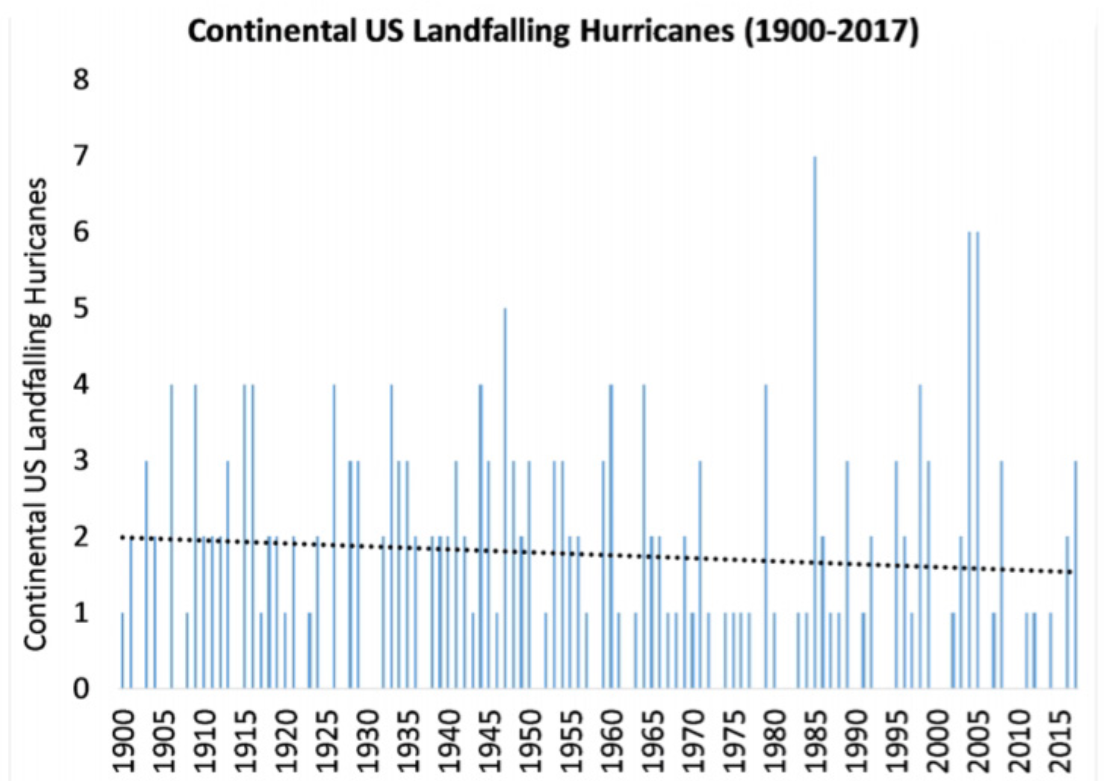
This graph from the bulletin of the American Meteorological Society shows the number of hurricanes in the US per year since 1900 showing a slight downward trend for the past 120 years. The strength and duration of hurricanes shows a similar lack of crisis.
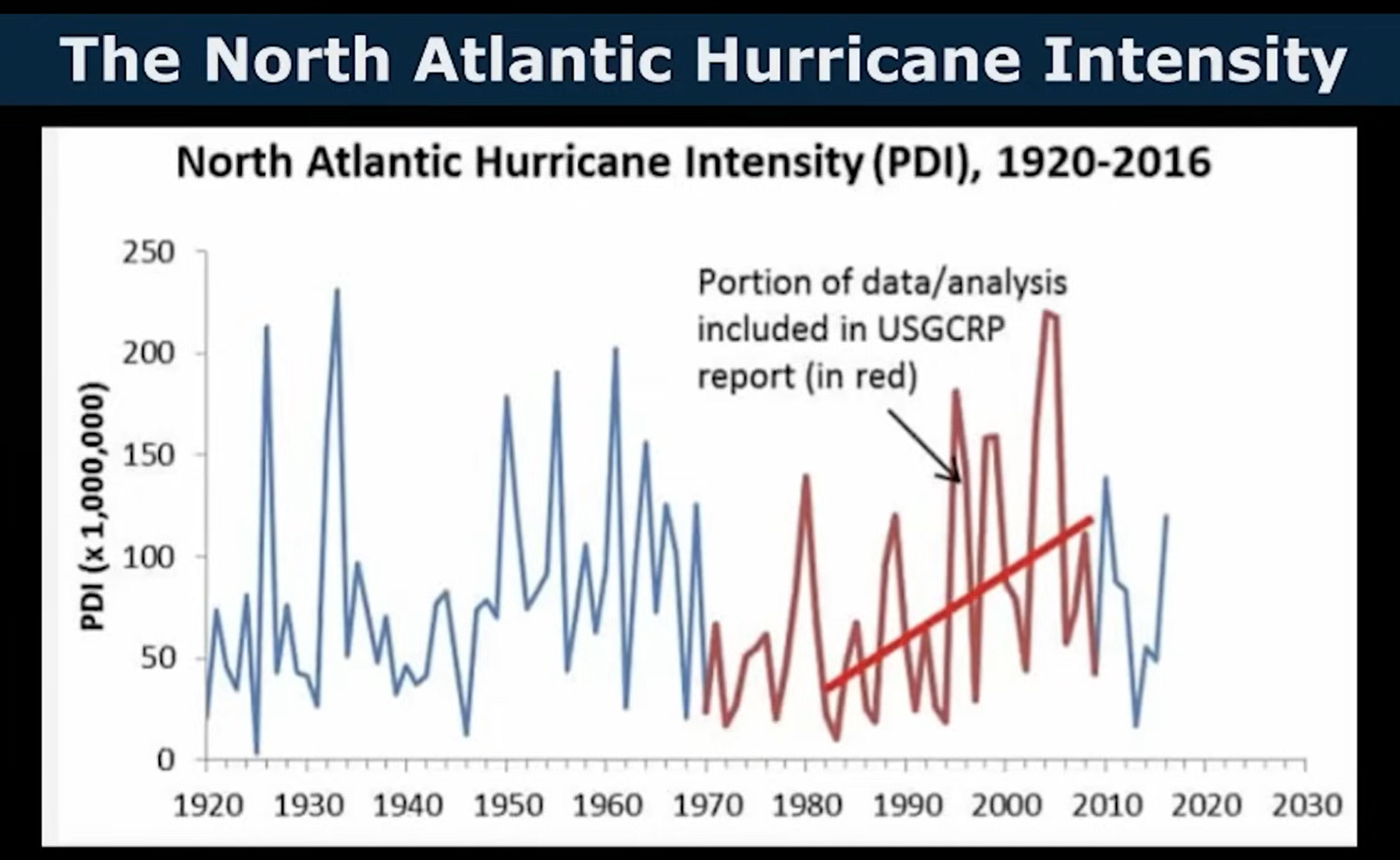
A graph from the National Hurricane Research Laboratory illustrates the North Atlantic hurricane intensity from 1920 to 2016, where there is evidently no trend. However the data presented to the public by the 2014 National Climate Assessment of the United States is limited to the portion highlighted in red creating an illusory upward trend.
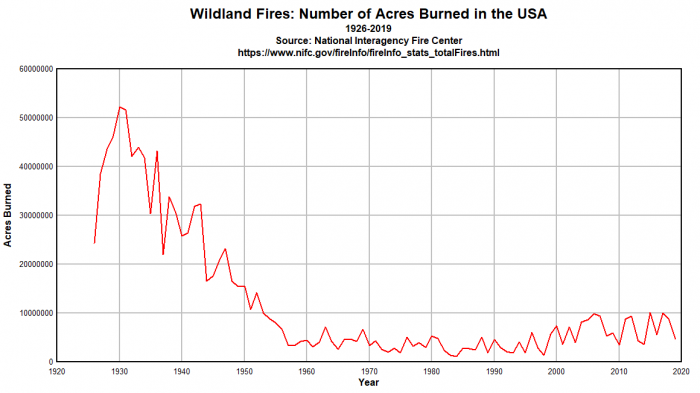
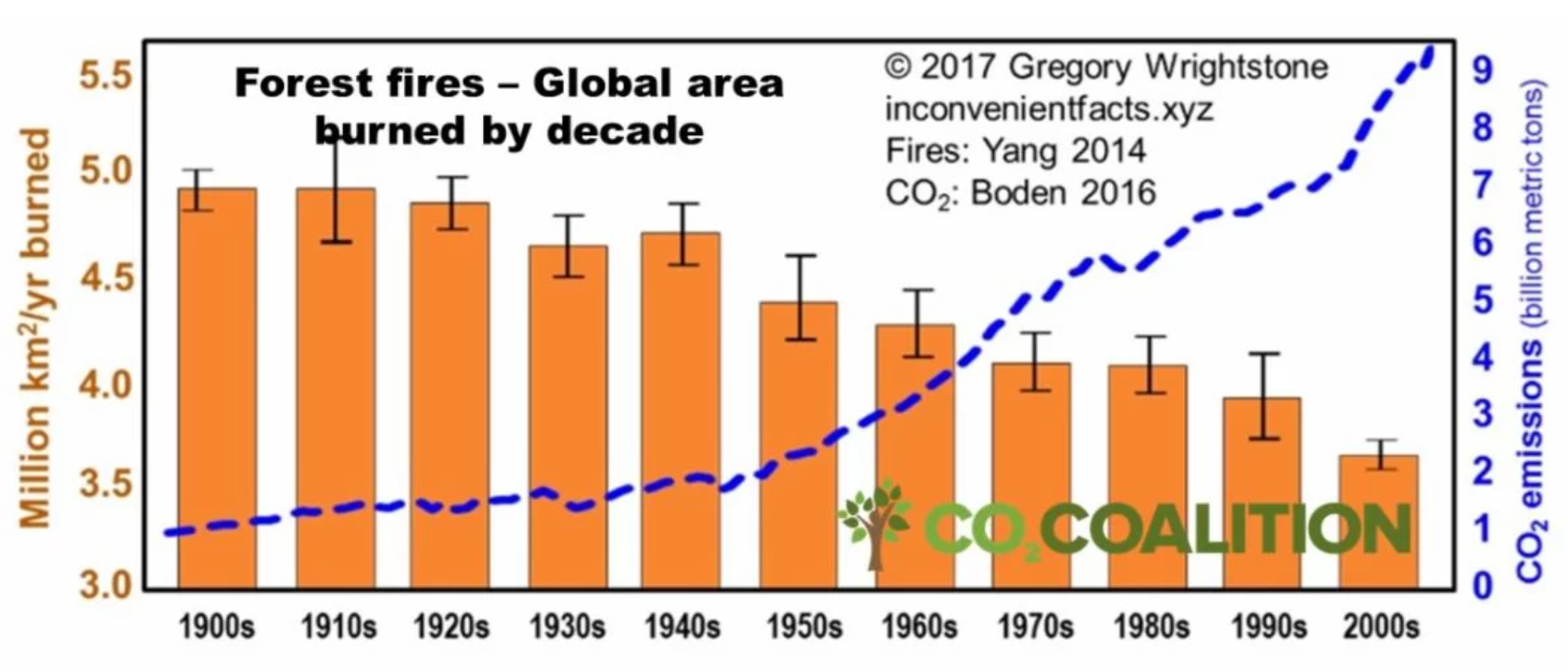
This graph starting in 1920 shows that the number of acres burned by wildfires in the US has been decreasing. Similarly the number of acres burned globally since 1900 has steadily declined as well. Ultimately the presented evidence goes against the narrative that anthropogenic CO2 emissions have been making the weather worse.
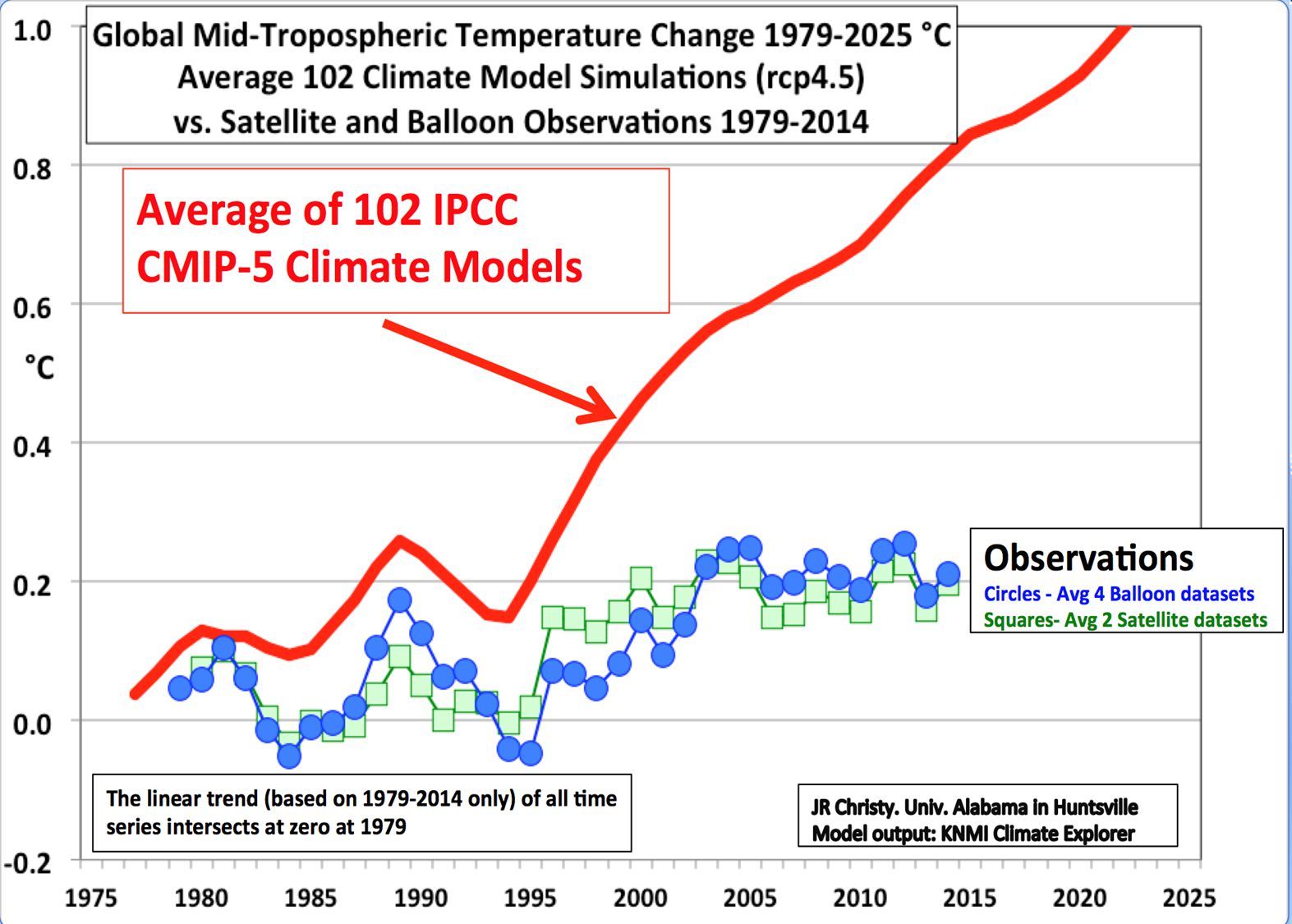
To understand the science behind the climate crisis claims of today, it is necessary to highlight the unreliability of available data. This is most evident in the disparity between climate model predictions and the observed data. In this graph illustrating temperature change, the blue line representing data taken from weather balloons matches up well with the green line showing data taken from satellites. However the red line represents the climate models used by the UNIPCC to predict future global warming. These observations show that actual warming is about one third of that predicted.
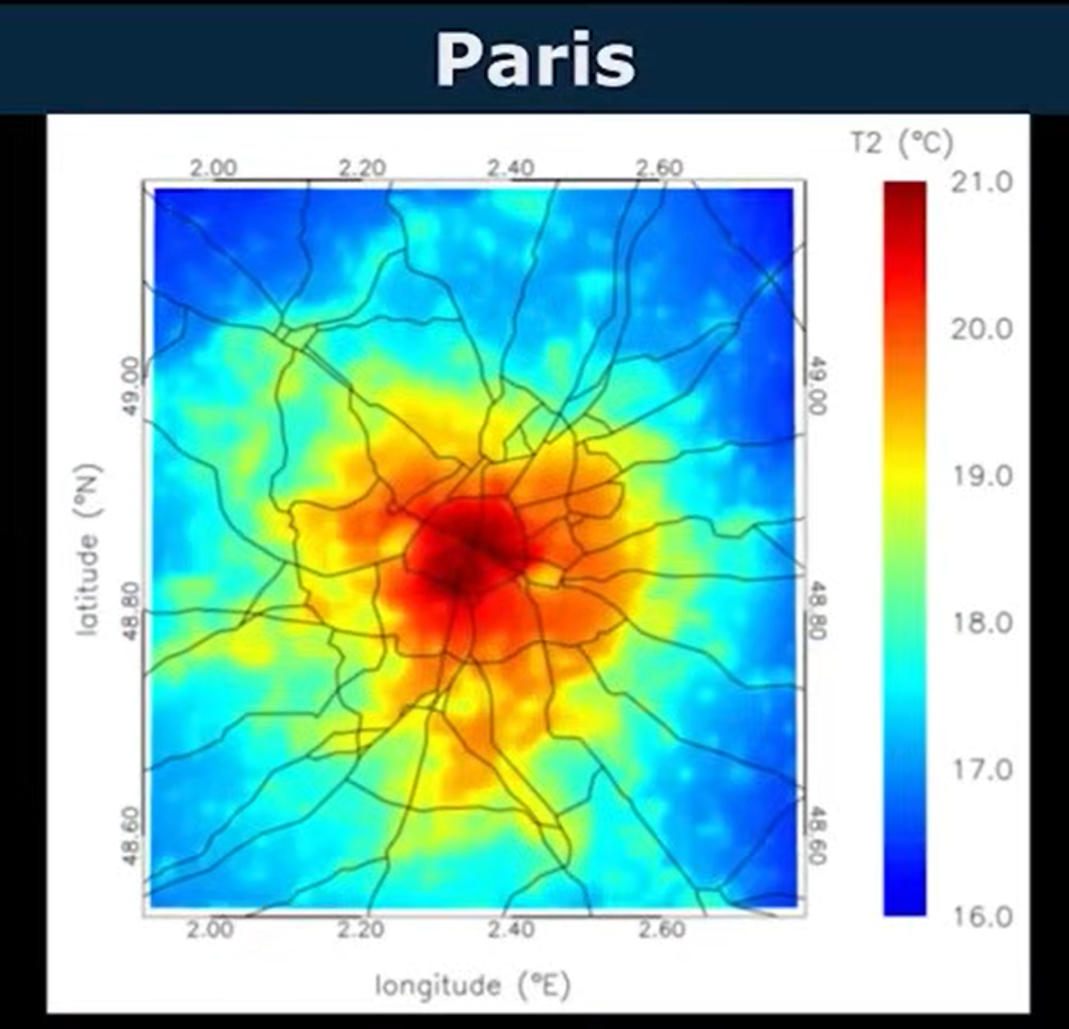
Temperature measurements are greatly affected by what is called the urban heat island effect. Since concrete picks up heat, temperatures taken in cities are much higher than those taken in rural areas. For example in a thermal radiation map of the city of Paris, the middle of the city produces a deep red color representing heat, while the rural areas around the city project a green to bluecolor representing milder temperatures.
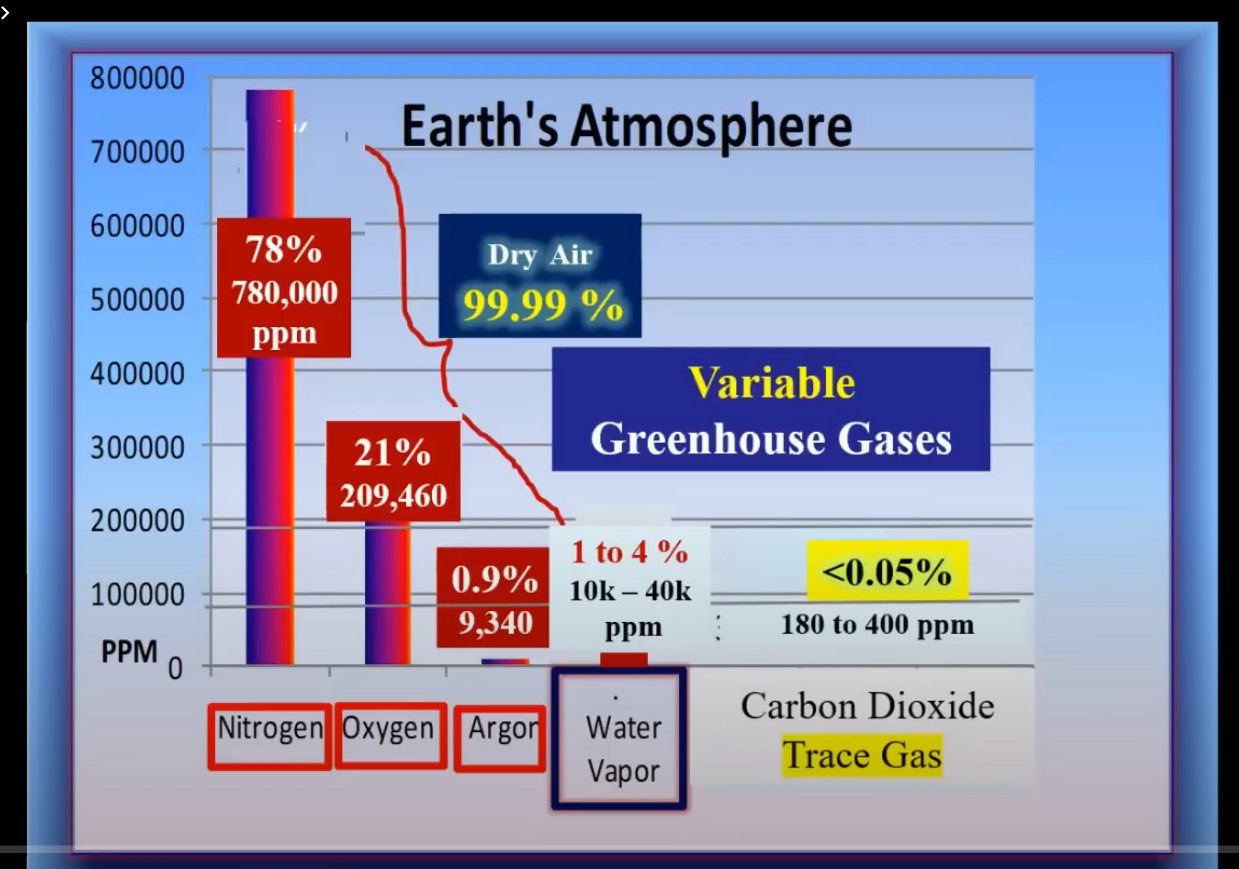
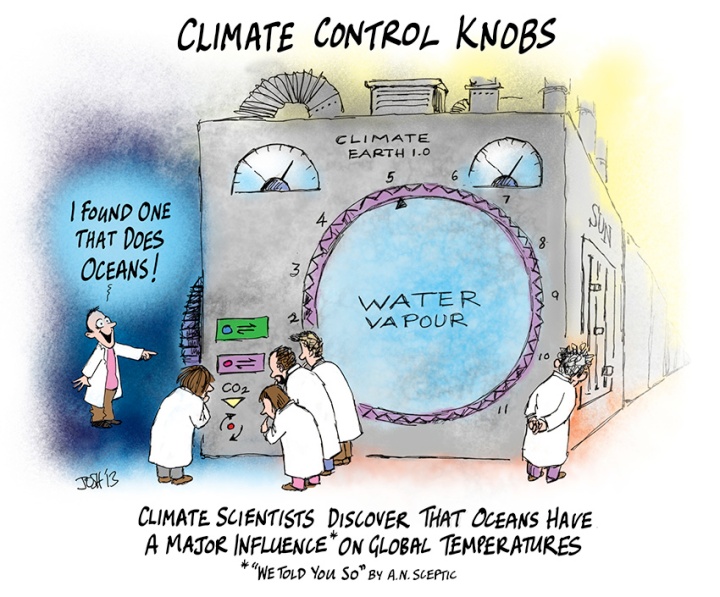
This gap represents one way that climate alarmists can instill fear by embellishing data to serve their agenda. Perhaps the greatest tool of the climate industrial complex is the supposed evil of CO2. However CO2 is not the control knob for climate change mainly because it is only 0.04% of the atmosphere. I’ll say it again: CO2 is only 0.04% of the atmosphere. A visual comparison of CO2 to the other atmospheric gases shows how barely negligible is the gas in comparison.
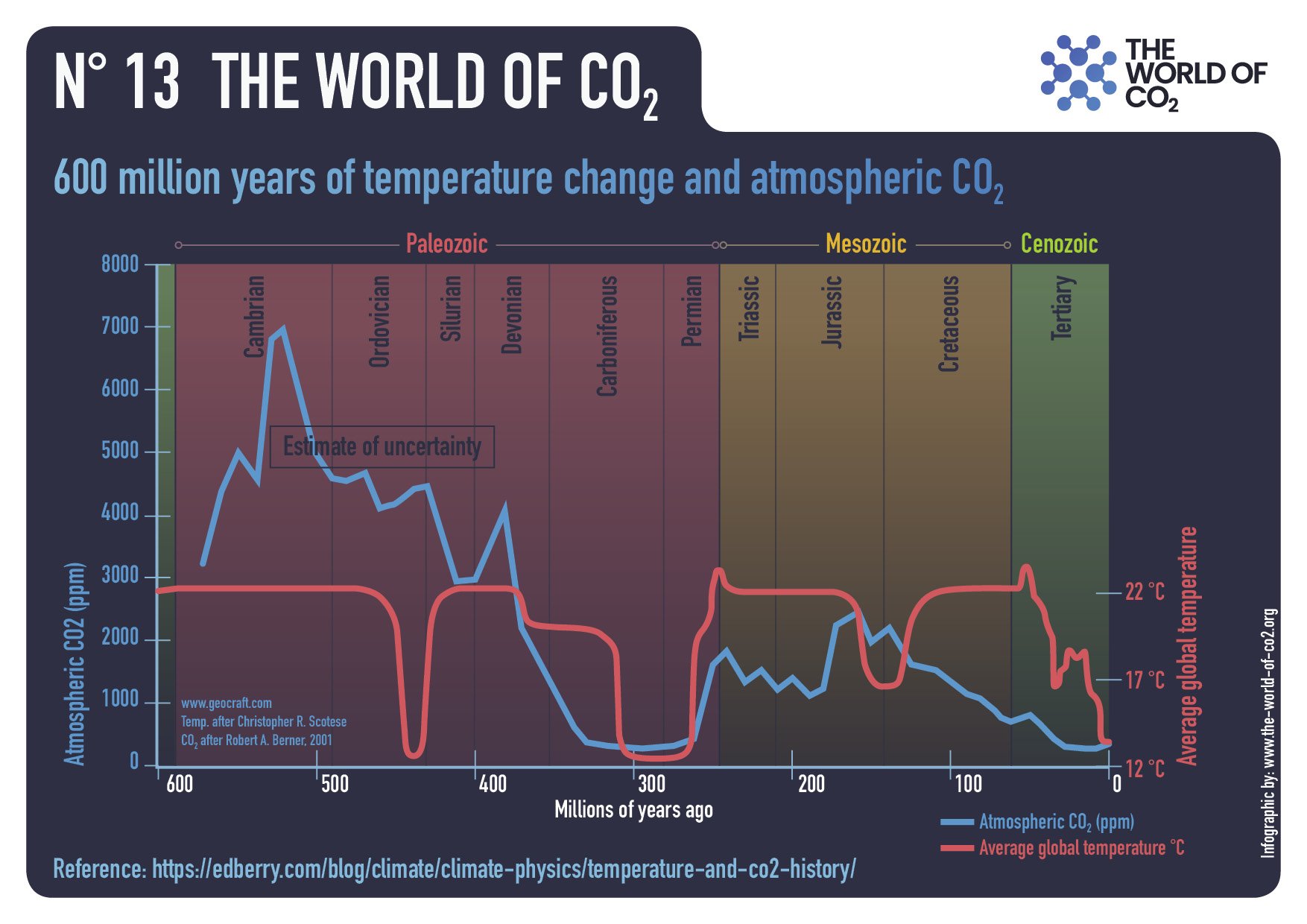
Although the mainstream media has tried to alarm its consumers with the accelerating emissions of CO2, the Earth is actually in a CO2 famine. Current levels are about 423 parts per million; however in the past they have been at least a thousand parts per million and have likely reached 8,000 parts per million.
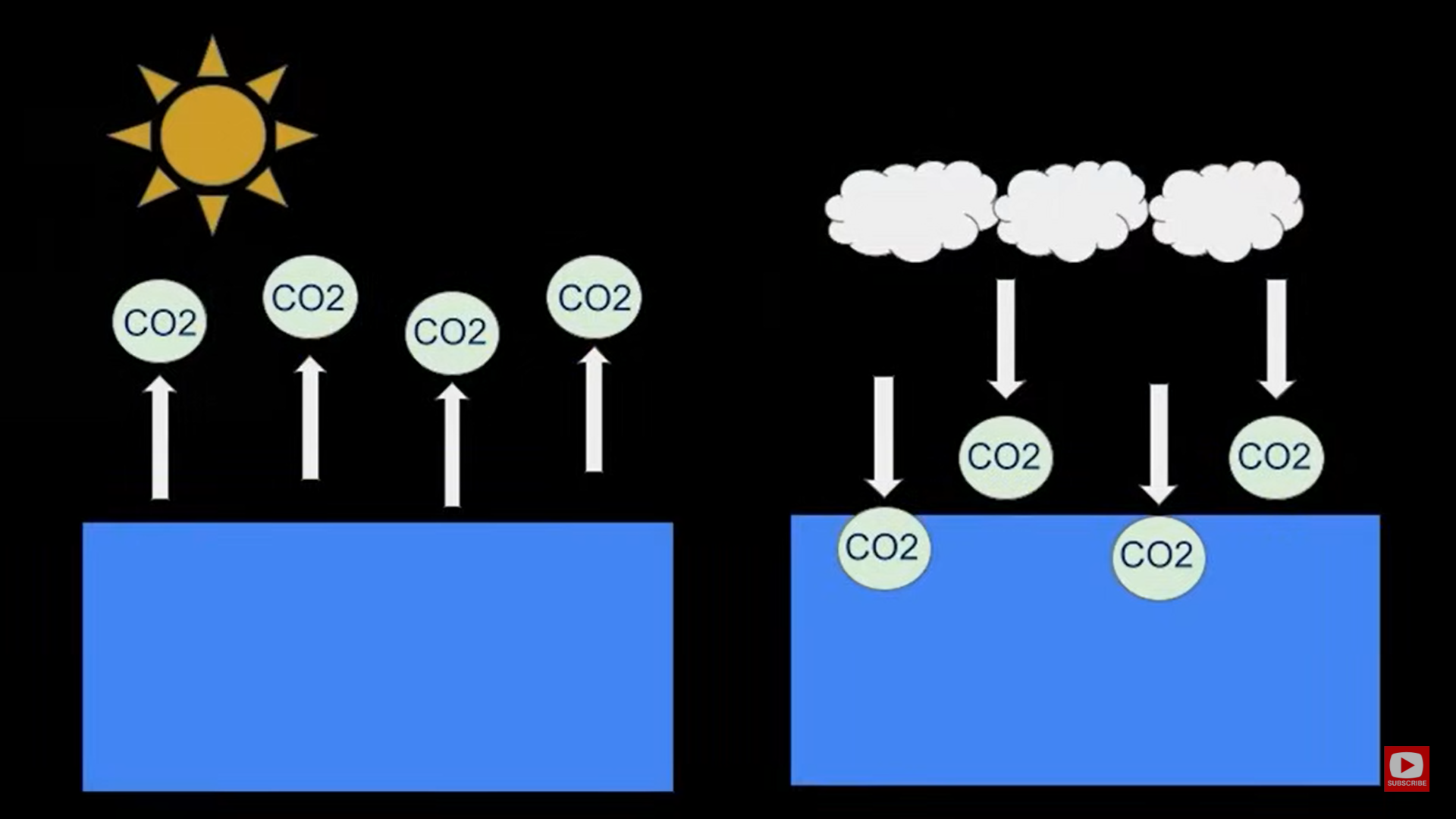
While the narrative states that CO2 directly causes the rise in temperature, it has been found that quite the opposite is true. The relationship between CO2 and temperature is not that more CO2 causes a rise in temperature, but that a rise in temperature causes an increase in CO2. Carl Wunsch, professor of oceanography at MIT, found that when the ocean warms more CO2 is released into the atmosphere. On the other hand when the ocean is cold, CO2 is absorbed into the water.
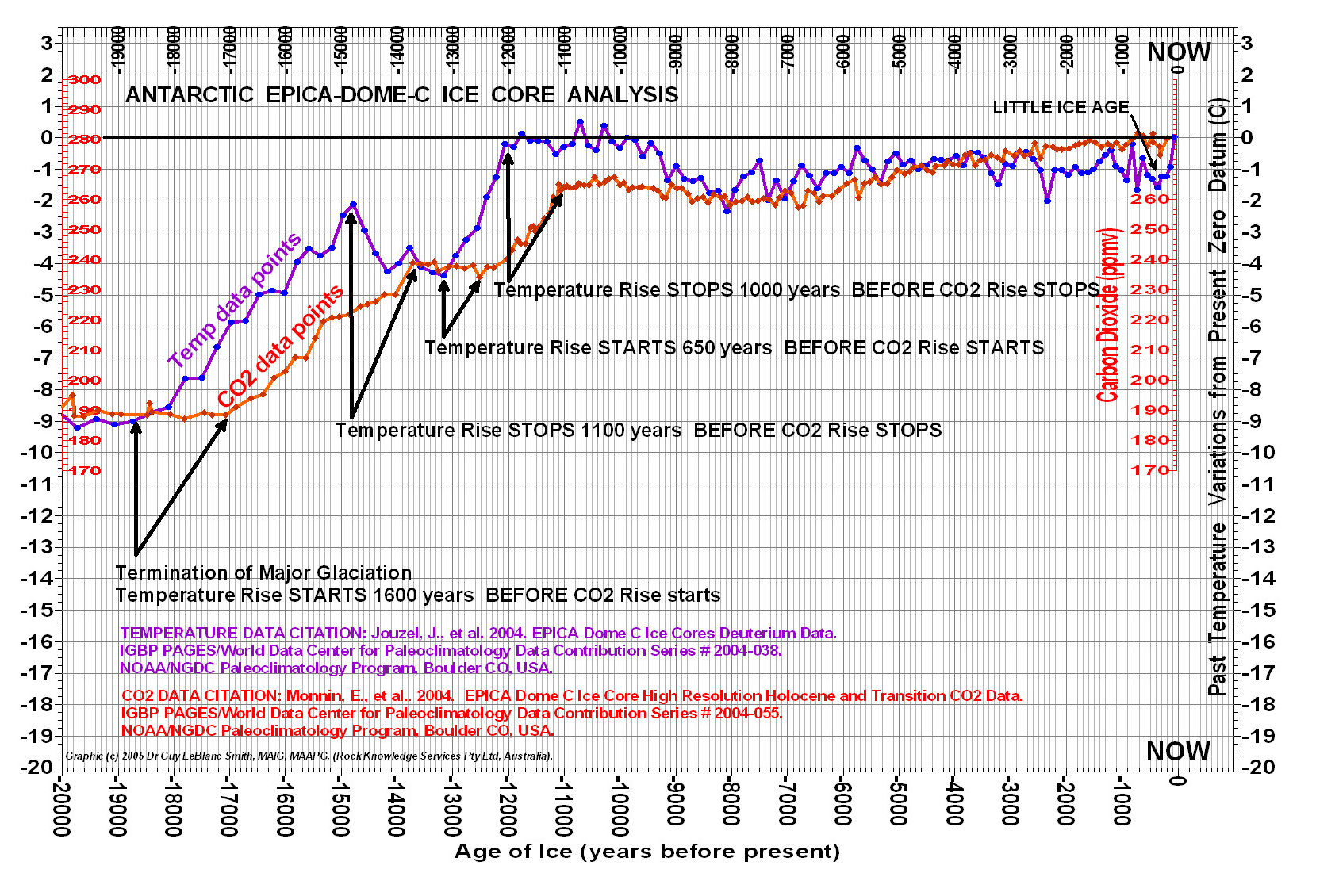
In a graphical correlation between temperature and CO2, it is found that when a rise in temperature occurs, a rise in CO2 follows a few centuries later. In this graph CO2 rose 800 years later in response to a surge in temperature.
Like everything else in the world, CO2 may have some small factor in climate, while there are countless of other factors affecting temperature. Some examples are volcanic activity, cosmic rays, and the sun. This highlights how if we were to limit CO2, it would only stunt biodiversity while having almost no effect on temperature. Because of the fact that it is only one small factor in a sea of greater causes.
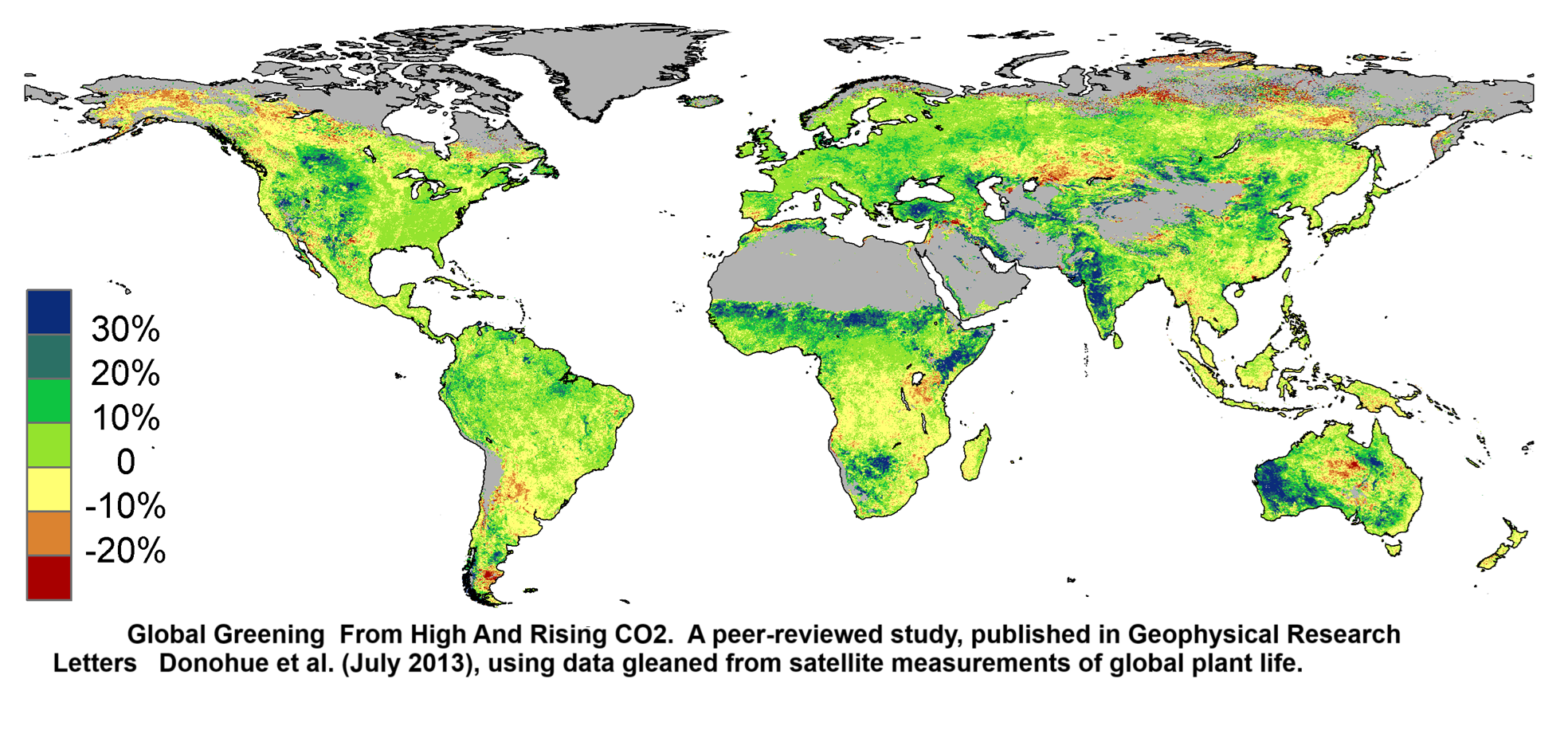
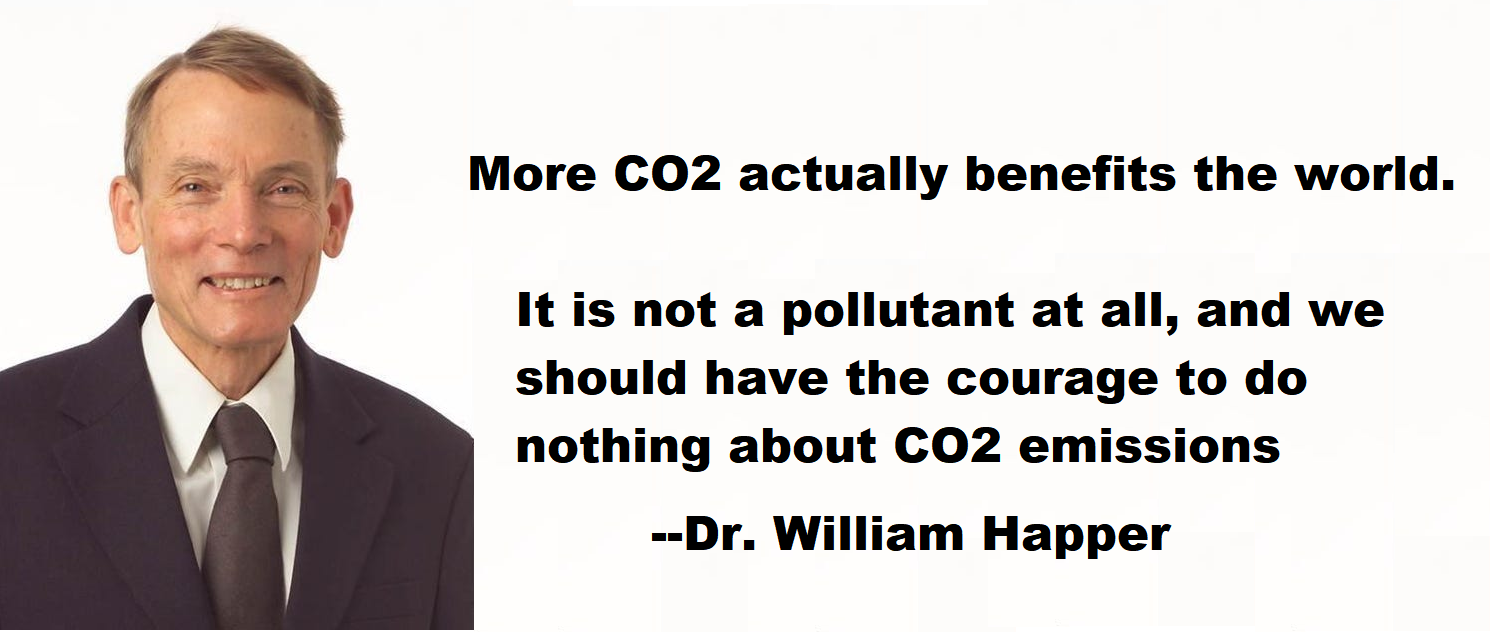
Some call CO2 the gas of life because it plays an instrumental role in the process of photosynthesis. It comes as no surprise that most farmers use high levels of it in their green houses to produce a better crop. In this picture four pine trees are shown growing at different levels of added CO2, from normal atmospheric CO2 to an added 150, 300, and eventually 450 parts per million. More CO2 is evidently beneficial for plant growth. Physicist Lubos Motl, former professor at Harvard, summarized the importance of CO2, saying “It is the key compound that plants need to grow, and indirectly every organism needs to have food. At the end it is clear that CO2 is not, as the New York Times frighteningly put it, a tiny bit of arsenic or cobra venom. Nor will it cause famine as many claim; if CO2 increases it will only green the planet and increase the food supply.
Across the western world climate change has been coined as an existential threat to mankind. While this sentiment is not new over the course of history, as it can be seen through the Aztecs and even in the Salem witch trials. It has once again become relevant in today’s culture with policies such as carbon taxes and individual CO2 budgets being proposed in our governments. We are seeing the climate issue creep into every part of our lives.
This is why I I found it necessary to pursue the truth and the climate debate. In my speech I presented the scientific evidence behind historical temperature change and natural disasters, discovering the unreliability of climate data, the small role of CO2 in climate, and its essential role in biodiversity. As a result I’ve concluded that the climate crisis is a hoax that we must arm ourselves against by pursuing the truth and by looking into the data ourselves.

 Iowa Climate Science Education