Drive Your Car While You Can


Issues & Insights Editorial Board article is Take A Hike: Driving Will Be Verboten.  Excerpts in italics with my bolds and added images.

Anyone who thought electric-vehicle mandates and policies designed to force Americans out of their cars and into public transit or onto early 18th-century technology (bicycles) are intended to protect the environment is either naive or an accomplice in tyranny. The evidence has been helpfully provided by a Massachusetts senator who wants to limit how far people can travel.

We are well past the point of being fed up hearing that the world has to sharply cut greenhouse gas emissions or we’ll scorch our planet. Carbon dioxide produced by man, the fanatics assure us, is an existential threat.
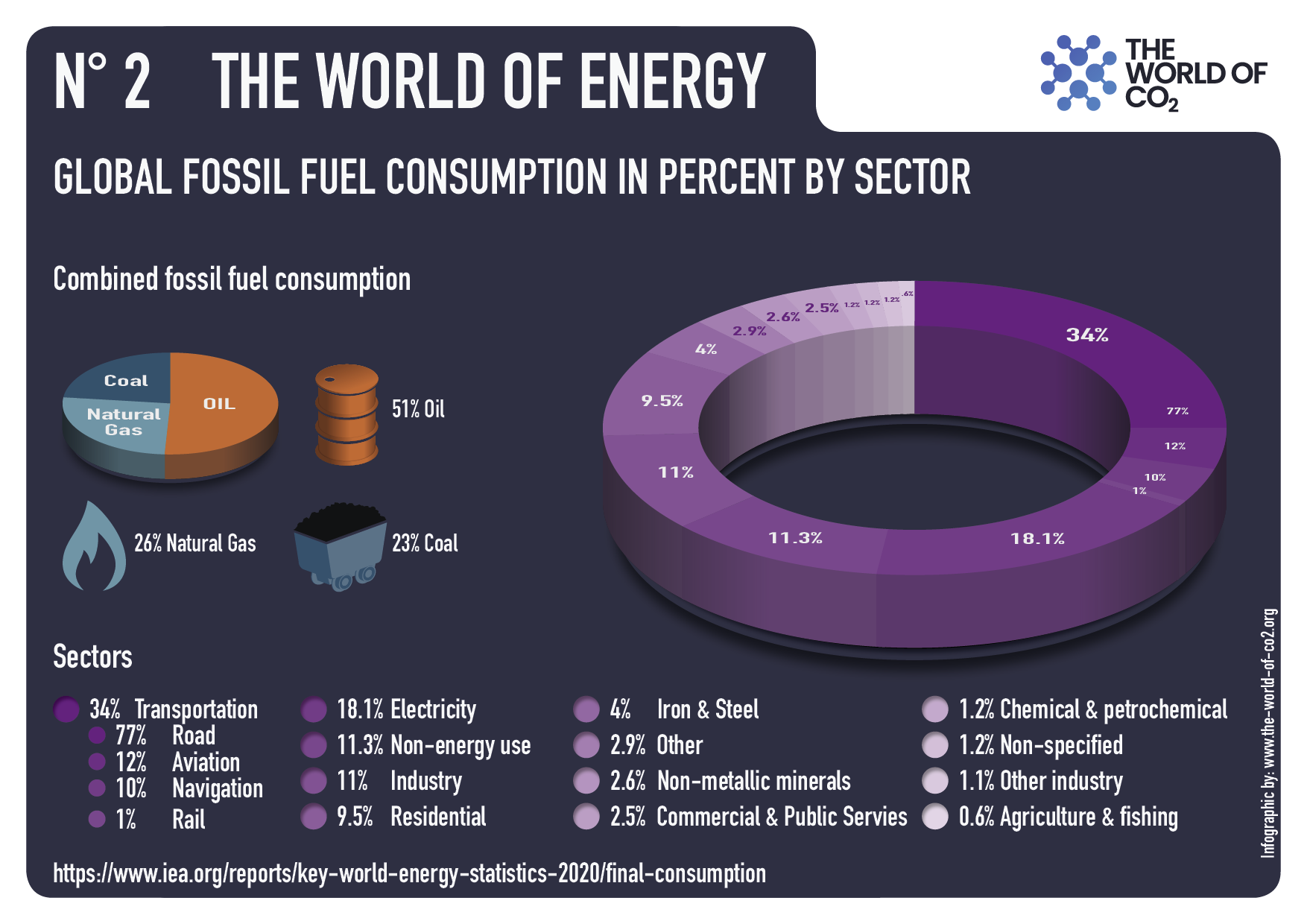
The transportation sector is the largest source of direct greenhouse gas emissions, so of course it is a ripe target for cuts for eco-tyrants. The starting point has largely been a focus on vehicles that burn fossil fuels. They must be replaced with EVs and other “emissions-free” vehicles (there are effectively no true zero-emissions automobiles), public transit, bicycles, and our own feet.
But those are only interim steps to the ultimate goal.

Massachusetts Senate Majority Leader Cynthia Stone Creem believes she knows how to cut emissions. She’s introduced a bill that would “set a statewide vehicle miles traveled reduction goal for the year 2030 and for every fifth year thereafter.” It includes a “a whole-of-government plan to reduce vehicle miles traveled and increase access to transportation options other than personal vehicles.”

It’s an example of “textbook extreme, out-of-touch policymaking,” says the Massachusetts Fiscal Alliance, which suggests that mileage vouchers might be ahead for Bay Staters.

“Creem says EVs aren’t enough – Massachusetts must limit how far you can drive, too,” the organization warns. “Her bill creates a panel to track your mileage and fine you if you go too far. She says just walk or bike instead.

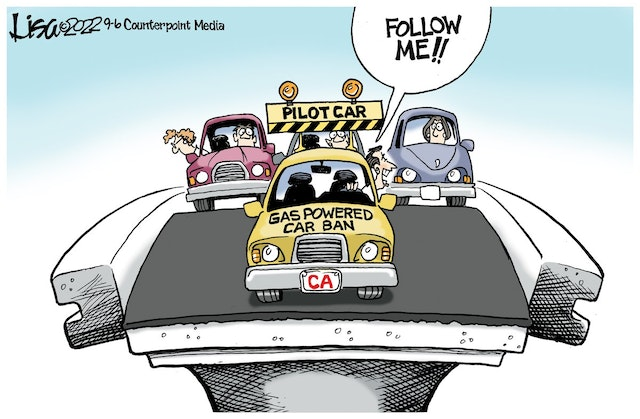
This “new” and “additional” strategy, as Creem calls it, is simply another effort to separate us from our cars in what we could loosely call the autozoic era. Similar actions include:

Do not think we are exaggerating, that there is no war on cars, because there is.

The authoritarian urges behind the assault on unfettered free travel are strong. The social engineering and malign central planning in the service of “sustainability” and “green” initiatives are hostile to freedom.

Naturally, elected officials, their high-ranking staff members, and senior government functionaries won’t have to abide by any limits. They’ll have some privileged equivalent of Zil lanes, the low-traffic VIP avenues that showed Muscovites that while everyone was equal in the Soviet Union, some were more equal than others.

No invention has liberated humanity or boosted economic prosperity more than the automobile. People choose to buy and drive cars out of convenience and need, and for their love of independence. But the political left wants to take away people’s right to make their own decisions because it suits both lower-case and upper-case “d” democrats’ tyrannical impulses. If anyone needs to take a hike, literally and metaphorically, it should be anti-car warriors.

via Science Matters

https://ift.tt/vZYMurD

June 2, 2025 at 01:12PM

Showdown looms for Empire Wind

From CFACT

By David Wojick

Empire Wind is a big New York offshore wind project that is ready to start construction. The Trump administration stopped it about a month ago but has now unstopped it, supposedly after the President made an informal deal with Governor Hochul to lift New York’s ban on new gas pipelines from Pennsylvania.

Empire is about to start driving the enormous steel monopiles that hold the turbine towers, but a new wrinkle has hit the fan, setting the stage for a massive confrontation. A group protesting the project has filed a federal lawsuit challenging its approval. Unlike prior lawsuits, this one makes a new argument in addition to some of the usual ones. It challenges the NOAA Fisheries’ authorized harassment of large numbers of a threatened dolphin.

The issue is the authorization limits in the Marine Mammal Protection Act (MMPA), which the lawsuit claims are being exceeded by a huge margin. On paper this looks like a strong case, so there is a real possibility the court will stop the project.

Adding a bit of drama, Empire Wind has hired one of the world’s biggest crane-wielding ship/boat/things to hold and drive the monster monopiles, which driving is the source of the objected to harassment. It is what is called a “semi-submersible,” meaning it sinks partway to get the stability for its huge crane to lift and hold stuff over the water without turning over.

The official name of this beast is the semi-submersible crane vessel (SSCV) Thialf, and you can read about it here: https://en.m.wikipedia.org/wiki/SSCV_Thialf. Before going to work it settles 48 feet into the water. It then has an incredible lifting capacity of 14,000 tons.

Note that there are already two other offshore wind pile driving projects going on, which raises the issue of cumulative impact, especially on the highly migratory and desperately endangered North Atlantic Right Whale. One is Revolution Wind off Rhode Island, which is not all that far away. The other is Dominion’s huge project off Virginia, one of the world’s biggest wind facilities.

The lawsuit lead is Save Long Beach Island, Inc. (Save LBI), joined by Save the East Coast, Protect Our Coast Long Island-New York, and the Miss Belmar whale watching company. You can read about the suit here: https://www.savelbi.org/press-releases.

The basic issue is pretty simple. Under MMPA, NOAA authorizes the harassment by pile driving of a specified number of critters of each protected species, from whales to seals. This is called an Incidental Take Authorization, where incidental means it is not the purpose of the project. It is certainly not incidental to the harassed animals, which may number in the tens of thousands.

For an offshore wind construction project, the authorization is for a five-year period, with annual authorizations. The MMPA says these authorizations are limited to a “small” fraction of the species population. NOAA interprets small to mean up to 30%, which is questionable in itself.

According to Save LBI, the Empire Wind authorization for one species of dolphin is 30% a year and a total about like the entire population. This they say violates the MMPA “small take” standard and that is the central issue before the court. Sounds right to me.

I have to wonder about the giant Dominion project where harassment of over 20,000 each of several dolphin species is authorized. Surely this is not small.

This case is of great interest to me, as I have been writing and ranting about excessive whale harassment authorization for quite a while now; see here: https://www.cfact.org/2024/12/30/my-41-wind-threatens-whales-articles-track-federal-deception/.

Two years ago I flagged NOAA Fisheries for cumulatively authorizing harassments of the North Atlantic Right Whale that exceeded 200% of the population here: https://www.cfact.org/2023/04/24/noaa-proposes-hammering-208-of-vanishing-right-whales/. That cumulative number is now much higher.

So this is the dramatic Empire Wind showdown. A small dolphin in court versus the world’s second-largest crane vessel at sea, dueling over giant pile driving. Stay tuned to CFACT as this drama unfolds.


Discover more from Watts Up With That?

Subscribe to get the latest posts sent to your email.

via Watts Up With That?

https://ift.tt/ZY7OC0d

June 2, 2025 at 12:05PM

US Supremes Rein In Politicized Environmental Reviews

On May 29, 2025 SCOTUS ruled unanimously that NEPA (National Environmental Protection Act) can no longer be a tool for political activists against development projects.  The report from MSN is US Supreme Court limits environmental reviews in Utah railway ruling.  Excerpts in italics with my bolds and added images.

The U.S. Supreme Court dealt a setback to environmentalists on Thursday by allowing federal agencies to limit the scope of their reviews of the environmental impact of projects they regulate, as the justices bolstered a Utah railway project intended to transport crude oil.

The 8-0 ruling overturned a lower court’s decision that had halted the project and had faulted an environmental impact statement issued by a federal agency called the Surface Transportation Board in approving the railway as too limited in scope. The project was challenged by environmentalists and a Colorado county.

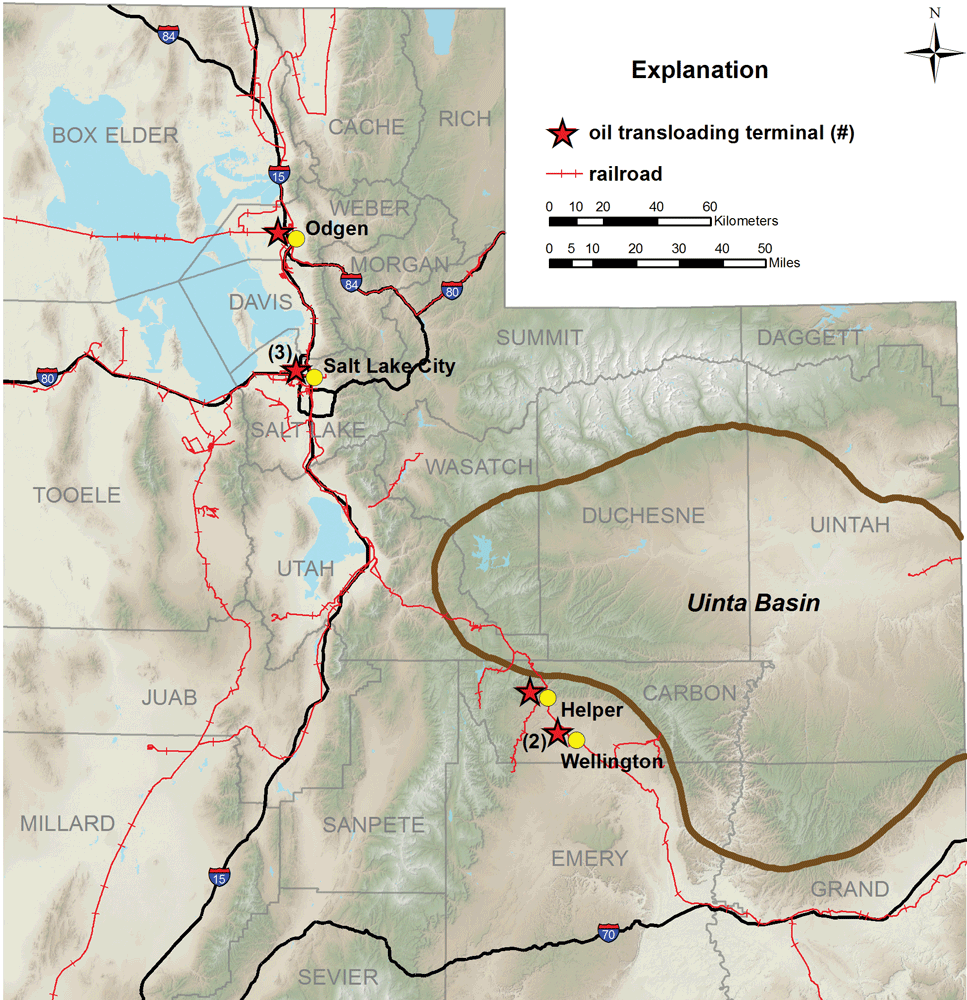
A coalition of seven Utah counties and an infrastructure investment group are seeking to construct an 88-mile (142-km) railway line in northeastern Utah to connect the sparsely populated Uinta Basin region to an existing freight rail network that would be used primarily to transport waxy crude oil.

The case tested the scope of environmental impact studies that federal agencies must conduct under a U.S. law called the National Environmental Policy Act (NEPA), enacted in 1970 to prevent environmental harms that might result from major projects. The law mandates that agencies examine the “reasonably foreseeable” effects of a project.

Background Post: US Supremes Hear Climate Lawfare Case to Stop Oil Railway

IER reports the news from December in article The Supreme Court Takes on a Case Involving the National Environmental Policy Act.  Excerpts in italics with my bolds and added images.

Key Takeaways

1  The Supreme Court has heard a major NEPA case that could affect investment in energy and other infrastructure projects in America.

Seven County Infrastructure Coalition v. Eagle County, Colorado will decide whether permit applicants must anticipate far-flung speculative impacts over which federal agencies have no control.

3  The case involves an 88-mile railway accessing oil production in the Uinta Basin in Utah, allowing expansion of domestic oil production as well as access to essential minerals in the region.

4  Green advocates sued the Surface Transportation Board because it approved without considering alleged but inestimable impacts far from the project.

5  Lower courts have sided with the Greens, who oppose mineral and energy development.

6  SCOTUS is expected to clarify the burdens projects must face to comply with NEPA, which has become a tool of delay and denial by those opposing projects of all kinds in the United States.

7 Congress is also looking at NEPA streamlining as the act has become an impediment to rational development in the United States.
The Supreme Court recently heard a major case, Seven County Infrastructure Coalition v. Eagle County, Colorado, that will affect the scope of the National Environmental Policy Act (NEPA). The case concerns the permitting of a proposed Utah railway that would ship oil from the Uinta Basin, potentially quadrupling its oil production. The 88-mile Uinta Basin Railway would connect the oil fields of northeastern Utah to the national rail network running alongside 100 or so miles of the Colorado River to reach oil refineries on the Gulf Coast.  According to The Hill,  at issue is whether and when upstream and downstream environmental impacts should be considered as part of federal environmental reviews. The company behind the railway and a group of Utah counties appealed a lower court decision to the Supreme Court, arguing that those indirect impacts are beyond the scope of the federal reviews.

Background

The case concerns a rail line to support oil development and mineral mining. In 2021, the federal Surface Transportation Board (STB) issued a 3,600-page environmental impact statement to comply with NEPA and approved the rail line. The NEPA mandates that federal agencies assess the environmental effects of projects within their authority. Any major initiative that is managed, regulated, or authorized by the federal government must undergo a NEPA evaluation, a process that can span years and frequently exposes projects to legal challenges.

The STB analyzed the railway’s potential effects on local water resources, air quality, protected species, recreation, local economies, the Ute Indian tribe, and other factors. Environmental groups, however, sued the agency, saying that it failed to examine sufficiently how the railway might affect the risk of accidents on connecting lines hundreds of miles away and to assess emissions in “environmental justice communities” on the Gulf Coast from increased oil shipments, among other supposed shortcomings.

According to the Wall Street Journal editorial board, “a D.C. Circuit Court of Appeals panel sided with the plaintiffs and told the STB it must consider the line’s upstream and downstream effects even if they were hard to predict and beyond the control of the agency and developers. This includes the effects of oil shipments on Gulf Coast refiners and their contributions to climate change.” The appeals court ruling found that the federal STB violated the Endangered Species Act and the Interstate Commerce Commission Termination Act when it permitted the project.

Furthermore, the editorial board also explained that lower court judges—those on the D.C. and Ninth Circuits—ignored the Supreme Court’s past rulings and imposed arbitrary permitting requirements with no limiting principle. The STB lacks authority over Gulf Coast refiners and cannot prevent climate change.

Court Rulings Regarding NEPA

The Supreme Court has heard other related cases and held that agencies need not consider indirect and unpredictable impact, most recently in a 2004 case, Department of Transportation v. Public Citizen. In that case, the Supreme Court held that agencies need only analyze environmental impact with “a reasonably close causal relationship” over which they have “statutory authority” and which they can prevent.

In 2020, the Supreme Court green-lit approval for permits for the Atlantic Coast Pipeline after nearly seven years of litigation, but the pipeline was scrapped due to legal delays that raised project costs significantly. It takes an average of 4.2 years to litigate a NEPA challenge, which adds to the four or more years to obtain a federal permit. These delays are what frustrate investment in new projects, slowing job creation and economic expansion in the United States.

judge struck down a Montana coal mine permit because a federal agency did not consider the climate effects of coal combustion in Asia. Additionally, a 225-mile electric transmission line in Nebraska has been stuck in permitting for 10 years because a lower court invalidated a U.S. Fish and Wildlife permit.

Conclusion

The Supreme Court is tackling a case involving the scope of a federal environmental law, NEPA, that involves a rail line to move oil. In this case, lower courts agreed with environmental groups, who are challenging the government’s permit approval of the rail line. The case is instrumental to the issue of what should be considered when determining potential environmental damages. Congress recognizes that NEPA needs reform as delays over lawsuits have killed projects and dramatically increased their costs and it continues to debate ways to make federal permitting easier and quicker. Until that reform happens, however, Supreme Court Justices need to reign in the environmental limits of NEPA so that needed projects can progress in America.

via Science Matters

https://ift.tt/XTyx5Lm

June 2, 2025 at 09:52AM

Tuesday

10 out of 10 based on 1 rating

via JoNova

https://ift.tt/tCUkchB

June 2, 2025 at 09:51AM