The Folly of Starmer’s Surrender Summit – Not so Much ‘Ruthlessly Pragmatic’ as Cravenly Sycophantic

From Tilak’s Substack

Tilak Doshi

When the first post-Brexit UK-EU summit to be held in London today was announced in February, UK Minister for the Constitution and European Union Relations Nick Thomas-Symonds said that Britain will be “ruthlessly pragmatic” in talks to “reset” its relations with the EU. Most Britons are not holding out for much ruthless pragmatism of any sort from a Labour Government led by a Europhile Prime Minister who called for a second Brexit referendum. British citizens are resigned to ever greater convergence with Brussels across food standards, fishing rights, defence and energy at what is being dubbed today’s “surrender summit”.

As Britain navigates its post-Brexit future, Chatham House recommended on Thursday that the UK should link its carbon market with the EU’s Emissions Trading System (ETS). It cited a letter signed by more than 50 companies and business groups that called for the convergence of carbon prices between the UK and EU that will “help curb costs for consumers”. Currently, carbon prices in the UK scheme trade around $10/ton cheaper than in the EU. The research institute considers this a matter of priority for the UK to be exempt from the bloc’s Carbon Border Adjustment Mechanism (CBAM) – a tax based on the carbon content of imported goods – which would apply initially to imports of cement, iron and steel, aluminium, fertilisers, electricity and hydrogen.

According to Chris Aylett, Research Fellow at Chatham House, “failing to align with the EU on a key climate policy tool will be costly for UK industry and stifle investment in the energy sector”. Alas, Mr. Aylett has it precisely backwards. Joining the EU’s ETS can only mean that the UK, like the EU, will consign itself to further de-industrialisation and an energy sector that is even less fit for purpose than it already is.

The EU ETS: A bureaucratic burden, not a trade solution

The EU is intent on implementing the world’s first tax on the carbon content of imported goods from January 1st, 2026. The ostensible purpose of this tariff is to prevent European industry from being undercut by less expensive goods made in countries that do not share the EU’s obsession with climate change and therefore have not adopted their draconian climate rules.

An early analysis on the impact of the EU ETS when it was first announced found that Russia, Turkey, Ukraine, India and China will be among the most effected by the CBAM. The BASIC countries (Brazil, South Africa, India and China) all expressed “grave concern” with the EU’s CBAM plan when it was first announced and warned of potential WTO challenges or retaliatory tariffs.

The complexity of the Brussels-concocted plan ensures that exporters to the EU will have their work cut out. Exporting firms will have to document detailed carbon audits on their emissions which would include calculating the percentage of emissions that are already covered by carbon taxes elsewhere (domestic and for imports which go into manufacturing the exports). If these complex and expensive analyses are beyond the compliance capabilities of firms, especially for small and medium-sized businesses, the EC will unilaterally establish carbon tariffs on the basis of the dirtiest 10% of European producers of the same good.

Linking the UK ETS with the EU’s would exempt UK exporters from CBAM levies, thereby easing trade barriers. But the CBAM risks violating World Trade Organization (WTO) rules on non-discrimination and national treatment. By rejoining the EU ETS, the UK will become embroiled in disputes with its trading partners. The UK will risk its recently concluded trade deals with India and the US. These deals signal a pivot to vibrant markets. Why chain Britain to an underperforming EU – a sinking ship – when it can sail onwards to global opportunities?

The EU originally announced its carbon tariff scheme in 2021 when it seemed that there was a broad transatlantic alliance intent on setting up a “climate club” combining the markets of the US under the climate-focused Biden administration and Europe together with close allies like the UK and Canada. To mitigate the problem of “free riders” – primarily, developing countries outside the OECD – the climate club would establish an incentive structure that penalized nations that did not play by the climate rules of “decarbonization” and “Net Zero by 2050”.

This alliance has been upended by the Trump administration which shares little enthusiasm for the EU’s green crusade and has exited the Paris agreement. The US Trade Representative stated recently that “the EU’s Carbon Border Adjustment Mechanism (CBAM) imposes costly verification measures and could reduce US exporters’ advantage in the EU market over high-emissions competitors, namely China”.

Joining the EU ETS plunges the UK into a bureaucratic quagmire. The EU ETS has faced criticism for its exemptions and free allowances granted to certain industries, particularly those with strong lobbies in Brussels. For instance, the steel sector – despite being a major source of CO2 emissions demonized by the climate zealots – has been shielded from a tightening of the ETS. The EU’s free emissions allowances for favoured producers make the CBAM, according to one analyst, a “horribly complex, legally questionable, and politically explosive instrument”.

Aligning with it would subject UK firms to EU regulatory oversight, potentially including European Court of Justice supervision – a red line for Brexit voters and the increasingly popular Reform UK party. Why surrender this sovereignty for marginal trade relief when the CBAM affects only an estimated 3% of EU imports? Moreover, the EU’s economic malaise – stagnant growth, high energy costs and industrial decline – makes ETS linkage a losing bet. Tying the UK to this underperforming bloc would stifle any hope of the UK’s economic revival.

The energy transition: a foolish quest against economic reality

Chatham House’s case for Britain to rejoin the EU ETS hinges on the “energy transition” narrative, portraying Net Zero by 2050 as an economic and moral imperative. This is a delusion, as both the Conservative and Reform UK parties have declared. Given global energy realities, the Net Zero goal is not only unachievable but undesirable. Even Tony Blair opined that trying to reach Net Zero by 2050 is “doomed to fail” although he has now retracted this straying from the approved climate narrative.

The EU’s climate club assumes a world racing toward decarbonization, yet most nations (now including the US) are prioritizing economic growth boosted by fossil fuels. The UK’s own energy transition is faltering. According to a recently published report by the Renewable Energy Foundation, the UK spent approximately £220 billion (in 2024 prices) on renewable energy subsidies from 2002 to the present. The annual subsidy cost is currently £25.8 billion a year and now comprises about 40% of the total cost of electricity supply in the United Kingdom.

In a recent interview, independent energy consultant Kathryn Porter stated that people “have been sold a fairy tale about renewables making their bills cheaper”. Depending on natural gas, even with the high prices during 2022 caused by the outbreak of the Ukraine war, would have still saved the country £220 billion, equivalent to £8,000 per household. Without the drive for decarbonization and so-called “cheap renewables”, the cost of electricity supply in the UK would now be 40% less.

The EU’s Net Zero obsession, embodied in the ETS and CBAM, constrains energy use to the detriment of economic vitality. Germany’s deindustrialization, with firms like BASF relocating to Asia, exemplifies this. Post-Brexit UK cannot afford to inflict this wound on itself. Its industrial heartlands – steel in Port Talbot, manufacturing in the Midlands – are already in ruins. Reform UK’s critique of Net Zero as “economic suicide” resonates here: why prioritize a green mirage, shackling to EU carbon prices that raise production costs, when global competitors like the US, India, and China embrace energy abundance?

Conclusion: a pragmatic rejection of Europe’s climate folly

Britain’s post-Brexit path should indeed be one of ruthless pragmatism – free from EU constraints and open to global opportunities. Joining the EU ETS, as Chatham House naively proposes, would reverse this progress, binding the UK to an underperforming EU and an ideological Net Zero agenda. Britain must reject this fool’s gold and chart its own course, fuelled by realism, not green dreams. Closer economic relations with the US, India, and APEC economies, not the EU’s sinking climate club, offer a pragmatic path for a prosperous future.

The EU’s CBAM, far from a trade necessity, is a protectionist gambit facing WTO challenges and global backlash. The UK’s trade deals with the US and India, and potential APEC partnerships, offer access to growing markets unburdened by climate tariffs. The energy transition, a quixotic quest to constrain energy use, defies the global reliance on fossil fuels now championed by Trump.

Far from securing economic advantage, tethering the UK to the EU ETS would shackle it to a declining economic bloc, undermine its newfound trade agility and commit it to an unachievable and undesirable “Net Zero by 2050” agenda that prioritizes ideological conformity over prosperity. Britain’s pragmatic path lies in rejecting Europe’s climate club and embracing global trade opportunities powered by realistic energy policies.

This article was first published in The Daily Sceptic

https://dailysceptic.org/2025/05/19/the-folly-of-starmers-surrender-summit-not-so-much-ruthlessly-pragmatic-as-cravenly-sycophantic/


Discover more from Watts Up With That?

Subscribe to get the latest posts sent to your email.

via Watts Up With That?

https://ift.tt/kE5zpcT

May 22, 2025 at 12:07AM

Energy Should Never Be In Question

By Gary Abernathy

When our nation’s founders collaborated on a constitution to outline the country’s guiding principles and establish the structure of a new government, there were concerns that the original document allowed for federal government overreach and did not go far enough to guarantee individual liberties.

To address those concerns, James Madison wrote amendments that were strongly influenced by the Virginia Declaration of Rights authored by George Mason. Of the 17 amendments that were originally proposed, 10 were eventually ratified and came to be known as the Bill of Rights.

Americans’ fear of federal overreach was not relegated to the 18th century, and has been proven to be well-founded, whether in regard to our rights or the choices we make for our homes and families. Unwarranted federal interference has been a constant concern throughout our nation’s history – a fear often justified by watching Big Government infringe on the lives of our citizens time and again.

Such excess was never more evident than in the abuse of federal power to utilize threats, engage in market interference, and employ shady tax gimmicks to funnel Americans into a range of narrow choices in regard to energy sources. For four long years, the Biden administration embraced oppressive, heavy-handed bullying tactics designed to coerce Americans into a reliance on energy sources that are dangerously unreliable, routinely inefficient, and resoundingly more expensive.

Thankfully, the Trump administration is reversing as many of the previous regime’s energy mandates as can be accomplished by executive fiat. But what’s to prevent a future tyrant who wins the presidency from returning to the oppressive and coercive energy dictates that the Biden administration adopted?

It is not hyperbole to suggest that access to affordable and reliable energy is nothing less than a matter of life and death for most Americans.

Imagine the United States without reliable and affordable energy. An idle furnace that can’t heat a home in the dead of winter. A powerless refrigerator that can’t keep food safely cooled or frozen. Life-sustaining medical devices that won’t function. Stores that can’t open because the power has gone out. Goods that can’t be transported because fuel is too costly or cannot be accessed. Crops that cannot be harvested because farmers cannot afford or obtain the gasoline and diesel necessary to operate their trucks, tractors and combines. The list goes on.

Americans should never have to fear that dependable and affordable energy is subject to the whims of a fickle government swaying back and forth like a thin reed on a windy day. What resources are approved this year? What appliances can I confidently purchase? Will my electric bills skyrocket to satisfy the mandates and penalties imposed by a government enslaved to the demands of the climate cult?

One blueprint designed to codify energy certainty for all Americans is the Affordable, Reliable and Clean Energy Security Act (ARC-ES), a model for legislation quickly gaining traction that balances affordability and accessibility with responsible environmental objectives.

The ARC-ES would protect affordable and reliable energy by ensuring that:

  • Fuel sources must be produced within the United States, and infrastructure should be developed domestically to minimize reliance on foreign countries.
  • “Affordable energy” is defined as having a stable and predictable cost with substantial savings compared to other resources, being reliably available 24/7, and including energy generated by hydrocarbon as a resource.
  • “Reliable energy” is defined as energy that is dependable even during peak demand, can ramp up or down electricity generation within one hour (stabilizing the electric grid), and can bolster and back up renewable energy sources during periods when those sources are experiencing low availability.
  • “Green energy” is defined as any energy in which emissions are equivalent to the standard set by pipeline-quality natural gas, releases reduced air pollutants, and includes energy generated by nuclear reactors and natural gas

Further, the ARC-ES would require that any state and federal funding for “green” or “clean” energy will be based on the updated and more inclusive definitions of those terms.

Nearly 250 years ago, before we ratified the Constitution and the Bill of Rights, we boldly declared our independence as a nation, proclaiming our insistence on life, liberty and the pursuit of happiness. Similarly, Americans today can sign America’s Declaration of Energy Independence, asserting that neither life, liberty nor the pursuit of happiness can be truly realized without affordable, clean and abundant energy.

In 1789, when Madison introduced the original amendments, many argued that they weren’t necessary, and that the Constitution, as written, sufficiently restrained the government from employing powers not specifically enumerated within its framework. But others argued – correctly as it turned out – that it was necessary to spell out certain aspects of our freedoms protected from federal interference in order to eliminate any ambiguity.

Likewise, to once more guard against government tyranny and oppression, it’s important that access to affordable and reliable energy be clearly defined, and for all Americans to unite behind the self-evident truth that such energy access isn’t just good policy, it’s fundamental to our freedom and security.

Gary Abernathy is a longtime newspaper editor, reporter and columnist. He was a contributing columnist for the Washington Post from 2017-2023 and a frequent guest analyst across numerous media platforms. He is a contributing columnist for The Empowerment Alliance, which advocates for realistic approaches to energy consumption and environmental conservation.

This article was originally published by The Empowerment Alliance (EmpoweringAmerica.com) and made available via RealClearWire. When republishing, please provide attribution to The Empowerment Alliance.

This article was originally published by RealClearWire and made available via RealClearWire.


Discover more from Watts Up With That?

Subscribe to get the latest posts sent to your email.

via Watts Up With That?

https://ift.tt/MocZ1DA

May 21, 2025 at 08:06PM

Argentina’s Bold Climate Rebellion: Milei Ditches Alarmism for Prosperity

From MasterResource

By Robert Bradley Jr.

“The grand opportunity is not only to leave climate alarmism and forced energy transformation in the dust. It is also to elevate the private and public wealth of Argentina with expanded private property rights and free markets. Let’s go!”

The rating of “critically insufficient” by Climate Action Tracker makes Argentina an international climate leader in 2025. President Javier Milei is putting people and greenery ahead of the Climate Industrial Complex in his country, offering a sound example of economic and environmental policy for other countries in the region.

Here is the good news (described as bad) by Climate Action Tracker (CAT):

Under Argentina’s new government, progress in developing and implementing climate policies has taken a step backwards. Among the restructuring and budget cuts in the national public administration, Argentina’s former Ministry of Environment has been demoted to the sub-secretary level, and the continuity of its previous climate policies remains in doubt. Meanwhile, the government continues to invest heavily in fossil fuels, notably a USD 30 billion LNG terminal to export fossil gas out of Vaca Muerta. Overall, CAT rates Argentina’s climate targets and policies as “Critically insufficient”.

Details follow:

Under President Milei’s administration which assumed office in December 2023, Argentina’s national government has been substantially restructured, with a focus on reducing the size of the public administration and cutting expenditure. In this process, the former Ministry of Environment has been reduced to the sub-secretary level, under the Secretary of Sport, Tourism and Environment (EcoNews Global, 2023).

During his presidential campaign, President Milei had stated he does not believe in man-made climate change and that his government will not support climate policies, including threats to leave the Paris Agreement (Colombo, 2023). While his administration later stated that Argentina will not be leaving the Paris Agreement, during COP29, Argentina recalled its delegation only a few days into the negotiations. Overall the outlook is bleak on Argentine increasing climate ambition for the next four years (Larena, 2024; Spring, 2023).

Energy projects for the masses have the green light!

The new government plans to continue developing the Vaca Muerta fossil gas fields, as well as a fossil gas pipeline and the LNG terminal planned by the previous administration. To support these large investments, the government set out an incentive package called RIGI or Incentive Regime for Large Investments (KPMG, 2024).

CO2 emissions are on the go also, doing its part to green the Planet and trash Net Zero.

In 2022, emissions in Argentina rebounded above 2019 levels after a sharp drop in 2020 due to COVID-19. This puts Argentina’s 2030 emissions projections under current policies at approximately 15% above its already unambitious 2030 target. Based on a study by UNICEN exploring energy scenarios (Blanco & Keesler, 2022), if Argentina were to implement additional policies to scale-up low carbon energy sources and reduce energy demand, it could get close to its NDC target. However, to be consistent with limiting warming to 1.5°C, Argentina would need to develop more ambitious policies, especially to stop deforestation and reduce livestock-related emissions.

The past administration put Argentina on a continued-poverty course.

Argentina submitted an updated NDC in December 2021 that sets an unconditional target that is only a marginal improvement on the previous iteration. Argentina’s latest target only achieves a “Highly insufficient” rating when compared to required domestic efforts, and to Argentina’s fair share contribution to global climate change mitigation. With emissions (excl. LULUCF) projected to grow significantly after 2022, Argentina is set to miss its NDC target.

“In the last few months, climate policy has been significantly deprioritised in Argentina,” Climate Action Tracker continued. “However, there have been some positive developments:”

  • After denying climate change and claiming Argentina would exit the Paris Agreement, the Milei administration promised to keep all existing international climate commitments, including both the NDC and long-term strategy (LTS) targets.
  • Subsidies for power and fossil gas have continued to progressively decrease, including plans to mitigate the impact on the most vulnerable groups of the population. However, it is unclear how successful those plans are in protecting these groups.
    New measures were introduced to reform the power market, in an effort to increase competition and private sector investment.
  • New measures were introduced to reform the power market, in an effort to increase competition and private sector investment.

Argentina can follow the U.S. lead and skip COP 30 and further demote the international effort to help defeat it. But Climate Action Tracker dreams otherwise:

There is much that Argentina could do to increase its climate ambition to CAT, including:

  • Re-committing to its existing domestic climate policies and make resources available for their implementation.
  • Phasing out support for upstream oil and fossil gas developments.
  • Setting out a transition plan for the energy sector and revive existing renewables policies such as the RenovAr auction scheme.
  • Setting out a low-carbon transition plan for the land sector, including agriculture, livestock and land use change.

Explicit subsidies for upstream oil and fossil gas development should be eliminated, but more than this, the opportunity for production incentives and wealth democratization should incite subsoil privatization, an idea born by another great Argentinian, Guillermo Yeatts ( (1937–2018). As I have written elsewhere:

The case of Guillermo Yeatts for subsoil privatization should eclipse ‘climate change’ as the number one policy initiative of the 21st century. This friend of private property, free markets, the rule of law, and civil society, a successful entrepreneur in his own right, a thinker and doer, has set up an excellent opportunity for a new political era in his beloved Argentina.

The grand opportunity is not only to leave climate alarmism and forced energy transformation in the dust. It is also to elevate the private and public wealth of Argentina with expanded private property rights and free markets. Let’s go!


Discover more from Watts Up With That?

Subscribe to get the latest posts sent to your email.

via Watts Up With That?

https://ift.tt/6woBgjF

May 21, 2025 at 04:04PM

Antidote to Climate Doomsters

At Quora someone posed this  question:  Will we avoid a climate catastrophe just in time (please be positive I need some hope)?

Paul Noel ,Former Research Scientist 6 Level 2 UAH (2008–2014) wrote this response.  Excerpts in italics with my bolds and added images.

I have researched this issue in depth. As a good scientist I have gone deeply and gotten the facts. I have gotten:

  • the Satellite data on the global profiles,
  • the weather data.
  • the storm data and disaster data
  • the polar ice data.
  • the historical data.

I have looked in deeply on this issue. I have studied the physics too! I have studied the history too! I have studied the archeology and even the paleo geology and even the ice core data.

This isn’t easy to get because lots of people are producing lies on the topic. So I have worked very hard to get down to the facts. Then the job becomes one which is very hard. If I just tell you the answers I got , it is a case of if you believe me or not. If I tell you the science data it is likely to get way in over your understanding and that is back to if you believe me or not. This is a job of explaining to you very carefully what the data is using things you can see and understand.

So taking this from the top there are 2 ways I can go.
One way is to go into the advocates of the topic that are so scaring you deeply
and the other is to go into the science.

The explanation of the science is pretty easy and such but explaining to you the motives of people and their actions and methods is much harder. But I am going to start with the people.

Why are they scaring you about the climate?

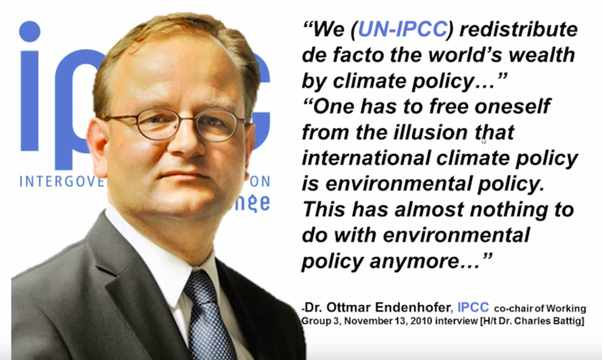
Climate policy has almost nothing to do anymore with environmental protection, says the German economist and IPCC official Ottmar Edenhofer.

This is what this is all about. There is no other motive. You may dispense with your worries here if you are worried for the world environment. But I will now switch to the facts and reality on the ground. Remember this alone should pretty much put an end to your worries. You are facing a very large deliberate well funded and most professionally constructed set of lies and propaganda designed to get you scared like you are. This is 5th generational warfare. It is not anything you are used to thinking about. That is why it is effective.

What are the climate facts on the ground?

The fact on the ground are that if the changes you are supposing to see are real they should be obvious. They should be something you can see, feel, hear and touch. That is where we are going right now!

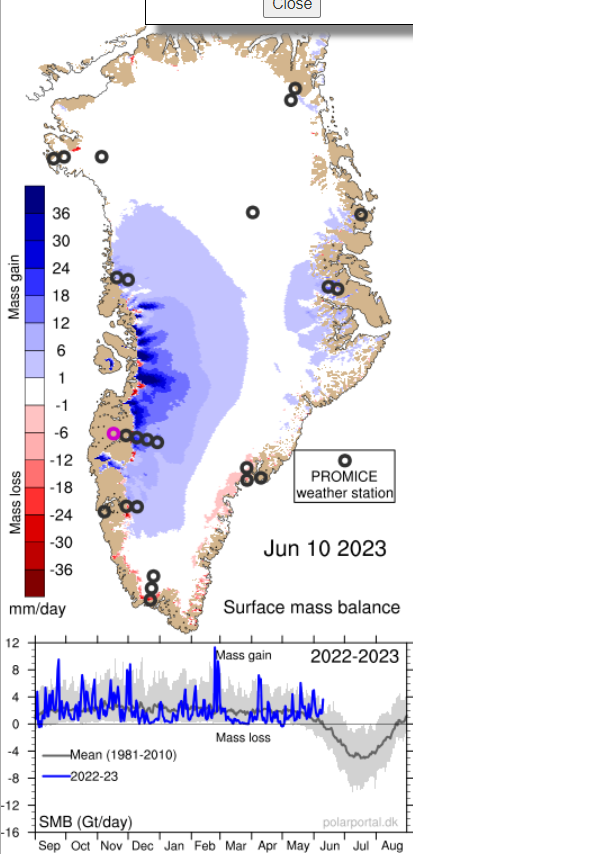
If the world is warming up the paleo-climate data says that the polar regions warm first. That is what you are being told about arctic ice melting and sea level raise. If you go to the Denmark Polar Portal on the web you can get the data.

Greenland Ice Sheet is not Melting Away

Because these people have to comply with the IPCC they put in all kinds of disclaimers trying to keep you scared of melt down etc.. The reality is we are solidly into the melt season and the ice is not melting down more than usual.

Arctic Sea Ice Is Not Going Away

The polar ice is at normal levels. I can go on and on here but the reality is that there is no emergency.

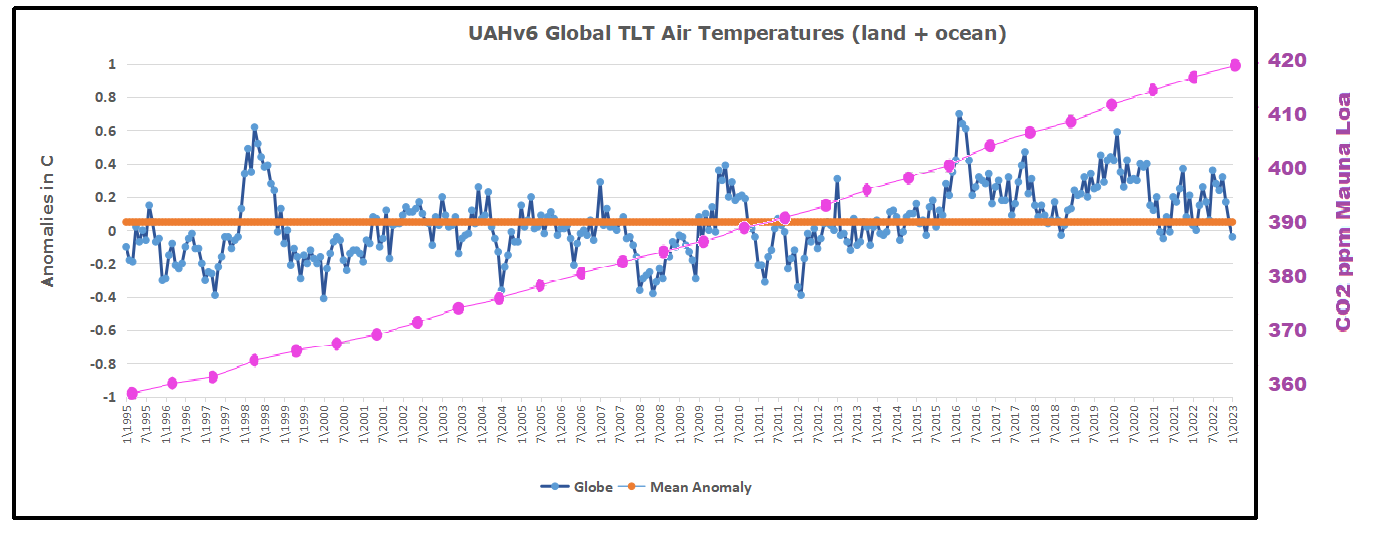
Global Warming is Not Accumulating

The data from UAH which is technical showed from January 1995 to January 2023 the global temperature did not increase at all.  And from 2016 actually went down (-0.7C) . That isn’t some melting or Global Warming or some Climate Catastrophe. It just is not.

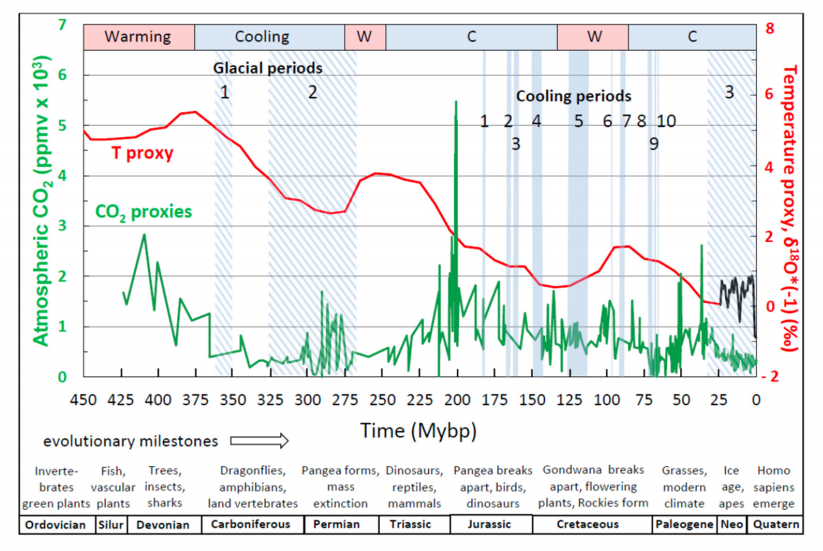
CO2 Is Rising But Far Below Its Optimum

Is CO2 rising it sure is and it isn’t even to the maximum level that occurred in the last maximum in the last interglacial period of earth. CO2 is not 1% it is 0.042%. The earth has thrived with maximum life at 1% CO2 there are no melt down periods.

Is the climate variable, You bet it is. We have seen in the last 2000 years it go up and down in temperature and we are actually near the bottom of that period. The reality is that we have been up to 10C warmer and guess what that time mankind did his very best. We don’t thrive on cold.

Warming Has Been Beneficial and More Would be a Good Thing

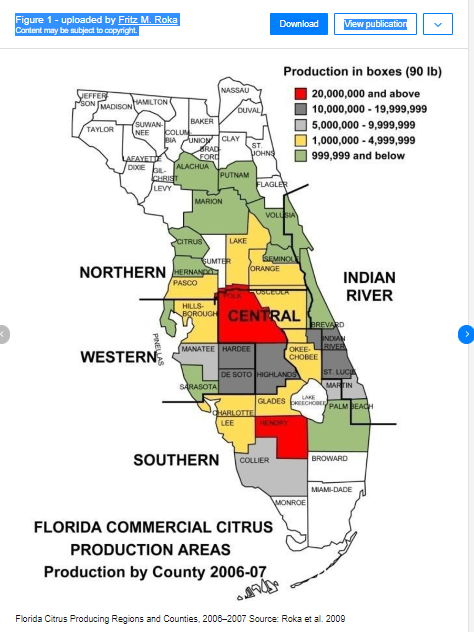
Now let’s look at the trends and in a way you never imagined. I have looked into this matter because Alabama where I live has a cute lovely vacation town called Orange Beach. I highly recommend Orange Beach for a vacation it is beautiful. Orange Beach was named in 1898 when the US Post Office (Now the USPS) opened a new post office there. The unincorporated town’s principal business was raising oranges commercially. Alabama used to raise oranges up to about Evergreen Alabama or almost to Montgomery Alabama the state capitol.

 Production of Oranges Limited by Freezing Temperatures in SE US

No commercial orange production exists in Alabama at this time. The reason is simple. The growing season in Orange Beach Alabama went from 365 days a year to 268 days a year. The orange trees froze out. Now they have new varieties that can grow in the colder weather but even they are severely limited in Alabama. The orange trees have frozen out almost to Orlando Florida now.

Orange beach would be right next to North Florida along the Gulf of Mexico. Literally Florida is just across the Perdido River from Orange Beach.

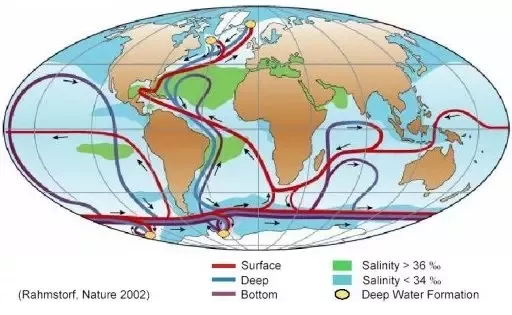
The Gulf Stream Makes Climate Change in the North Atlantic

The reality is the climate from 1898 to the present has gotten colder in the USA. This is significant to the whole earth for a very important reason.

You see the heat from the whole earth gets aimed directly at Alabama! We cool down so is the rest of the world. The whole circulation for the whole earth focuses on the Gulf of Mexico and Alabama.

This by the way is why Greenland has so much ice. You see it is the warm water from the Gulf Stream that generates the steam that freezes and comes down as snow. You have to make the steam to make the ice.

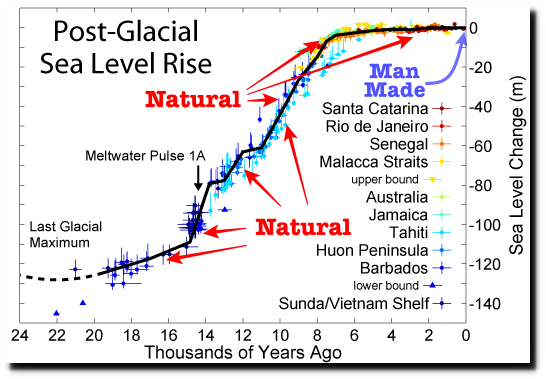
Sea Level Depends on Land Buoyancy, not CO2

Now on to sea level rise. First of all if you believe that the sea level is rising and such it is only reported to be rising in the order of the thickness of 2 US 5 Cent coins per year. So if you believe it is happening it is no emergency and no real problem. It isn’t worthy of losing sleep over. The stories of melting sea ice are silly. First of all even if they melt they will have absolutely no effect on the sea level because they are floating. But there is another thing these people don’t tell you about.

The sea level is not the product of the amount of water in the ocean. It is in fact the product of a large sum of buoyancy issues and the gravity of the earth. The continents are where they are because they have less gravity than the other areas. The seafloor is a zone of higher gravity. Because the continents are floating that means that their level above the sea is determined by the laws of buoyancy. If Greenland were to melt off, the resulting reality would cause the area to buoy up because it would weigh less. At the same time the water added to the oceans would simply sink the sea floor deeper.

Continents Can Sink to Form New Seas

But to illustrate this you must learn about the Great Rift Valley of Africa. That valley is a place where the base continental rocks have spread apart. The land is sinking there and has already sunk to form the Red Sea! A new ocean is forming in Africa. This is what has sunk the continental shelves of the continents. The edge of the continents tinned out and lost the thick granite below that floats on the magma and they sunk. So sea level is not in any way related to ice melting. Sea level is related to this continental buoyancy issue. So nothing in their story not melting ice nor rising seas is happening. But I will show you this in pictures because we have these now.

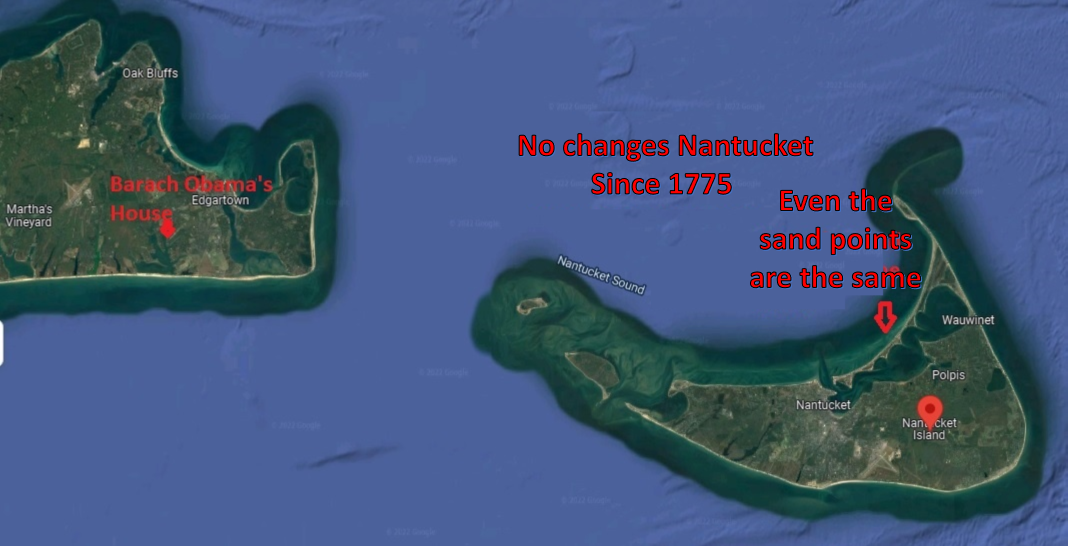
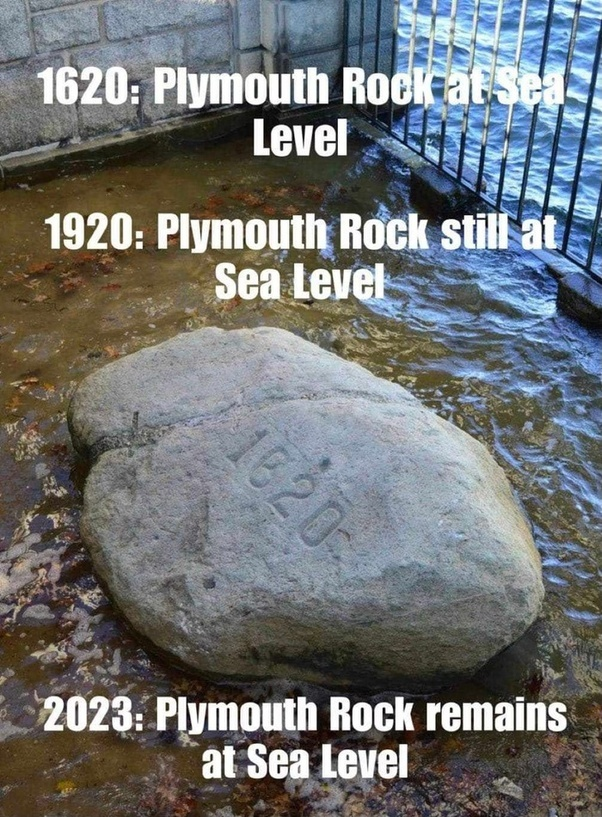
Many Coastlines Show Water Receding Rather than Rising

Tell me if you see any sea level rise in the past 246 years now. (None!)

[Since we are looking in New England:]

This is just about due south of London–Pevensey Castle.

It was started construction in about 203 AD. It was built right on the sea on a coastal island. Such a fort only has value as far as an archer can shoot an arrow. It guarded the entrance to Pevensey Bay. The bay doesn’t exist it is nearly 30 meters above sea level now. Lots of people just refuse to see them. The fort itself is 110 feet above sea level and 5/8 mile from the sea.

If it isn’t clear yet that you have been hoaxed into a panic I don’t know what I can do. I have shown you that it got colder not warmer. That the ice is not melting. That the seas are not rising. Shall I go on?

CO2 Is Plant Food not a Pollutant

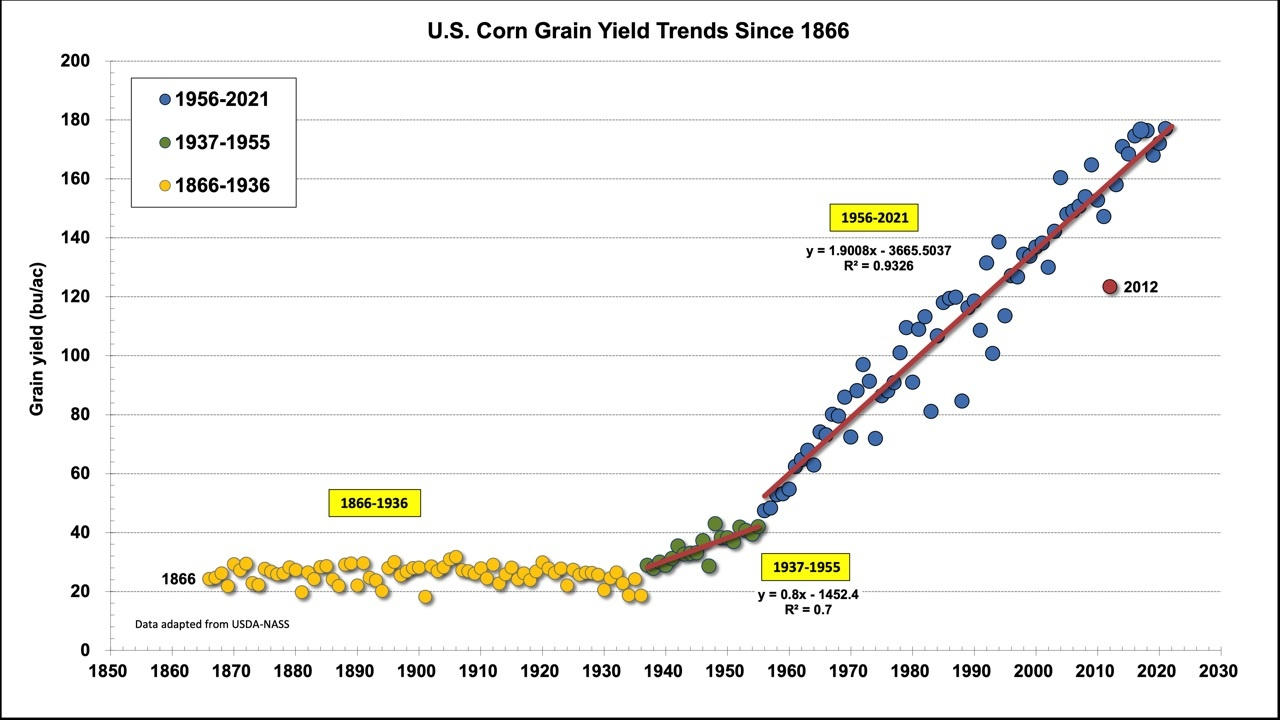
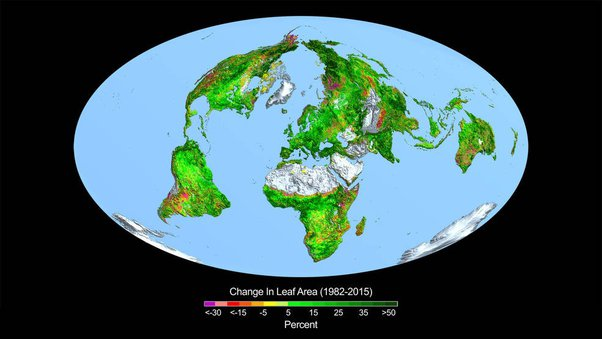
How about the real truth of CO2 and what it is doing on our earth. Look at these pictures carefully they tell the truth beyond any possible doubt.

C3 photosynthesis plants are growing 800% better than they were. Our C4 plants are doing 650% better.

The whole earth is growing better and the forests are growing because of CO2. Sorry this isn’t a “doom and gloom” story here.

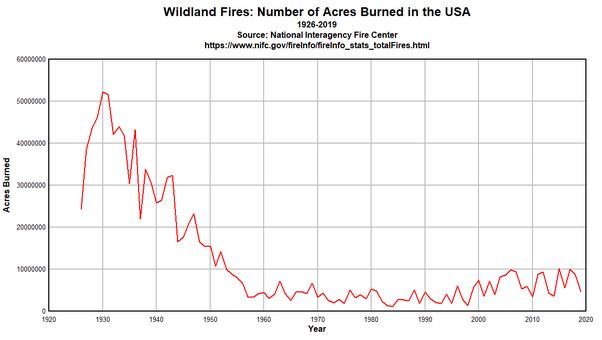
Wild fires are down too!

The fact is that in 1960 the world was running out of food because our plants and farms were at their limits. Today we are run over with food and 45% of our crop land has been turned back to the forests. We are not at the limits. This has led to an explosion of wildlife too!

Life is Thriving Not Facing Extinction

There literally is no mass extinction going on. We are in the largest bloom of life on earth that has been seen in the past 10,000 years.

The human race is on the edge of unlimited energy, unlimited food, unlimited technology and we are sitting here in terror of some imaginary doom and gloom hating the very system that is feeding mankind and building him up.

Everything is quite literally the opposite of what you are told!

In Sum;

The only catastrophe would be ill-advised climate policies willfully destroying
our energy platform and economic supply processes out of irrational CO2 hysteria.

via Science Matters

https://ift.tt/oyNKDuh

May 21, 2025 at 03:17PM