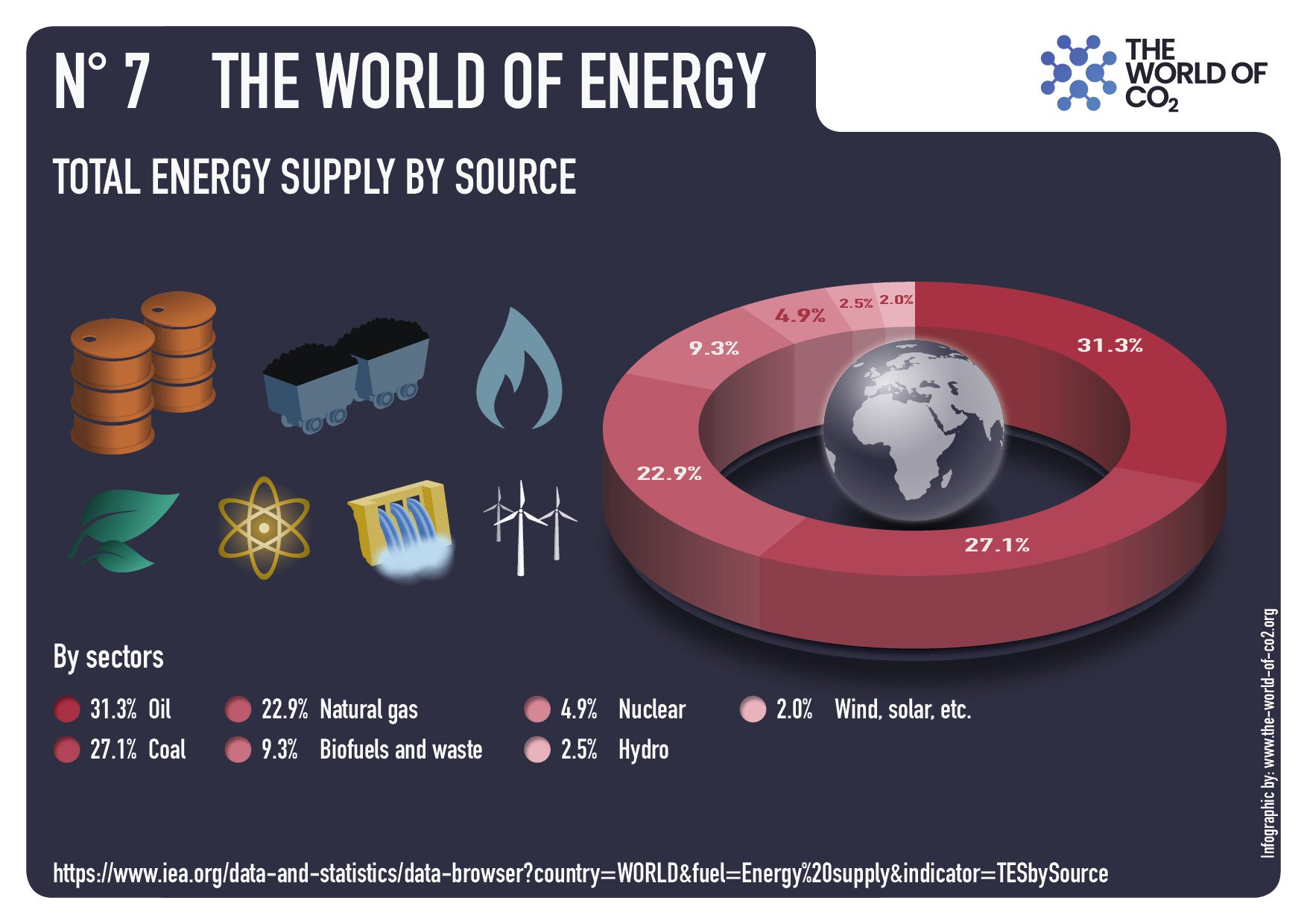
Steve Milloy puts things in context in his Daily Caller article ‘All Of The Above’ Is DEI For Energy. Excerpts in italics with my bolds and added images.
The Restoring Energy Dominance (RED) Coalition recently produced an ad advocating for “all forms of energy.” “You voted for it, you got it,” the ad starts. It features a clip of President Trump saying “All forms of energy, yep…” What exactly does “all forms of energy,” or its 21st century shorthand, “all of the above” really mean? Is it good policy” And, is President Trump for it?
The concept of ‘all of the above’ dates back to a mid-2000s convergence of energy-related events including: (1) the then emerging but imaginary “climate crisis” and (2) an actual energy crisis caused by a combination of factors including the Iraq war, US dependence on OPEC, the rise of energy-hungry China and India, the notion of Peak Oil and more. Congress’s solution to this was the Energy Policy Act of 2005 signed into law by President Bush. It called for expanding domestic energy production, including: oil, natural gas, coal, nuclear, and renewables. “All of the above” wasn’t in common usage at the time, but the law essentially embodied it.

“All of the above” subsequently came into more common use, albeit with different variations, during President Obama’s “war on coal” and his embrace of Executive action to cut emissions because of “climate change.” For President Obama, “all of the above” meant all forms of energy except for coal, which he tried to regulate into extinction. To counter Obama, the coal industry and its Republican supporters used “all of the above” as a desperate means of including coal in the US energy equation.
But the tables have now turned. President Trump supports:
the booming oil and gas industry;
the now-crippled coal industry;
the flailing nuclear industry, and
solar power.
He campaigned and has repeatedly spoken against the onshore and offshore wind industry. He has also issued an executive order to review offshore wind projects and has, thus far, paused one specific project. It is now the wind industry’s turn to scream “all of the above” in hopes of remaining part of the US energy equation.
President Trump also campaigned and has taken executive action against what he often calls the “Green New Scam,” which means the climate spending and energy subsidies contained in President Biden’s 2022 Inflation Reduction Act. Opponents of the Green New Scam hope to repeal the subsidies in President Trump’s upcoming Big Beautiful Bill.
The RED Coalition ad would take us back to the days of the Energy Policy Act and its focus on producing domestic energy from all sources. While that may sound reasonable, it ignores the realities we’ve experienced and lessons we’ve learned over the past 20 years.

First, Energy Policy Act proponents did not foresee the late-2000s advent and impact of fracking for oil and gas. Whereas in 2005 we were dependent on imports of natural gas and were running out of cheap oil production options, fracking changed the global energy situation almost overnight. Fracking gave the US essentially a limitless supply of oil and gas. That has essentially crushed OPEC’s ability to control the global price of oil. Thanks to fracking, we probably have enough oil and gas to run the entire US economy without any other form of energy.
Second, we have been told for decades that wind and solar were cheaper than fossil fuels and were a solution to the alleged “climate crisis.” Both claims have been proven to be false. Wind and solar have not reduced the price of electricity for anyone. At best, they have only reallocated energy costs to taxpayers. Wind and solar have only increased the price of electricity for consumers, even when it is subsidized by taxpayers.

Worse, solar and wind have jeopardized the reliability of our grid. Grid operators now routinely warn of possible grid failure during peak demand. A February winter storm in Texas froze the wind turbines, resulting in hundreds of deaths and almost causing catastrophic grid failure. Too much solar and wind caused a similar grid crisis in Spain and Portugal just last month.

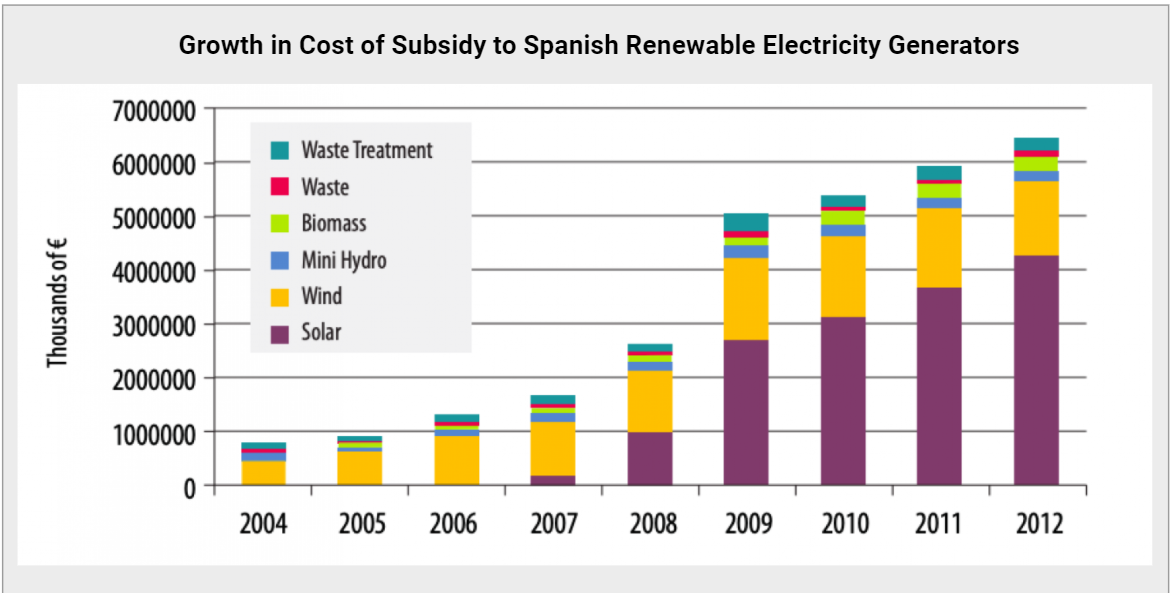
Wind and solar have never been economically viable without subsidies. That’s why wind and solar supporters oppose the end of the Green New Scam. Not only do wind and solar require taxpayer subsidies, they are also intrinsically subsidized by government mandates, and the sourcing of materials and labor from Communist China. This has also had the national security-imperiling effect of making our electricity grid dependent on our geopolitical rival.
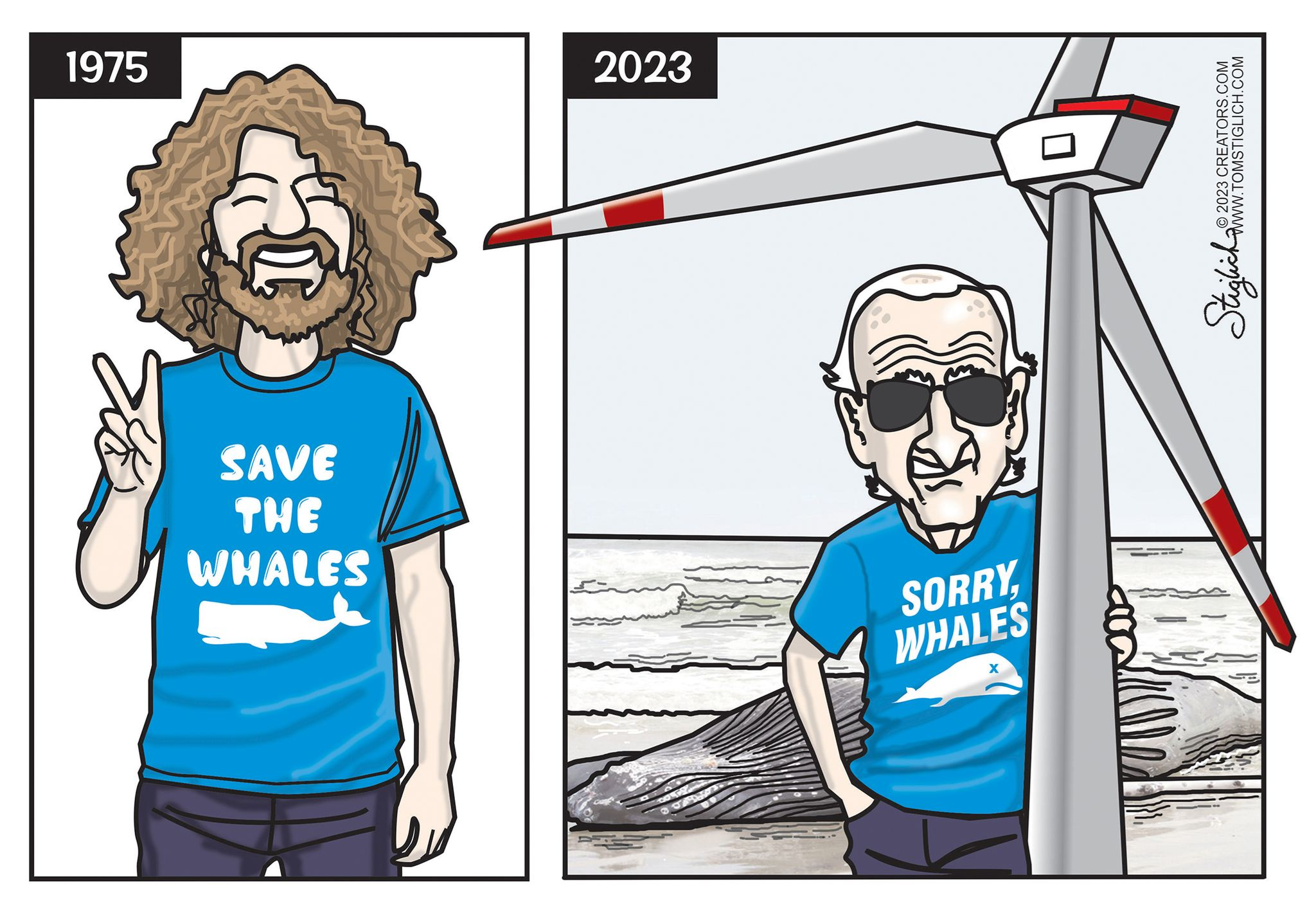
Finally, wind and solar have also been an environmental disaster in terms of great birds, bats, whales and much other marine life killed. Their oversized footprints are made essentially a permanent part of the environment because of the vast amounts of concrete and iron rebar used in their foundations. There are also national security concerns with offshore wind.
We need energy that works. After 20 years of experience,
“all of the above” is just affirmative action for wind and solar energy.
If energy decisions were made on the basis of standard economic merit, like cost and functionality, then oil, gas, coal and nuclear power would win hands down. President Trump occasionally says kind things about solar, but not about wind. He saves his lavish praise and attention for those most deserving: oil, gas and coal.

W. J. Lee expands on this topic in his AMAC article Spain’s Green Energy Blackout Proves Trump is Right about Energy. Excerpts in italics with my bolds and added images.
Last week’s sweeping blackouts across Spain and Portugal
delivered a stark reminder: energy policy rooted in ideology,
not engineering, has real-world consequences.
Days before the lights went out, Spanish leadership celebrated their power grid’s high reliance on renewables. But when solar and wind faltered—as all intermittent sources eventually do—the system buckled. Their mistake should give Americans added confidence that President Donald Trump’s all-of-the-above energy vision will lead to American energy dominance and dependability.
As large swaths of the Iberian Peninsula went dark, Europe came face-to-face with the instability that results from over-reliance on wind and solar power. The irony? This chaos unfolded on a sunny, wind-swept day—exactly the kind of day when renewables are supposed to dominate.
At the heart of the disruption was a grid built not on resilience, but on fashionable climate politics. Spain’s grid operator reported that just before the outage, solar power provided nearly 60 percent of the country’s electricity. Wind contributed another 9 percent. Together, these intermittent sources accounted for over two-thirds of supply—and when the system folded, it did so calamitously.
Spanish Prime Minister Pedro Sánchez stubbornly holds to the belief that the country’s high reliance on renewable energy had nothing to do with the extensive blackout, but several experts disagree. Leading former International Energy Agency board member Jorge Sanz told the press that the grid did not have enough support from nuclear and fossil fuel power plants to fill in when a sudden drop in power occurred from solar and wind power plants.
André Merlin, a former executive of France’s power grid, warned Europe against following Spain. “We need to be careful about the policy of maximum development and maximum use of intermittent renewable energy to the detriment of more conventional means,” he said.
It’s no coincidence that President Trump’s all-of-the-above energy policy—embracing fossil fuels, nuclear, renewables, and hydro—is giving the economy supreme confidence in our energy future. By diversifying America’s energy mix instead of putting all our eggs in the wind-and-solar basket, Trump ensures stability, affordability, and national security.

In contrast, the European Union is marching toward a self-defeating future where 69 percent of electricity must come from renewables by 2030, regardless of the consequences. Technocrats in Brussels may pat themselves on the back, but grid operators are still scrambling to solve basic technical challenges—like how to keep the lights on when clouds roll in or the wind dies.
One of the key technical problems is the loss of grid “inertia”—the momentum in spinning turbines at coal, gas, and nuclear plants that help stabilize voltage and frequency. When a solar farm goes offline, the output vanishes instantly. There’s no cushion, no time to react. This is precisely the kind of fragility President Trump warned about in 2018 when he pushed back on radical energy mandates and shutdowns of baseload power plants.
British energy expert Professor David Brayshaw of the University of Reading, summed it up: future blackouts will likely become “more significant and widespread” as renewables dominate the grid. Europe is learning that the hard way. Meanwhile, American energy independence—secured under Trump through expanded oil and gas production—offers the flexibility and robustness that Europe sorely lacks.
Back in Spain, grid operator Red Eléctrica wouldn’t say for sure what caused the outage, but all eyes turned to solar. The system collapsed in broad daylight, when solar production was at its peak. Two rapid losses of power—just 1.5 seconds apart—threw the grid into chaos and severed Spain’s connection with the wider European system.
And when it came time to reboot the grid, what energy sources did authorities rely on? Not wind. Not solar. It was hydroelectric and natural gas—energy sources vilified by climate activists but proven once again to be essential. President Trump understands this dynamic and refuses to bow to the environmental lobby’s demand for a total shift to intermittent renewables.
His administration is supporting investment in solar and wind
—when and where it makes sense—
but never at the expense of coal, oil, gas, or nuclear.
That balance, that pragmatism, ensures that America stays competitive, keeps utility bills low, and avoids the kind of disaster Europe just experienced. Spain’s blackout was not the result of a freak accident—it was the predictable outcome of an energy policy that treats physics as optional.
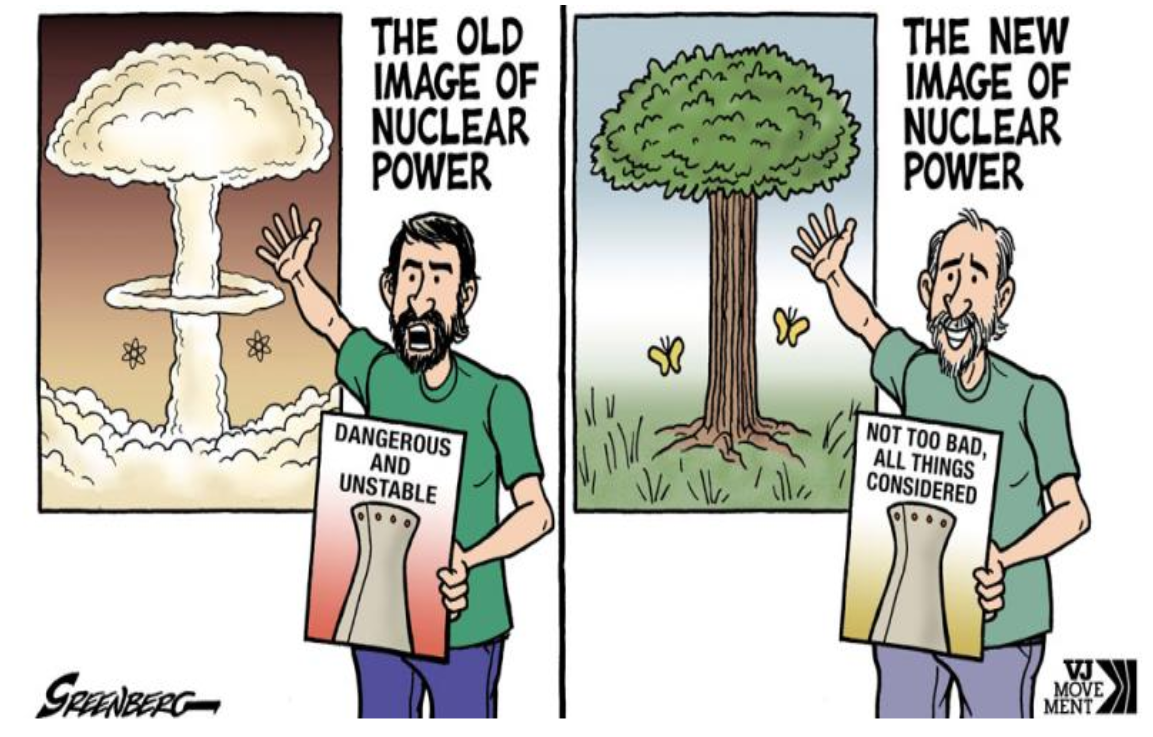
Spain is still moving forward with its plans to shut down its nuclear plants, the most reliable sources of zero-emissions power, and doubling down on wind and solar. That decision defies common sense. Nuclear energy is precisely the kind of carbon-free, high-output technology we should all support—technology that delivers stability and allows us to be good stewards of natural resources.
Europe’s push for a continent-wide “supergrid” is another
green utopian dream not grounded in reality.
The idea is that countries can share power more efficiently—but this past week’s outage rippled through Spain, Portugal, and even parts of France. Interdependence sounds great until a single failure spreads like wildfire.
This blackout should be Europe’s wake-up call. The “transition” they keep touting isn’t a triumph—it’s a gamble, and one that’s starting to cost real people their livelihoods, their travel plans, and their basic security.
Trump will continue to show the world what a sane energy policy looks like: use everything. Don’t demonize fossil fuels that keep the lights on. Don’t shut down nuclear reactors that provide dependable, carbon-free power. Don’t force the economy to depend on whether the sun shines or the wind blows.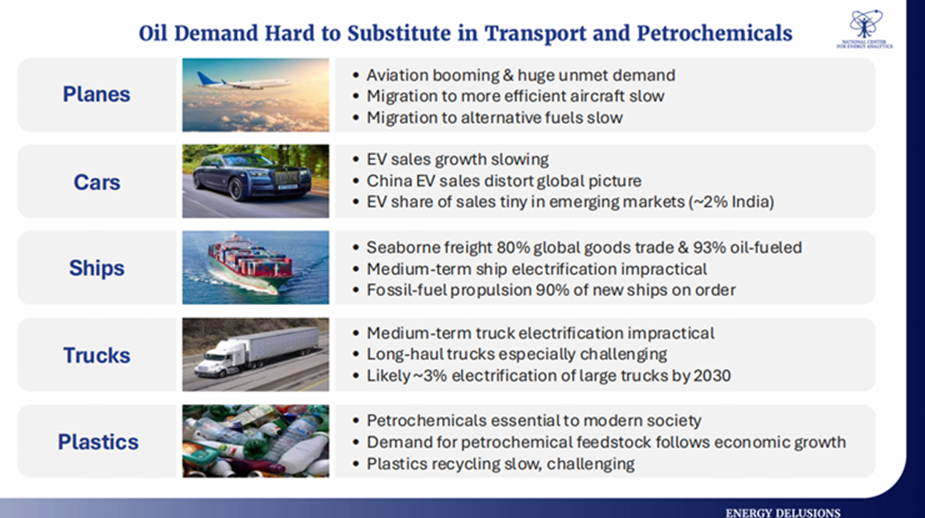
As Spain gropes in the dark for answers, one thing is clear: President
Trump’s all-of-the-above approach isn’t just sensible—it is essential.

via Science Matters
https://ift.tt/K6NMlvW
May 16, 2025 at 10:20AM


