Supreme Court Case Could Spell The End For California’s EV Mandate

From THE DAILY CALLER

Daily Caller News Foundation

Audrey Streb
Contributor

The Supreme Court heard oral arguments Wednesday in a landmark case that could spell the end of California’s Clean Air Act waiver, which created what has been widely referred to as a de facto electric vehicle (EV) mandate in more than a dozen states.

While Diamond Alternative Energy v. Environmental Protection Agency (EPA) does not directly center on the legality of the waiver, the court’s ruling on whether the petitioners have standing in the case could set a “massive” precedent, creating an opportunity for President Donald Trump’s administration to “balance” the emissions standards set by “extreme climate policy,” energy experts told the Daily Caller News Foundation. The elimination of California’s Clean Air Act waiver could lead to greater freedom for consumers and cheaper vehicle prices in the state, the District of Columbia and in the 17 other states that follow aspects of California’s emissions standards, the policy experts said.

“The entire future of the auto industry, and what kinds of automobiles people are allowed to buy, what choices they have … All of that is at stake in this ruling, in this court case,” Myron Ebell, former senior fellow and director for the Center for Energy and Environment at the Competitive Enterprise Institute told the DCNF. “Now we finally are at the point where we can win this debate.”

States are generally held to the EPA’s standard of emissions, though they can choose to follow the more strict California standard instead under the 1970 Clean Air Act. According to the law, only California is allowed to request a waiver from federal vehicle emission standards, permission which was granted to address “extraordinary conditions” in the state, such as poor air quality.

“The Los Angeles Basin has intractable air pollution problems, and it’s not just caused by people,” he said. The Golden State has received several waivers to enforce different emissions standards for vehicles over the years, he noted, as the Los Angeles Basin traps emissions due to its topography. (RELATED: Blue State Democrats Take Another Crack At Putting Gov’t In Driver Seat Of Americans’ Cars)

The case now before the Supreme Court examines whether petitioners, like Diamond Alternative Energy which is a subsidiary of Valero Energy Corporation, have the legal standing to challenge the EPA’s 2022 decision to reinstate California’s waiver for stricter vehicle emissions standards under the Clean Air Act. Under former President Joe Biden, the EPA reinstated the 2013 waiver which the first Trump administration partially withdrew in 2019. The EPA on Feb. 14 announced that it would be “transmitting to Congress the Biden administration’s rules granting waivers that allowed California to preempt federal car and truck standards,” and Republican lawmakers have since sought ways to repeal the state’s ability to create the de facto EV mandate.

A court decision in favor of Diamond Alternative Energy could upend California’s ability to foist its emissions standards on the nation, and would allow other companies that represent key oil and gas producers to challenge the EPA’s other regulatory actions. The petitioners further argue that the California standard pins an unfair burden on fuel producers, which would lose business as a result of regulators’ push for EVs, and that they should have the standing to challenge it in court. A lower court previously ruled that the petitioners lack the standing to challenge the EPA’s waiver grant.

The lawsuit notes that the EPA has granted at least 75 waivers to California under the Clean Air Act since its inception.

“If California gets away with having the waiver, they are in control of our entire automobile transport policy,” Ebell told the DCNF.

California’s Advanced Clean Cars I program, which had its waiver reinstated in 2022, combines several regulations into one package, including zero-emission vehicle regulation and low emission vehicle criteria. The state’s Advanced Clean Cars II program, implemented in 2022  on a separate waiver, builds on this, mandating that all new cars, trucks and SUVs sold in the state — and any other state that adopts the California standard — be zero-emission by 2035.

To date, 17 states and the District of Columbia have adopted all or part of California’s emissions standards as allowed under a section in the Clean Air Act, according to the California Air Resources Board.

Under the emission standards, manufacturers are required to produce a greater amount of EVs and hybrids, or they must purchase “credits” from another auto manufacturer.

“Manufacturers are required to produce a number of [zero-emissions vehicles] ZEVs and plug-in hybrids each year, based on the total number of cars sold in California by the manufacturer,” California Air Resources Board explains. “Manufacturers with higher overall sales of all vehicles are required to make more ZEVs. Requirements are in terms of percent credits, ranging from 4.5% in 2018 to 22% by 2025.”

“The founding fathers would be rolling over in their grave if they ever thought the government would be in the business of dictating the type of transportation that Americans can choose,” Tom Pyle, president of the Institute for Energy Research (IER) told the DCNF. “The public is behind President Trump and the effort to preserve our ability to choose the types of cars that best suit our needs as consumers,” Pyle said.

Trump has been an outspoken critic of the previous administration’s push to produce more EVs as nationwide interest in the vehicles waned.

“I don’t believe that it was fair for the lower courts to argue that the plaintiffs didn’t have standing because their product is going to be severely impacted by the EV mandate because you don’t put gasoline in an EV, right?” Pyle continued.

He added that if the court does not rule in favor of Diamond Alternative Energy, the waiver can eventually “still be undone through regulatory review, but both the courts and the Trump administration’s review process will take a bit longer.” Pyle noted that the “shortest path” would be through the Congressional Review Act. (RELATED: Senate Republicans Move To Nuke California EV Mandate Despite Procedural Hurdle)

“There is a ton at stake,” Amy Gunasekara, author and former EPA Chief of Staff under the first Trump administration, told the DCNF. “This would be the first time that an administration that has been very scrutinous of this waiver authority in the past that would also be calling the shots from the Department of Justice legal strategy perspective.”

This ruling will determine who has the authority to file lawsuits against the Clean Air Act waiver, which is “one of the biggest barriers” when it comes to this issue, Gunasekara said. “It would be huge if the Supreme Court finds that these parties do, in fact, have standing to challenge the California waiver,” she continued.

“The merits have never actually been challenged in the courts, and that’s because the parties bringing the suit haven’t gotten a standing test,” Gunasekara said.

Vehicles in states that have adopted the more strict emissions standards are “ultimately subsidizing California’s decision” Gunasekara added.

Ebell also noted that the higher emission standards lead to limited choice for consumers when it comes to selecting a new vehicle, calling it a “naive belief” that the government can “order automobile manufacturers to design more efficient engines and cars that get better mileage without increasing the price or lowering the performance of the engine.”

Manufacturers have the “cloud of California hanging over them,” Gunasekara also said, adding that most regulatory attorneys would recommend auto companies take the “most risk averse approach,” which is to comply with the California standard. This means that car manufacturers must build pricier cars — like electric vehicles or hybrids — or buy special zero emissions credits to make up for not meeting the strict California emissions rules. “The ultimate loser here is the consumer,” she said.

Valero Energy Corporation, the EPA and the City of Los Angeles did not respond to the DCNF’s request for comment.

All content created by the Daily Caller News Foundation, an independent and nonpartisan newswire service, is available without charge to any legitimate news publisher that can provide a large audience. All republished articles must include our logo, our reporter’s byline and their DCNF affiliation. For any questions about our guidelines or partnering with us, please contact licensing@dailycallernewsfoundation.org.


Discover more from Watts Up With That?

Subscribe to get the latest posts sent to your email.

via Watts Up With That?

https://ift.tt/GpPInfl

April 25, 2025 at 08:02PM

When the Labor Party talk about “The Science” the Opposition can easily outflank and outgun them with bigger, better science

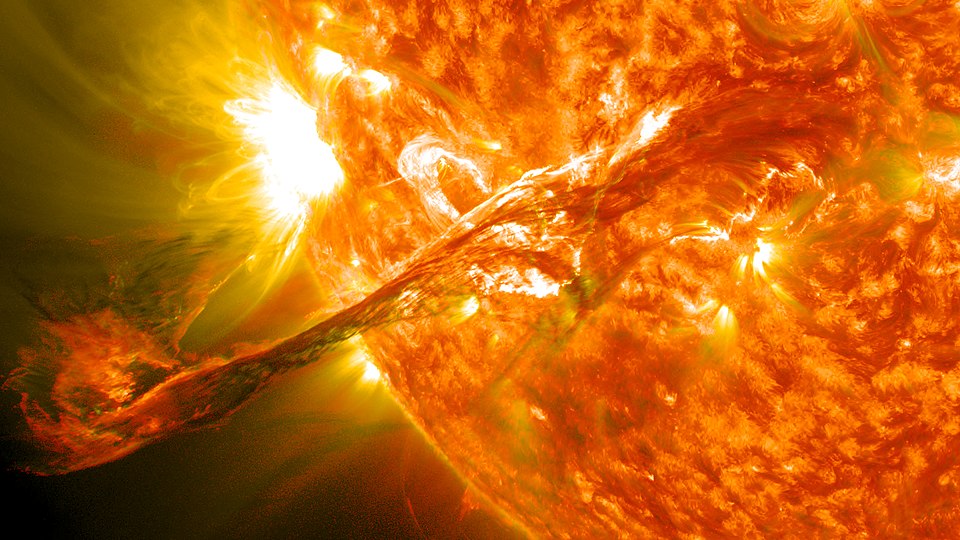
Coronal Mass Ejection, The Sun.

By Jo Nova

The Blob sets “The Science Trap” — conservative politician get caught every time

The Bureaucratic Blob Team brag about following “The Science” but the truth is, they fund only the questions they want answered, they sack the scientists who disagree, then they call everyone names who thinks differently. They’re not open to debate or ideas, they rule through ostracism and cancel culture — demanding people believe “The Science” — and mocking them as simpletons if they don’t —  it’s like a cult or perhaps a kindergarten.

Conservative politicians leave themselves defenseless because for decades they keep funding the same Blob Science Institutions with the same Blob-incentives. When research groups are paid to find a crisis, they’ll keep hunting til they find one.

Last week in the debate, the Australian opposition leader, Peter Dutton said the dreaded line: “I’m not a scientist” and then had to say the next day “I believe in climate change” just to quell the uproar. It was the classic mindless science trap. It’s a hundred agencies paid to speak jargon versus one politician with no tech support.

Imagine if he had said the Coalition is going to fund the science research the Labor Party won’t? None of our climate models can tell us whether next summer will be a BBQ scorcher or a wet blanket. The models are failing because they are missing nearly everything about The Sun. They treat our nearest star like it is a light globe, ignoring the solar magnetic field which is bigger than the solar system, the electric field, the sun spot cycles, and the way sun’s output of UV light changes. Our current best climate models all assume these effects are zero. They assume the solar wind which batters Earth at a million miles an hour has no effect at all. Isn’t it time we set up a dedicated agency to find out what role the sun has?

Don’t we owe it to the koala’s the children and the taxpayer?

We know some factor on the Sun affects ground water recharge rates, streamflow, jet streams, lightning in Japan and even jelly fish plagues. In the 1800s we knew solar cycles affected the price of wheat. Two hundred years later we still don’t know why there are so many links between the solar cycles and our climate. When the sun is quiet, there are more floods in central Europe, the prevailing winds shift in Chile, and winters are warmer in Greenland. All the warming we’ve seen since the Little Ice Age could be entirely due to the increase in solar activity. What if the Sun is causing the warming and we’re spending hundreds of billions trying to reduce CO2 and it’s irrelevant?

Who did that due diligence before we spent half a trillion dollars trying to change the weather?

Why aren’t we investigating The Sun’s role in Climate Change? (Because we’re afraid it’s real?)

Big-Government politicians strangle science. They pour money in to find out “how bad man-made climate change is” but virtually nothing goes into asking how “good” our emission are, nor whether the Sun has the commanding role, and we’re irrelevant. Where is the institution dedicated to finding out how the Sun drives our climate? There isn’t one. There are a few researchers who trip over parts of the puzzle, but there is no independent dedicated agency that exists in order to find reasons that the Sun controls our weather.

Australia needs a dedicated Australian Space-Weather-Climate Institute to investigate the effect of the solar magnetic field, cosmic rays and the changes in solar UV on our climate. It needs to be separate from the other conglomerate behemoths of science, or it just becomes another part of The Blob.

We need competition in science, and a free market, not these centralized Soviet conglomerates of Science like the CSIRO. Once an agency is trapped inside a big organisation, it can’t say something which makes the rest of the organization look silly. Nor could it publish results that showed the rest of the conglomerate group’s work was pointless. Likewise, Australia has an Australian Space Weather Forecasting Centre (ASWFC) but it’s a part of the Bureau of Meteorology. It won’t be competing with the BoM, or pointing out their flaws on the Channel Nine news.

Australia has  RMIT SPACE Research Centre, and the University of Newcastle’s Centre for Space Physics, they are looking at space weather effects on satellites, technology, and advancing the space industry.  The CSIRO Climate Science Centre should be looking at the role of the sun, but the CSIRO is 100% Blob. It has bet its “expert” reputation on CO2, lock, stock and barrel.

We need a free market in science — we need that competition

The incentives for science are screwed. Right now scientists work for Big Government and want to get Bigger Government elected. They don’t serve the people.

In an better world the government would fund both science teams and they’d be criticizing each other in televised debates. The voters could have informed consent…

In an even better world, the voters could vote for their tax dollars to go to particular areas of interest (like say when they fill out their tax return?). That way the scientists would want to serve the public, they’d want to be useful, and they’d be competing with other scientists so they’d speak out when they thought a climate model was useless.

In my favourite world, we’d pay hardly any tax, so we could all afford to donate to the research we liked the most…


Photo: CME on the Sun August 31, 2012.


10 out of 10 based on 1 rating

via JoNova

https://ift.tt/boezTnY

April 25, 2025 at 05:55PM

Early Atlantic Hurricane Season Predictions

News Note by Kip Hansen

The early predictions for this coming 2025 Atlantic Hurricane Season have come out. 

From the group at CSU, we have this:

“Summary

We anticipate that the 2025 Atlantic basin hurricane season will have above-normal activity. Current La Niña conditions are likely to transition to ENSO neutral conditions in the next couple of months; however, there remains considerable uncertainty as to what the phase of ENSO will be this summer and fall. Sea surface temperatures across the eastern and central Atlantic are generally warmer than normal, but not as warm as they were last year at this time. A warmer-than-normal tropical Atlantic combined with likely ENSO neutral (or potential La Niña) conditions typically provides a more conducive dynamic and thermodynamic environment for hurricane formation and intensification. We anticipate an above-average probability for major hurricanes making landfall along the continental United States coastline and in the Caribbean. As with all hurricane seasons, coastal residents are reminded that it only takes one hurricane making landfall to make it an active season. Thorough preparations should be made every season, regardless of predicted activity.”

As usual, the CSU Tropical Cyclones, Radar, Atmospheric Modeling, and Software Team (TC-RAMS), the team built by the late-great Bill Gray, provides their reasoning and basis of their predictions below the summary on the page linked above.   

There is additional data, including deeper historic data, in a StoryMap description of their forecast here: StoryMap

[What’s a StoryMap?  See here.]

Important for hurricane season prediction is the state of El Niño/La Niña – here are the model predictions, provided by Columbia University’s International Research Institute for Climate and Society (IRI):

[Author’s Note:  Predicting ENSO requires models to use non-linear equations, multiple times, in models, which guarantees chaotic results (chaotic as in Chaos studies). What we see above are the results of using the more-or-less the same input data, observations, fed into non-linear models, producing a wide spread of essentially chaotic results, which are then interpreted (the heavy red and green lines) by averaging those results, which by the end of Oct-Nov-Dec 2025,  are spread almost exactly evenly above and below zero.  They call result “ENSO Neutral”]

From CSU’s StoryMap:

 “PROBABILITIES FOR AT LEAST ONE MAJOR (CATEGORY 3-4-5) HURRICANE LANDFALL ON EACH OF THE FOLLOWING COASTAL AREAS:

  1. Entire continental U.S. coastline – 51% (average from 1880–2020 is 43%)
  2. U.S. East Coast Including Florida Peninsula (south and east of Cedar Key, Florida) – 26% (average from 1880–2020 is 21%)
  3. Gulf Coast from the Florida Panhandle (west and north of Cedar Key, Florida) westward to Brownsville – 33% (average from 1880–2020 is 27%)”

Other predictions:

Atmospheric G2 and The Weather Company have their own forecast:

But where do those landfalling hurricanes strike?

Here’s two interesting graphics I stumbled across, showing every U.S.  landfalling hurricane ever recorded, produced by Michael Ferragamo [ story here with the original images ].

[ larger here ]

And just the US portion:

[ larger here ]

There are some interesting blank spots along the Mid-Atlantic Coast including almost all of Virginia, Maryland and Delaware.

And the mainstream media?  What is their response to this rather mundane news?

Here’s the headlines folks:

Yale Climate Connections:

“Forecasters predict another active 2025 Atlantic hurricane season — Colorado State University’s hurricane forecasting team is calling for yet another unusually active season with 17 named storms, nine hurricanes, and four major hurricanes.”

MSN:

Forecasters Warn of Rough 2025 Hurricane Season: ‘Start Preparing Now’

The Cool Down:

Meteorologists share grim forecasts ahead of 2025 hurricane season: ‘Everyone needs to start planning and preparing’

Yahoo! News

Scientists sound the alarm over the looming 2025 hurricane season: ‘An above-average probability’

The Weather Channel

First Major 2025 Hurricane Season Outlook Released: Slightly Above Average Activity Expected The team at Colorado State University said the season will be somewhat more busy than average due to the lack of El Niño.

Only the Weather Channel  makes an attempt to simply deliver the news.  CSU expects the 2025 season to be a tad more busy than “average”, but less active than 2024.

And that’s the news….

# # # # #

Author’s Comment:

It is not unexpected to see even these very early hurricane season predictions leading to a bit of overblown alarm in the press.  I suspect it would be the same regardless of the prediction – even “below average”.

It is de rigueur for all the media reports about hurricanes to point out that no matter what the prediction, your area being hit by a hurricane is a big deal, dangerous, and all should be prepared.  When we were living on our boat in hurricane country, we were always ready to run to a nearby hurricane hole  where we could tough it out in relative safety.

The maps supplied by Michael Ferragamo are fascinating.

Thanks for reading.

# # # # #


Discover more from Watts Up With That?

Subscribe to get the latest posts sent to your email.

via Watts Up With That?

https://ift.tt/W6a9N7B

April 25, 2025 at 04:03PM

Climate Change Ate My Homework

John Ridgway’s article Is 3.0 Really Greater than 0.85 is, of course, worth reading in its own right. As was merited by the subject raised therein, an interesting discussion followed. In one comment, John pointed out the specific absurdity of climate change being shoehorned into a BBC article about the threat of flooding to New York, given that the city is sinking three times faster than the sea level is rising, and he made the point thus:

This narrative that the global warming impact was to blame for the exceptional New York flooding completely fails to mention that the greater problem has been the sinking of the city and the extent to which that has made it more vulnerable to flooding.

This is a common aspect of the narrative these days. It doesn’t seem to matter what the cause of a particular problem, an article appearing on the BBC or Guardian websites will usually add “and climate change”, whilst failing to make explicit the extent to which climate change is having an impact on the problem, and without even attempting to identify the relative impact of other factors compared to climate change. If there’s a problem, then climate change must be part of the mix, and that’s all there is to it.

In another comment, I drew attention to a study reported in Nature last month, which I thought was rather more promising. My take on it was as follows:

It analysed previous papers to ascertain the impact of humanity on nature, and not surprisingly it found that humanity is having a considerable negative impact. However, what interested me is that it sought to analyse the issue by reference to five separate factors, and included a table under the heading “Impacts of human pressures on homogeneity and shifts in composition of biological communities”. OK, so this is only one area, but the key results support the sceptical view that when it comes to humanity’s impact on nature, climate change is probably bottom of the list. In order it found the following numbers of cases under the following headings:

Habitat change: 1,198.

Pollution: 1,197.

Resource exploitation: 521.

Invasive species: 418.

Climate change: 333.

All of which is a rather long-winded introduction to the point I want to make. In essence, this is that the BBC (and others, most obviously the Guardian) publish article after article bemoaning the role of climate change in the decline of nature, and in the decline of bird and insect species in particular, yet once articles address the specifics of the issue, it becomes apparent in almost every case that climate change either isn’t a factor or plays only a very minor part, with the main culprit being habitat loss (or one of the other issues identified in the study published in Nature – pollution; resource exploitation; and invasive species – in that order).

Thus in 2019 the BBC offered us this heading: “Climate change ‘has affected a third of UK bird species’”. In fairness, the report mentioned that there were winners as well as losers, and it did indicate that other factors might be at work, but the headline and the bulk of the story was aimed at bigging-up the climate change factor. For instance we were told:

Dr Bond said caution should be paid between correlation and causation – the bird populations may correlate with climate changes but that does not mean they are solely caused by them.

Changing land use and habitat fragmentation were also mentioned as factors, but no attempt was made to weigh their relative importance, and the message about climate change had to be rammed home:

But he said climate change is “the big one” that needed addressing, although he added we could be in a “palliative care” state now as the “stopping climate change ship has more or less sailed”.

In the following year the BBC treated us to an article explaining how re-wilding “could help protect species in Britain”, but the emphasis remained on climate change:

This is all in an effort to help slow down the effects that it says climate change has had on Britain’s wildlife.

By the way, the words “climate change” contained an embedded link to another BBC article headed “Climate change: What is it and why is everyone talking about it?” [er, maybe because the BBC never stops going on about it?]. The main article carried on in determined fashion:

The study warned that the wildlife in Britain is already at risk and is not ready to try and fight the effects of climate change.

Climate change brings, floods, fires, rising temperatures and droughts, all things that massively impact on wildlife.

So there you have it. Habitat loss is an issue, re-wilding might help, but climate change is the threat. But is it? I idly googled for more recent BBC articles about habitat restoration and its impact on wildlife, and the following is an entirely random selection of what I found.

In August 2021 there was an article headed “Light pollution from street lamps linked to insect loss”. The article did the usual from the BBC, listing different factors (climate change, habitat loss and pesticides) and mentioning climate change first, but crucially, it said this:

Modern LED streetlights appeared to have the biggest impact.

That is the biggest impact in terms of artificial lights, not of the different factors mentioned. But still, it constitutes recognition that other factors are at play:

The researchers say their study, published in Science Advances, is the strongest evidence yet that light pollution can have detrimental impacts on local insect populations, with consequences for the birds and other wildlife that rely on caterpillars for food.

Then, in March 2022 an article about bitterns appeared: “RSPB: Bitterns make booming recovery in UK wetlands”.

Britain’s loudest bird, the “booming” bittern, is making a recovery after almost disappearing from the UK twice.

The RSPB reported the birds had had a “record-breaking year” in 2021, with 228 males counted, up from 209 in 2019.

Ornithologist Dr Alex Lees described it as a “spectacular conservation success story” thanks to the restoration of wetland habitats.

“It shows that conservation does work,” the Manchester Metropolitan scientist told BBC News…

…systematic restoration and re-creation of wetlands over recent decades has allowed their numbers to more than double in the past 10 years…

It’s evident from the article that climate change is irrelevant to the story of the bittern, but the BBC still had to find an angle:

Wetlands also play a role in flood protection and combatting climate change, by locking away carbon-rich plant matter in their mud.

In February 2023 there was another success story, titled “Cranes: Survey reveals UK’s tallest bird is making wetland comeback”.

The birds are making a comeback thanks to restoration and protection of their wetland habitats.

Neither their initial demise nor their subsequent recovery appears to have anything to do with climate change, yet the obligatory obeisance before climate change still makes an appearance:

Wetlands help lock carbon away, reducing green house gas emissions, and can also help to reduce flood risk to homes and communities as well as being wonderful areas for wildlife.

September 2023 saw an article appear about seven bird species:

A rewilding project has led to the return of a number of bird species that are in critical decline…

…Nightingale, greenfinch, grey partridge, marsh tit, skylark, nightjar and tree pipit – all Red List species – have been recorded.

A major part of the scheme has been to “re-naturalise” the River Sherford, creating a wetland which now hosts lapwing, golden plover and common snipe.

Future plans include the introduction of grazing animals to create a mosaic of habitats that will improve biodiversity.

Good news, and nothing to do with climate change. Even the BBC failed to mention it.

In September 2023 we learned that butterfly numbers were up, ironically because of a wetter summer. Climate change wasn’t mentioned, and the key quote was this:

Dr Richard Fox, head of science at Butterfly Conservation, said one of the biggest threats facing butterflies was “habitat loss”.

“Butterflies need a place to live,” he said. “If they can feed, breed and shelter, they can thrive.”

Perhaps not surprisingly, the same month brought an article about moth recovery. The cause? Re-wilding:

A critically-endangered moth indigenous to the east Kent countryside has had a bumper year after its habitat was restored by farmers.

In 1995, the black-veined moth was close to extinction due to the loss of their chalk grassland habitat in the Wye National Nature Reserve…

…This year, surveys counted a peak of 255 moths, the highest number recorded since the project began.

Dan Turson, Natural England’s farm adviser, said: “Farmers are leading nature recovery through long-term one-to-one advice and close working to create new wildflower grasslands at scale.”

He said they were now seeing the results of the farmers’ hard work.

The butterfly recovery continued, as we were told in June 2024, with record numbers of the heath fritillary butterfly – once close to extinction – being counted at a special reserve. They are found only in specialised habitats:

“Colonies of this delicate butterfly occupy sheltered and coppiced woodland in the south-east of England where their larval food plant, common cow-wheat is present,” she said.

“The trust, alongside dedicated volunteers, have been carefully managing ancient woodland to maintain this specialised habitat for over a decade.”

Once more, habitat is key; climate change has nothing to do with it.

July 2024 brought encouraging news about bees: “Rare bumblebee numbers rise after meadows restored”:

Rare bumblebee numbers are rising in Shropshire following a successful project to restore old hay meadows.

The National Trust is leading Stepping Stones, an initiative which aims to reconnect isolated patches of wildlife habitat across the Long Mynd and Stiperstones.

Jinlye Meadows, on the Long Mynd, is now thriving with wildflowers and insects and as a result, the population of bilberry bumblebees has increased.

Restore vital habitat, it seems, and recovery follows. Again, climate change has nothing to do with the issue.

The following month it was the turn of black grouse to bring us some good news. This time the story was in the National:

REWILDING efforts in part of the Scottish Highlands have resulted in local populations of an “amazing species” of endangered bird reaching their highest level for 17 years, conservationists have announced.

Black grouse, which are seen as an important indicator species for ecosystem health, have suffered UK-wide decline over recent decades due to threats such as habitat loss and intensive land management.

Yet again, nothing to do with climate change.

In September of that year the good news was once more about moths, specifically the endangered black-vein moth:

In 1995, the black-veined moth was close to extinction due to the loss of their chalk grassland habitat in the Wye National Nature Reserve….

…Dan Turson, Natural England’s farm adviser, said: “Farmers are leading nature recovery through long-term one-to-one advice and close working to create new wildflower grasslands at scale.”

He said they were now seeing the results of the farmers’ hard work.

In December 2024 it was the turn of reptiles and ground-nesting birds: “Rare heathland species to benefit from restoration”:

Dorset Council is removing hundreds of invasive pine trees from Avon Heath Country Park to help rejuvenate the heathland.

The 210-hectare site is home to all of Britain’s native reptile species, including the elusive smooth snake, along with birds including nightjar and woodlark.

Trees, scrub and other invasive species such as Rhododendron will be removed to help reverse the habitat loss.

After a few reports when climate change didn’t get a mention (because it wasn’t relevant), this time it does – even though it still isn’t relevant to the story:

“…while removing trees during a climate emergency may seem counter-intuitive, heathlands play an important role in tackling climate change too.

“Their soils are excellent at absorbing carbon from our atmosphere and locking it away permanently.”

Finally with regard to this whistle-stop tour, an article appeared on the BBC website last month suggesting that the introduction of ponies to a site will facilitate flower growth, which will in turn help birds. My scepticism about this one is because:

The scheme is being run by Environment Bank, a company which sells parcels of land to developers to offset the environmental impact of their construction projects…

…It is hoped the ponies, which belong to local breeder and vet Michael Dewhurst, will create space for wildflowers and other plant species by grazing and trampling over the land.

It strikes me as rather tenuous and possibly nothing more than green-washing, but if it works, the idea is that the ponies will eat pervasive soft rush which has taken over much of the site, with the result that plant life valued by lapwing, curlew and redshank will return. Whatever the merits of the project, it’s another story about bird populations being linked to habitat loss and/or restoration.

Search the internet and you will find many such stories. Habitat loss is a massive issue, climate change less so. Perhaps, then, it would be a good idea to stop destroying the habitat of birds, insects, reptiles and plants by imposing tens of thousands of acres of solar panels and wind turbines on them. It’s regularly claimed that the climate crisis and the nature crisis go hand in hand, as though they are both caused by the same thing. The reality, I suspect, is that the nature crisis is being – at least in part – caused, and certainly exacerbated, by our crass attempts to deal with a non-existent climate crisis.

via Climate Scepticism

https://ift.tt/0lcZkHK

April 25, 2025 at 03:29PM