The Flawed ICAT Hurricane Loss Dataset: A Call for Scientific Integrity in Climate Research

In a compelling study published in the Journal of Applied Meteorology and Climatology (April 2025), Roger Pielke Jr., previously a professor at the University of Colorado Boulder and now a Senior Fellow at the American Enterprise Institute and professor emeritus, exposes critical flaws in a widely used dataset of U.S. hurricane losses, known as the ICAT dataset. This dataset, originally derived from Pielke’s own peer-reviewed work, was modified without documentation by an insurance company, leading to biased results in peer-reviewed studies and major climate assessments. Pielke’s paper, titled “Do Not Use the ICAT Hurricane Loss ‘Dataset’: An Opportunity for Course Correction in Climate Science,” is a clarion call for the climate science community to uphold rigorous standards and correct these errors.

A fatally flawed time series of U.S. hurricane losses assembled by an insurance company almost a decade ago has found its way into analyses published in the peer-reviewed literature. The flawed time series is based on undocumented modifications to a research-quality dataset that I and my colleagues published almost two decades ago.

Pielke’s study meticulously documents how the ICAT dataset, initially based on his team’s carefully curated hurricane loss data (Pielke et al. 2008; Weinkle et al. 2018), was altered by International Catastrophe Insurance Managers, LLC (ICAT) after a corporate acquisition. These changes, made without transparency or scientific rigor, introduced significant biases, particularly inflating post-1980 loss estimates. The result is a “Frankenstein dataset” that combines incompatible methodologies, rendering it unsuitable for research.

The ICAT dataset’s flaws are not trivial. Pielke demonstrates that it includes 61 additional loss events compared to the Weinkle et al. (2018) dataset, with 53 of these occurring in the latter half of the time series, creating an artificial upward trend in losses. Furthermore, post-1980 data were replaced with estimates from NOAA’s “Billion Dollar Disaster” (BDD) database, which uses a different methodology that inflates losses by including factors like government flood insurance and commodity effects.

The problem with replacing base damages originally from Pielke et al. (2008) with those from NOAA NCEI (and extending the dataset forward using NCEI data to 2017) is that the methodologies used to develop the hurricane loss estimates in each time series are very different. The loss estimates are simply apples and oranges.

This methodological mismatch has led to erroneous conclusions in studies like Willoughby et al. (2024) and Grinsted et al. (2019), which reported increasing trends in normalized hurricane losses and attributed them to climate change. Pielke shows that these trends disappear when the Weinkle et al. (2018) dataset is used instead, underscoring the ICAT dataset’s role in driving misleading results.

The findings of Willoughby et al. (2024) and Grinsted et al. (2019)—of an upward trend in normalized hurricane losses—are due entirely to the use of the flawed ICAT base damage time series and the Frankenstein extensions.

Pielke’s critique extends beyond data quality to the broader implications for climate science. The ICAT dataset’s use in high-profile reports, including the IPCC’s Sixth Assessment Report and the U.S. National Climate Assessment, risks undermining public trust in climate research. He argues that economic loss data, like hurricane damages, should not be used to detect climate trends, as direct meteorological data (e.g., hurricane landfall frequency) are more appropriate. Notably, studies like Klotzbach et al. (2018) and Vecchi et al. (2021) find no upward trend in U.S. hurricane landfalls since 1900, consistent with NOAA and IPCC assessments that refrain from attributing hurricane changes to greenhouse gas emissions.

There is no upward trend in landfall U.S. hurricanes or major hurricanes since 1900, so we should not expect to detect a change in normalized losses resulting from more or more intense landfalls.

Pielke’s paper is a model of scientific self-correction, emphasizing the importance of transparency and accountability. He calls for the retraction of papers relying on the ICAT dataset, arguing that their errors are “so obvious and significant” that they demand action to prevent further misuse. This stance aligns with the National Academy of Sciences’ guidance on ensuring research data integrity.

Science advances knowledge and sustains public trust in part because of the commitment of scientists to self-correction. … The errors are so obvious and significant that editorial boards from JAMC and PNAS should retract both of these papers to prevent the further misuse of a fatally flawed dataset.

This study is a timely reminder of the need for rigorous data provenance in science. By exposing the ICAT dataset’s flaws, Pielke not only protects the integrity of hurricane loss research but also offers a path forward for the scientific community to correct course. His work underscores the importance of grounding science, including “climate” science, in robust, transparent data to ensure that policy and public understanding are based on sound evidence.


Discover more from Watts Up With That?

Subscribe to get the latest posts sent to your email.

via Watts Up With That?

https://ift.tt/STHCZa2

April 25, 2025 at 01:07PM
Watch: Morano on Jesse Watters on blocking the sun with geoengineering

"We spent decades cleaning up our atmosphere, & now they want to inject pollution back into it?!"

via CFACT

https://ift.tt/yfT4N0b

April 25, 2025 at 12:08PM

The Climate Empire Strikes Back – The Climate Realism Show #154

.
The Heartland Institute

While the climate realism movement might feel it has the wind at its back these days, the global climate empire is not going away quietly, or quickly. A new report by the Media Research Center and Bongino Report details just how far and deep the reach of the radical Soros-backed network reaches. The report finds that no fewer than 345 well-funded eco-activist groups push radical environmentalism worldwide. George Soros and his more-radical son Alex have spent more than $600 billion (with a “b”) to exploit fears about climate change to push for more government control over the lives of ordinary people. We will go over this important report.

We will also cover the “Crazy Climate News of the Week” just after Earth Day, including how activists are using AI tools to identify and censor climate realists, UN Secretary-General Antonio Guterres pledging that we must act now to avoid “climate hell,” how the UK government wants to blot out the sun, and how Trump’s State Department has axed the office of “Climate Envoy to the World.”

Join us LIVE at 1 p.m. ET on Friday as Heartland’s Sterling Burnett, Linnea Lueken, and Jim Lakely welcome special guest Tom Nelson — co-founder of Gorilla Science, podcaster, and producer of “Climate: The Movie.”


Discover more from Watts Up With That?

Subscribe to get the latest posts sent to your email.

via Watts Up With That?

https://ift.tt/mdZh59f

April 25, 2025 at 11:32AM

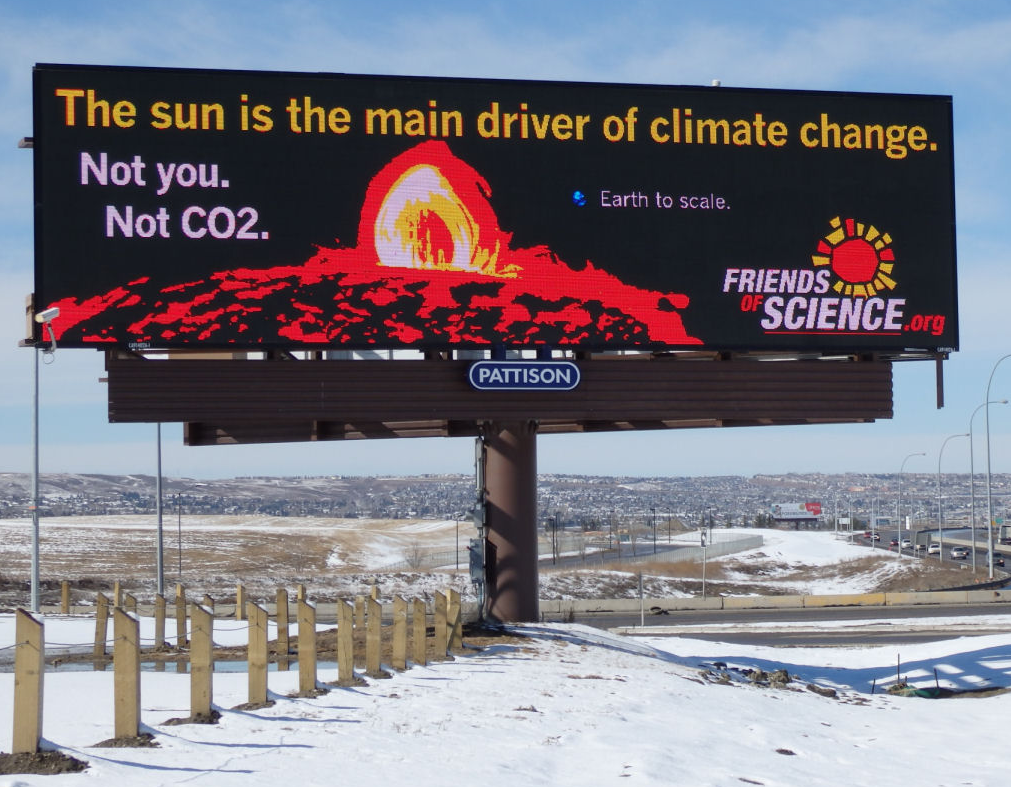
It’s the Sun Warming Us, Dummy

Nir Shaviv makes sense in his Daily Sceptic article Global Warming is Mostly Caused By the Sun, Not Humans, Says Astrophysics Professor.  Excerpts in italics with my bolds and added images.

“There’s no such thing as a scientific consensus,” Nir Shaviv, a Professor at the Racah Institute of Physics at the Hebrew University of Jerusalem says in response to a question about what he thinks of the widespread claim that there is a scientific consensus on the anthropogenic nature of climate change. “In science, we deal with open questions and I think that the question of climate change is an open question. There are a lot of things which many scientists are still arguing about,” he explains.

Indeed, there are scientists who say that climate change is caused entirely by humans and the situation is very dire. But then there are those who say that although humans are causing much of the warming, the situation is not as bad as we are being told by politicians and activists through the media. Some think that CO2 plays an important part in the current warming trend and some believe its role is insignificant.

Although Shaviv assesses that some of the warming in the 20th century is indeed the result of increasing atmospheric CO2 concentrations, most of the change is a natural phenomenon. “My research has led me to strongly believe that based on all the evidence that’s accumulated over the past around 25 years, a large part of the warming is actually not because of humans, but because of the solar effect,” he says.

Up to two-thirds of the warming comes from the Sun

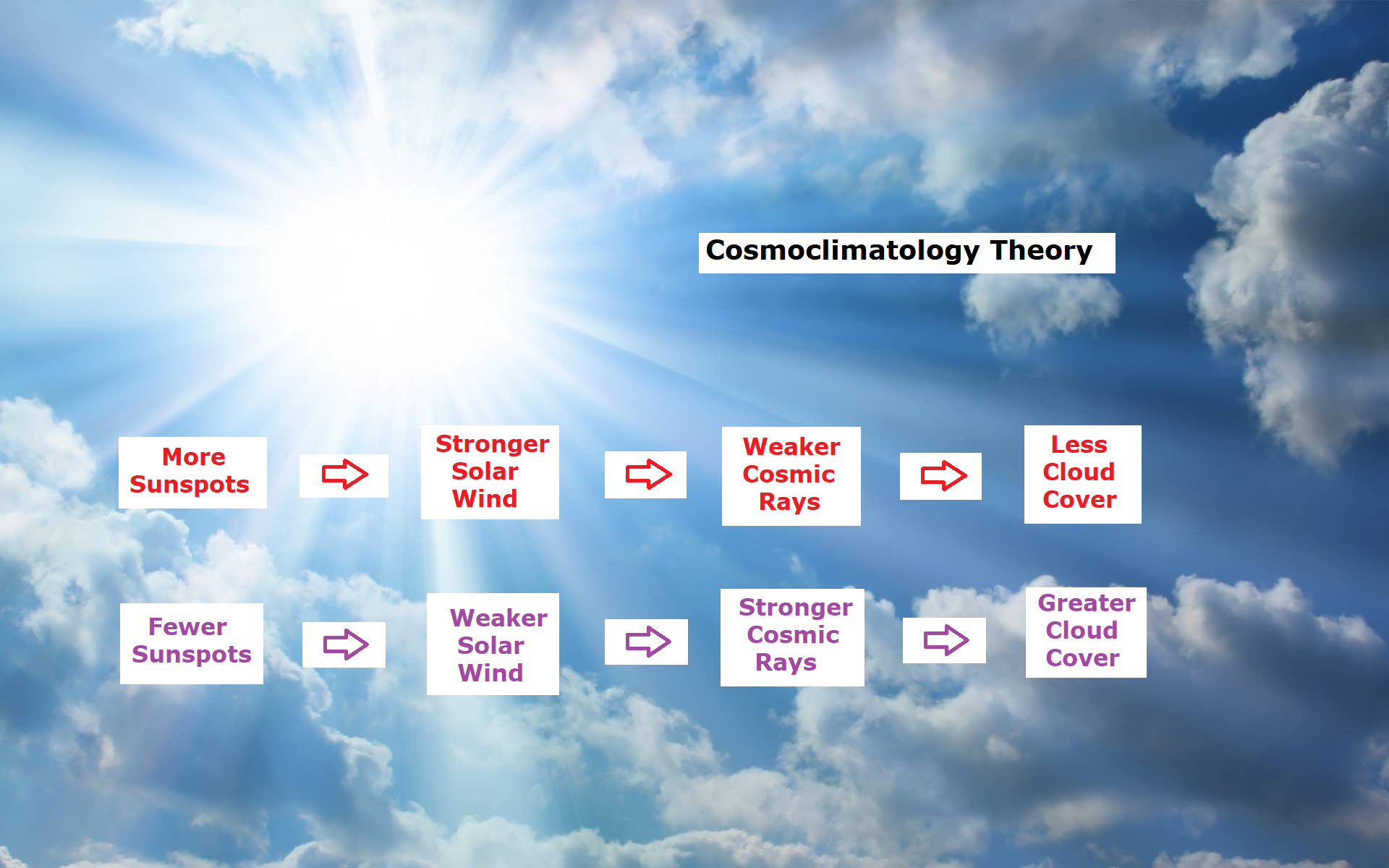
As an astrophysicist, Shaviv’s research has largely focused on understanding how solar activity and the Earth’s climate are linked. In fact, he says, at least half, and possibly two-thirds, of the 20th century’s warming is related to increased solar activity. Shaviv has also shown that cosmic rays and their activity influence cloud cover formation, also causing the climate to change. He has been working on this issue together with Danish astrophysicist Dr Henrik Svensmark.

In any case, Shaviv says, if solar activity and cosmic ray effects are taken into account, the climate sensitivity remains relatively low, or simply put – an increase in the proportion of CO2 in the atmosphere cannot cause much warming. Scientists have long attempted to calculate how much a doubling of atmospheric CO2 would raise the temperature of the Earth. The first attempt was made more than 100 years ago by the Swedish chemist Svante Arrhenius, who suggested an answer of up to six degrees Celsius. Since then, this number has been revised downwards, but not enough, according to Shaviv. “If you open the IPCC [Intergovernmental Panel on Climate Change] reports, then the canonical range is anywhere between one and a half or two, depending on which report you look at, to maybe four and a half degrees increase for CO2 doubling. What I find is that climate sensitivity is somewhere between one and one and a half degree increase per CO2 doubling,” Shaviv says, adding that he does not expect the temperature rise in the 21st century to be very high.

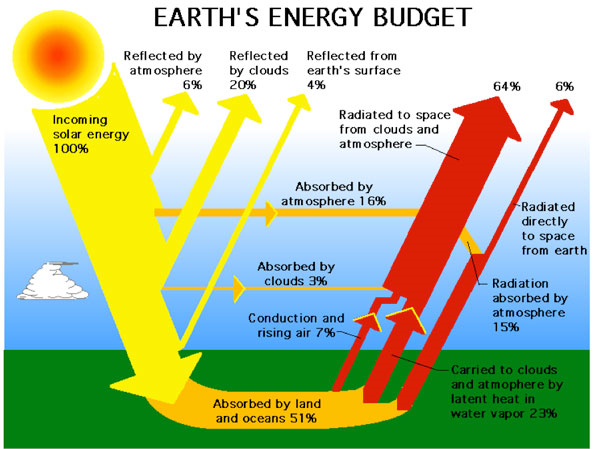
On average, half of sunlight is either absorbed in the atmosphere or reflected before it can be absorbed by the surface land and ocean. Any shift in the reflectivity (albedo) impacts greatly on the solar energy warming the planet.

Explaining the warming that has happened primarily with CO2 is where the IPCC’s scientific reports err, Shaviv says, by failing to account for the solar effect. And because they do not account for it, but there is still a need to explain the temperature rise, the rise in CO2 levels in the atmosphere, which has been attributed to human influences, has been used to explain it. Shaviv explains that this is the wrong answer as it fails to take into account all the contributing factors.

Is the planet boiling?

But is this temperature rise causing a climate crisis? Shaviv’s answer to the question is simple and clear: “No.” He explains that the average temperature on the planet has risen by one degree Celsius since about 1900, but this is not unprecedented. We are familiar, for example, with the Medieval Warm Period, when the Vikings charted the coast of Greenland, including its northern part, which today is covered with ice even in summer. “This kind of climate variation has always happened. Some of the warming now is anthropogenic, but it’s not a crisis in the sense that the temperature is going to increase by five degrees in a century and we’re all doomed. We just have to adapt to changes. Some of them are natural and some are not, but they’re not large,” Shaviv explains.

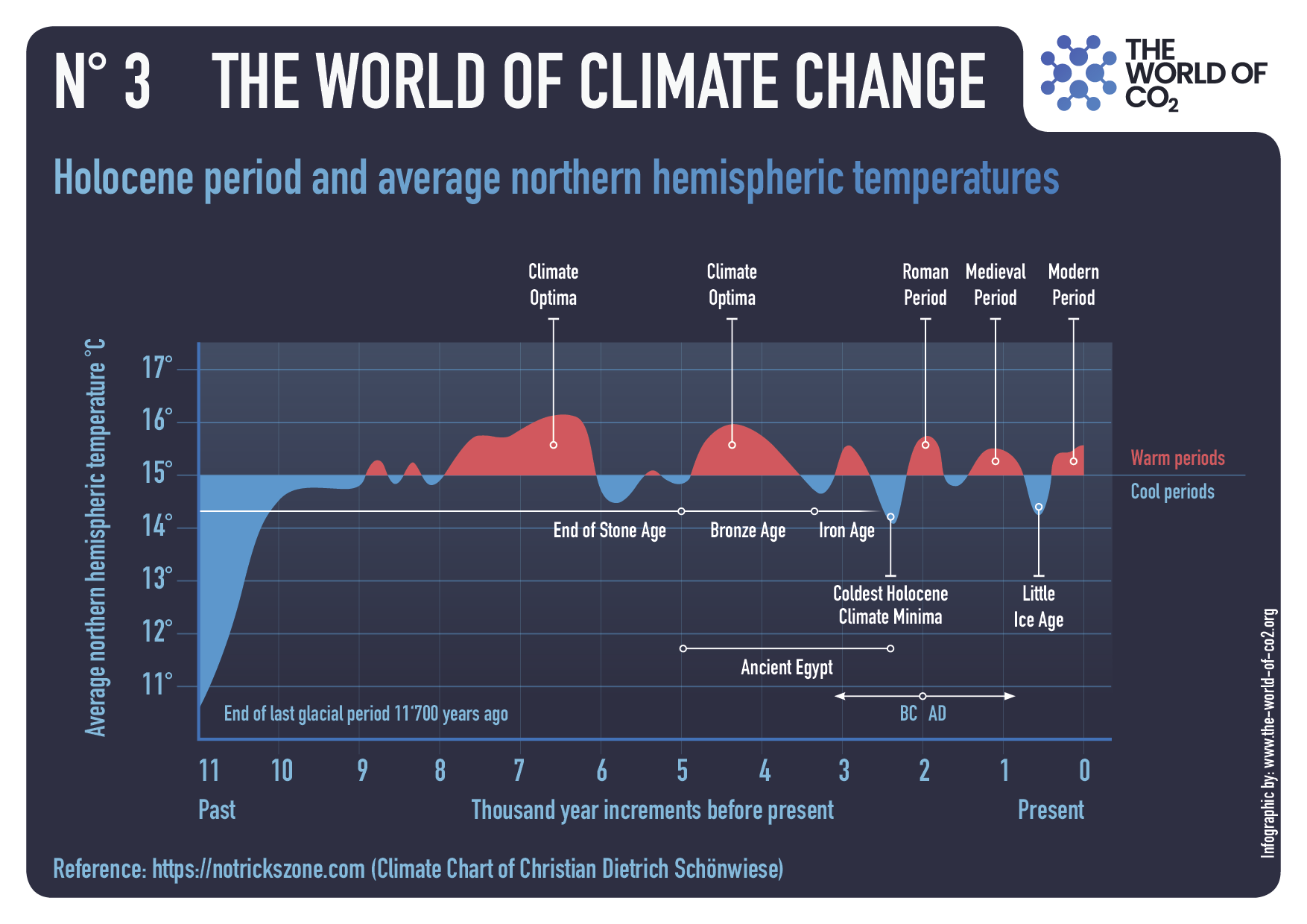
It has been widely reported that both 2023 and 2024 were the warmest years on record. Referring to this rise in temperatures, UN Secretary-General António Guterres already in July 2023 declared that we have entered an “era of global boiling”. Shaviv says that of course, we can have average surface temperatures that are highest if we only look back 100 or 150 years. “If you go back a thousand years it was just as warm. If you go back 5,000 years it was definitely warmer. So, It doesn’t mean much,” he explains.

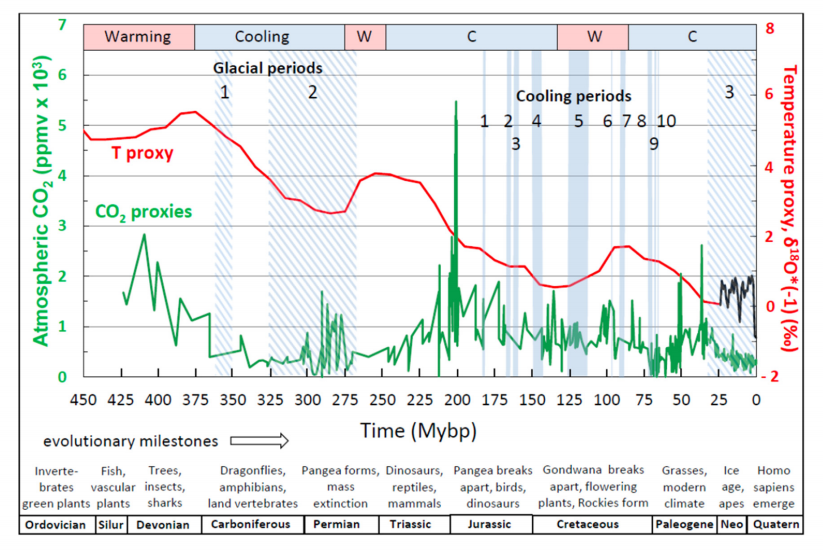
And if you look at a longer time scale, warmer periods have alternated with colder periods throughout. Also, over the last 100,000 years, the Earth has been in an ice age for most of that time, and the retreat of the ice in Europe and North America happened about 12,000 years ago.

Do extreme weather events prove a climate crisis?

However, it is often claimed in the media that we are in an unprecedented and critical climatic situation and all the reported extreme weather events are said to be proving it.

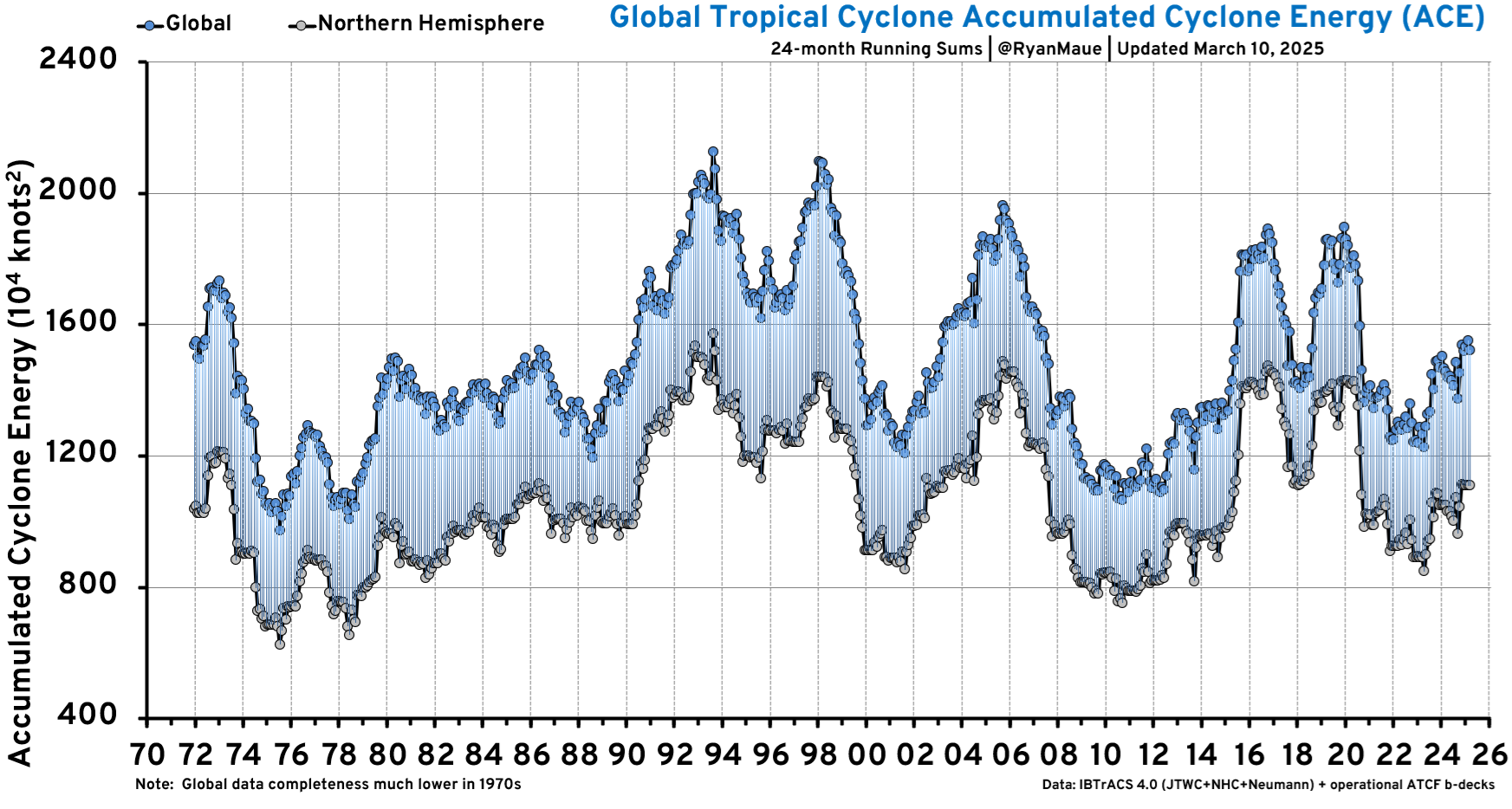
In reality, there is no indication that most extreme weather events are more frequent or in any way more severe than in the past. Take hurricanes, for example. It’s true that the damage they cause has increased over time, but Shaviv says that’s because more people live near the coast. “If you look at the statistics of hurricanes making landfall in the US, which is a relatively reliable record, then you see that there is no significant change,” he says. Shaviv adds that, in reality, there is not even any reason to expect a warming climate to bring more hurricanes. “Sure, you need hotter waters to generate hurricanes, but you also need the gradient, you need the temperature difference between the equator and the subtropics in order to drive the hurricanes. And warmer Earth actually has a smaller temperature difference. So it’s not even clear ab initio whether you’re going to have more hurricanes or less,” Shaviv explains.

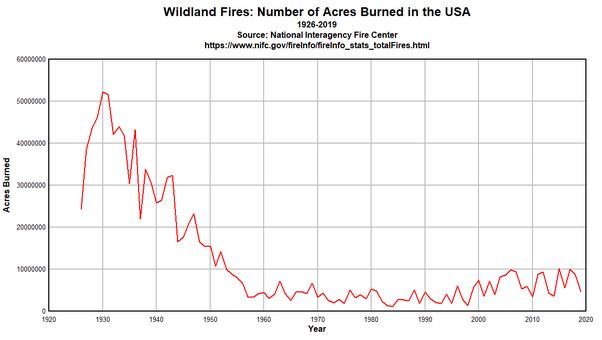
Large wildfires, for example, are also associated with climate warming, but Shaviv says there is no reason for this either. “In the US in the 1930s the annual amount of area which was burnt a year was way larger than what it is today,” he says, adding that the reality is that a large proportion of fires are caused by poor forest management, which fails to clear the forest floor of flammable material.

Towards nuclear energy

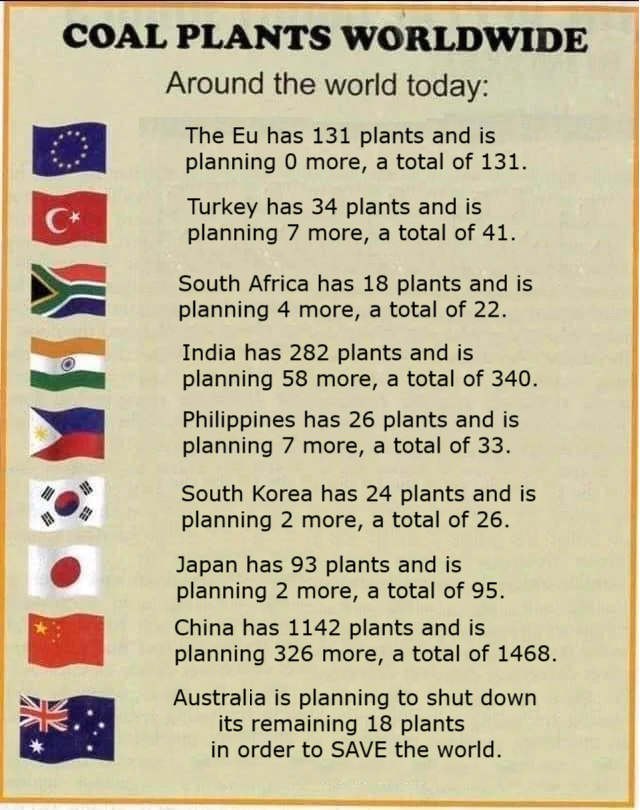
In the light of the above, climate change does not make it necessary to abandon fossil fuels. However, Shaviv says we should still move towards cleaner energy. Firstly, burning fossil fuels causes real environmental pollution – in particular coal, which is still on the rise worldwide. Secondly, fossil fuels will run out one day.

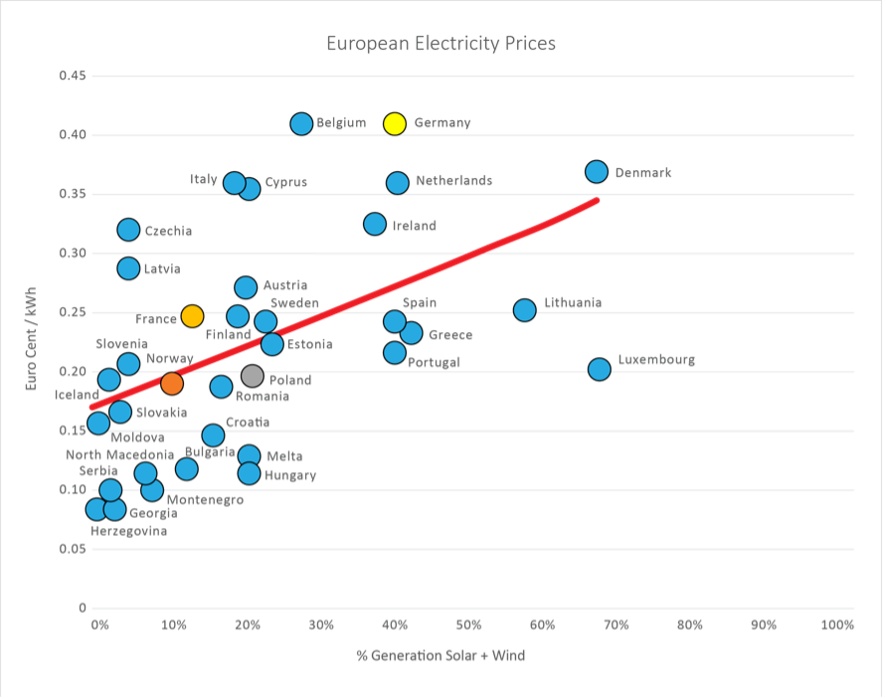
But mankind cannot replace these fuels with wind and solar power. “First of all, it’s very expensive. You can see that any country that has a lot of any of those, they pay much more for electricity,” Shaviv says. He suggests looking at electricity prices in countries such as Germany or Denmark, where wind and solar have been developed with billions of euros of government aid, and comparing them with, for example, France which uses nuclear power. What makes this form of energy so expensive is its intermittent nature – generation takes place when the sun shines and the wind blows. So to guarantee electricity supply, either huge storage capacity or backup systems, such as gas-fired power stations, are needed.

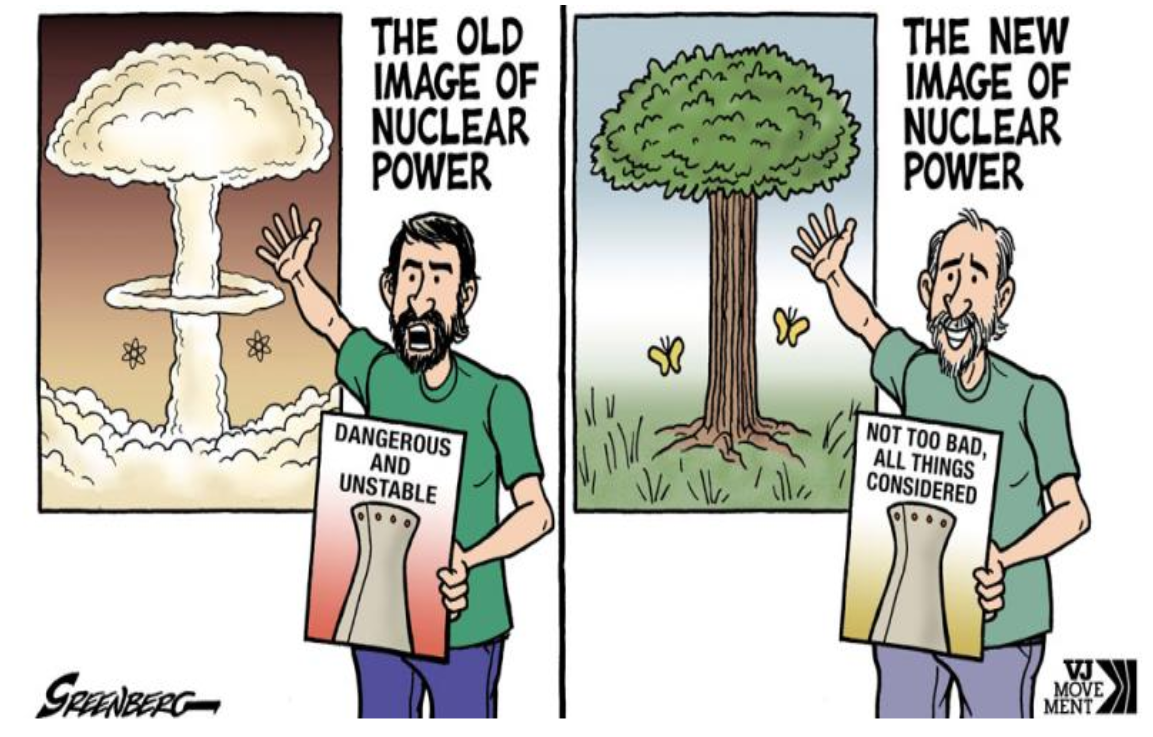
Shaviv believes that in the future, much more reliance should be placed on nuclear power, which does not have the pollution problems of fossil fuels and, unlike wind and solar, can provide a stable energy supply. However, the critics of this plan remind us of past nuclear accidents – Chernobyl in Ukraine, Three Mile Island in the USA and Fukushima in Japan. Each of these accidents had its own causes – in the case of Chernobyl and Three Mile Island, technical defects mixed with human error, and in the case of Fukushima, natural forces, in other words, the earthquake and tsunami. In the case of Fukushima in 2011, however, no one died as a direct result of the accident at the nuclear power plant (though thousands of people died as a result of the tsunami that devastated the coastline).

Shaviv says there is no point in comparing the safety of nuclear plants that have suffered accidents in the past with today’s technology. “I don’t think it’s going to be a problem in the sense that we can have an extremely safe design,” he says, adding that the wider deployment of nuclear power will happen whether the West joins in or not. “If you look at China, which is energy-hungry, they don’t care about public opinion as much as we do in the West. And they don’t have as much problem with regulation. So they’re just going to run forward and instead of building or opening a coal power plant every few weeks, in a few years, they’re going to be opening a nuclear power plant every few weeks,” Shaviv says. He adds that the West would also be wise to participate in this development, rather than moving in the opposite direction.

via Science Matters

https://ift.tt/gmAseBM

April 25, 2025 at 11:08AM