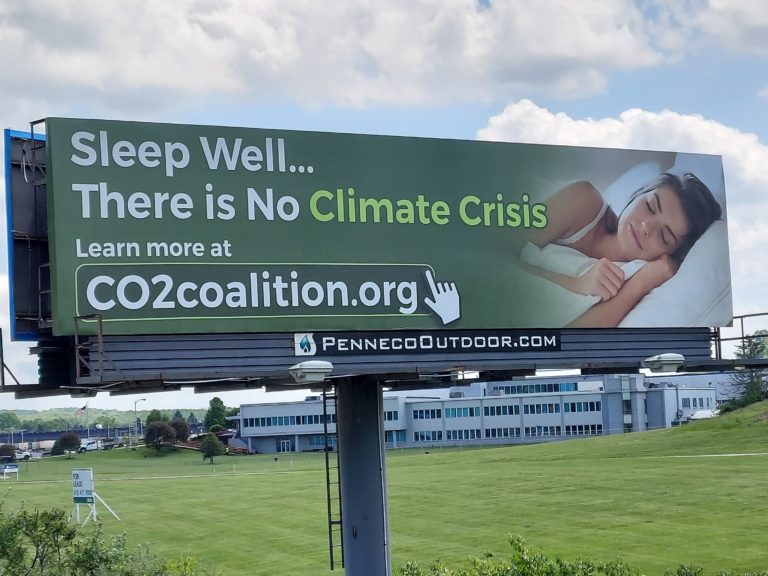
Six Good Reasons to Overturn EPA CO2 Ruling

Paul Driessen makes six strong points in his Town Hall article Reexamining the Obama Era Endangerment Finding.  Excerpts in italics with my bolds and added images.

The supposed climate cataclysm consensus is disintegrating under growing pressure from reality. Green energy subsidies, regulations and mandates are crumbling. Greenpeace has been hit with a $667-million judgment for conspiracy, defamation, trespass, and fostering arson and property destruction.

Last year’s “Buy a Tesla – save the planet” placards have been exchanged for “mostly peaceful” protests based on “Torch a Tesla – save our democracy” and infernos of toxic pollution and “carbon” emissions.

Even higher anxiety is battering climate activists from the Lee Zeldin Environmental Protection Agency’s review of EPA’s 2009 “Endangerment Finding” (EF) – the foundation and justification for restrictive Obama and Biden Era standards and regulations on permissible electricity generation, automobiles, furnaces, home appliances and much more.  Six Good Reasons to Overturn:

CO2 is the Essence of Life on Earth. Damning it as a Pollutant is absurd and ignorant.

Humans and animals exhale carbon dioxide when they breathe, combustion processes also emit CO2, and during photosynthesis plants absorb CO2 and emit oxygen. More atmospheric CO2 helps plants grow better, faster and with less water. Nearly all life on Earth depends on this process. It’s basic science.

That’s why the Clean Air Act doesn’t include carbon dioxide in its list of dangerous pollutants, along with carbon monoxide, lead, nitrogen dioxide, ground-level ozone, particulates and sulfur dioxide.

But fossil-fuel-hating activists blame CO2 for the alleged “climate crisis” – and in Massachusetts v. EPA the US Supreme Court said EPA could regulate CO2 emissions if the agency found that they “cause or contribute” to “air pollution” that may be “reasonably anticipated” to “endanger public health or welfare.”

The Obama EPA quickly determined that they did and issued an Endangerment Finding that gave the agency effective control over America’s energy, transportation, industries, furnaces and stoves– indeed, over almost every facet of our lives and living standards – to help “fundamentally transform” the nation.

In formulating its decision, EPA did no research of its own, relied heavily on GIGO computer models and outdated technical studies, dismissed the clear benefits of rising atmospheric CO2 levels, and ignored studies that didn’t support its decision. EPA even told one of its own experts (who had offered evidence and analyses contradicting official claims) that “the administration has decided to move forward [on implementing the EF] and your comments do not help the legal or policy case for this decision.”

That alone is a compelling reason for reversing the Endangerment Finding. But other realities also argue convincingly that EPA’s 2009 action should be nullified.

EPA had no authority to convert plant-fertilizing, life-giving carbon dioxide into a dangerous, health-threatening pollutant.

First, Massachusetts v. EPA has been sidelined, rendered irrelevant or effectively reversed.

West Virginia v. EPA (2022) ruled that federal agencies may not violate the “major questions doctrine,” which holds that, in the absence of clear congressional direction or authorization, agencies may not make decisions or issue regulations “of vast economic and political significance.”

The Obama EPA had no clear congressional language or authorization to declare that carbon dioxide is a pollutant that would likely “endanger public health or welfare.” The Supreme Court’s minimal guidance in Massachusetts underscores the absence of congressional intent or direction. The process EPA used in rendering its predetermined finding demonstrates how little actual science played a role. And the enormous significance and impact of the EF decision and subsequent regulations can hardly be disputed.

Similarly, the SCOTUS 2024 ruling in Loper Bright v. Raimondo overturned the court’s 1984 decision in Chevron v. NRDC and ended judicial deference to government agencies (the “Chevron doctrine”). Bureaucrats may no longer devise “reasonable interpretations” of unclear statutory language if those interpretations would significantly expand regulatory powers or inflate private sector costs.

These two decisions mean EPA had no authority to convert plant-fertilizing, life-giving carbon dioxide into a dangerous, health-threatening pollutant.
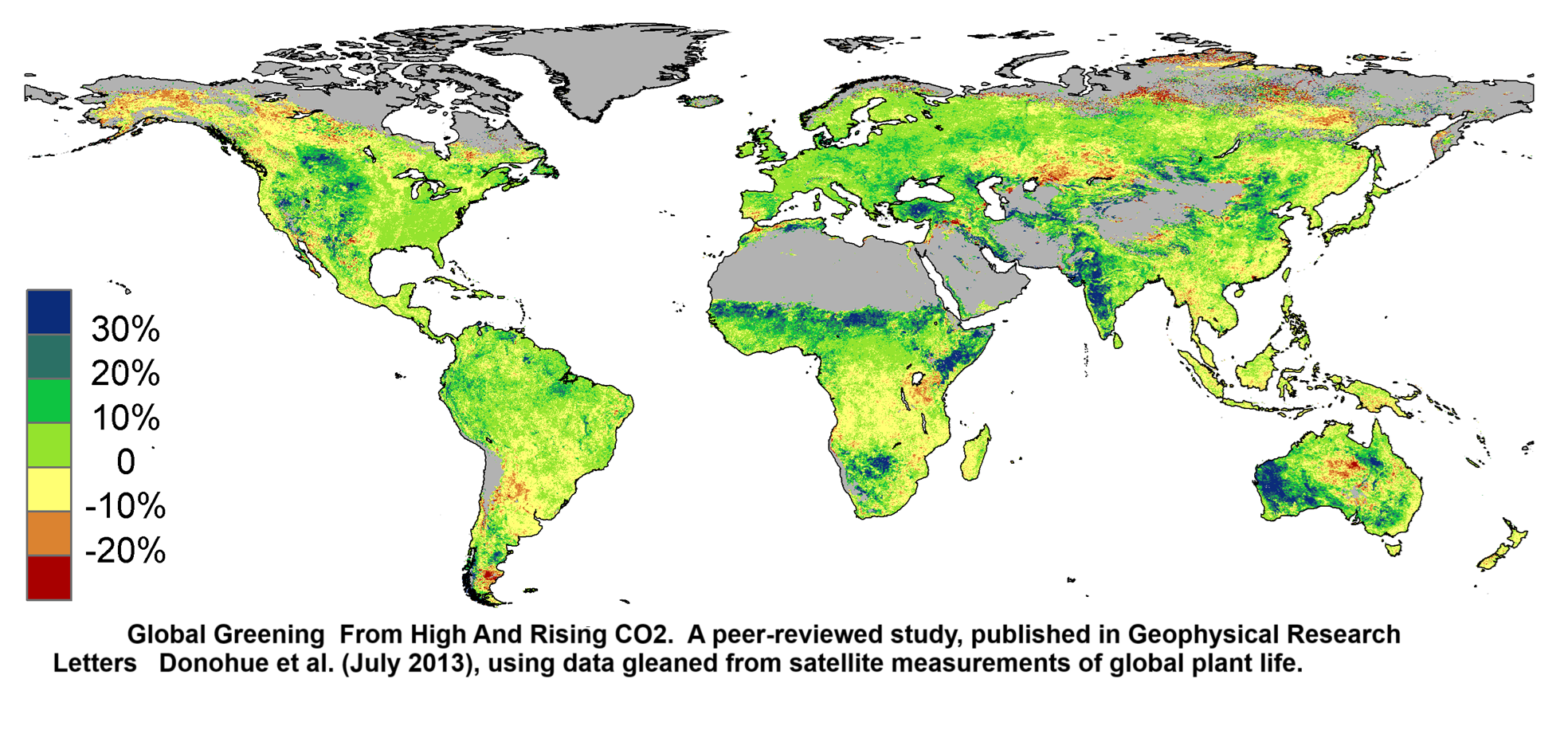
Natural Climate Forces and CO2 Benefits Were Ignored by EPA 2009 Ruling

Second, reams of post-2009 studies and analyses show that CO2 is hugely beneficial to forests, grasslands and croplands – and that CO2 and other greenhouse gases (GHGs) have not replaced the powerful, complex, interconnected natural forces that have always driven global warming, climate change, ice ages, Little Ice Ages, and extreme weather events. EPA ignored this in 2009.

Others demonstrate that there is no climate crisis, nothing unprecedented in today’s climate and weather, and nothing modern industrialized societies cannot cope with far more easily than our ancestors did.

(See Climate Change Reconsidered II, CO2 Coalition studies, NOAA hurricane history, US tornado records, and studies the Trump EPA will undoubtedly consult during its EF reconsideration.)

Human Lives are Sustained by Hydrocarbon Fuels and By-Products

Third, our energy, jobs, living standards, health, welfare, national security and much more depend on fossil fuels – for energy and for pharmaceuticals, plastics and thousands of other essential products that are manufactured using petrochemical feedstocks.

Developing Nations Need and Will Use More Hydrocarbons in Any Case

Fourth, China, India and other rapidly developing nations also depend on fossil fuels – and in fact are increasing their coal and petroleum use every year – to build their industries and economies and improve their people’s health and living standards. They are not about stop doing so to appease those who insist the world faces a climate crisis. That means even eliminating coal, oil, gas and petrochemical use in the United States would have no effect on global GHG emissions.
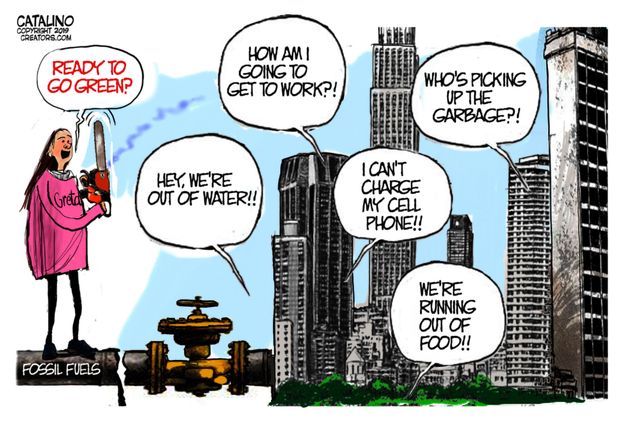
Primary Threat to Earth Future is Losing Reliable, Affordable Energy

Finally, the primary threats to human and planetary health and welfare come not from using fossil fuels – but from eliminating them, trying to switch to “clean, green, renewable” energy, and no longer having vital petrochemical products.

As Britain and Germany have shown, switching to intermittent, weather-dependent wind and solar energy with backup power raises electricity prices to 3-4 times what average Americans currently pay. Industries cannot compete internationally, millions lose their jobs, living expenses soar, and families cannot afford to heat their homes in winter or cool them in summertime.

Thousands die unnecessarily every year from heatstroke, hypothermia, and diseases they would survive if they weren’t so hot, cold or malnourished.

In poor countries, millions die annually from indoor pollution from wood and dung fires, from spoiled food due to lack of refrigeration, from contaminated drinking water due to the absence of sanitation and treated water, and from diseases that would be cured in modern healthcare systems.

The common factor in all these deaths is the absence of reliable,
affordable energy, largely imposed by climate-focused bureaucrats
who finance only wind and solar projects in poor nations.

Wind and solar power, electric vehicle and grid-backup batteries, and associated transmission lines require metals and minerals mining and processing on unprecedented scales, power-generation facilities blanketing millions of acres of croplands and wildlife habitats, and the disposal of gigantic equipment that breaks or wears out quickly and cannot be recycled.

Reliance on wind, solar and battery power also means blackouts amid heatwaves and cold spells, cars stalled in snowstorms and hurricane evacuations – and thus still more deaths.

A slightly warmer planet with more atmospheric CO2 would be greatly beneficial for plants, wildlife and humanity. A colder planet with less carbon dioxide would significantly reduce arable croplands, growing seasons, wildlife habitats and our ability to feed humanity.

EPA’s 2009 Endangerment Finding ignored virtually all these realities.
EPA Administrator Lee Zeldin’s reexamination of that decision
must not repeat that mistake.

via Science Matters

https://ift.tt/Pj3kfpN

March 29, 2025 at 11:22AM

Sunday

10 out of 10 based on 1 rating

via JoNova

https://ift.tt/bQIX8Pu

March 29, 2025 at 09:47AM

The Science of Misdirection

Who doesn’t love a good magician? Yes, they can be a bit cheesy at times, but a good one can make you believe that they actually do have magical powers. Of course, the truth is far more mundane. Despite appearances, these folk are not supernatural, they are just masters of misdirection. If you want to get all sciency about it, the trickery relies upon the fact that we don’t notice what we aren’t paying attention to, and so the magician makes sure that we are paying attention to the wrong thing. A good magician can do this so subtly that we are not aware that our focus of attention is being manipulated. It’s not so much that they are being dishonest with their audience; they are just taking advantage of our inability to process all of the information in real time. It’s an inability for which we must blame evolution, since natural selection has favoured those with an ability to focus their attention.

But you don’t have to buy tickets for a cabaret act in order to experience the wonders of misdirection. It surrounds you everywhere you go. Just ask the behavioural scientists and they will tell you just how easy it is to influence the decisions of we poor, intuitive thinkers with our cognitive biases. What is far less appreciated, however, is that even within the realm of scientific research, where analytical thinking is the eel’s eyebrows, much can still be achieved in terms of public misdirection, and it doesn’t require scientific malpractice or outright deception. But whilst this has always been appreciated by your average climate sceptic, it has taken until now for a pair of philosophy professors to draw the rest of the world’s attention to this important phenomenon.

Earlier this year, a paper appeared in Philosophy of Science (the ‘Official Journal of the Philosophy of Science Association’) highlighting the problem. The abstract reads:

There are myriad techniques industry actors use to shape the public understanding of science. While a naive view might assume these techniques typically involve fraud or outright deception, the truth is more nuanced. This paper analyzes industrial distraction, a common technique where industry actors fund and share research that is accurate, often high-quality, but nonetheless misleading on important matters of fact. This involves reshaping causal understanding of phenomena with distracting information.

The headline example offered by the paper is that of Coca-Cola, who funded a great deal of legitimate and high quality research establishing the health benefits of exercise, thereby distracting attention away from the health problems associated with their own product. No one was suggesting that there was any fraud or outright deception involved, just a very subtle but effective sleight of hand. The paper continues with much talk about the tobacco industry and what they had got up to in the past (cue Oreskes and Conway). Predictably enough, it isn’t too long before the climate sceptics also appear within the paper’s crosshairs:

Consider the recent transition from fossil fuels to wind power, intended to prevent the harms of global warming. The oil and gas industry spent decades obfuscating the link between fossil fuels and global warming, but their ability to plausibly do so is waning (Oreskes and Conway 2011). Instead, a number of prominent Republican lawmakers in the United States—backed by powerful oil and gas interests—have blamed offshore wind turbines for the deaths of whales (Hu Reference Hu2023).

The paper goes on to explain:

Legitimate scientists are indeed worried about impacts of these installations on cetaceans, and have produced studies of these impacts (Quintana-Rizzo et al. Reference Quintana-Rizzo, Leiter, Cole, Hagbloom, Knowlton, Nagelkirk, Brien, Khan, Henry, Duley, Crowe, Mayo and Kraus2021; Thompson et al. Reference Thompson, David Lusseau, Simmons, Rusin and Bailey2010). But their worries are being shared cynically to distract from the more important benefits of wind energy. Others connected to the Republican party, and funded by oil and gas, have emphasized the impacts of wind turbines on birds, despite evidence of fossil fuel’s much more serious impacts on bird life (Katovich Reference Katovich2023; Sovacool Reference Sovacool2013; Bateman et al. Reference Bateman, Chad Wilsey and Joanna Wu2020).

I don’t wish to argue the rights and wrongs of the impacts being referred to above (these are topics discussed elsewhere, such as here and here). Instead, what I want to do is clarify the real nature of the misdirection we are dealing with here. Whilst the paper chooses to feature examples of ‘industrial distraction’ allegedly perpetrated by climate sceptics, it distracts attention away from the many examples in which sleight of hand is clearly used by climate scientists and activists alike. The paper is in many respects perfectly sound in its description of the phenomenon (I particularly like its use of Bayesian causal networks to demonstrate how the reshaping of causal understanding works), and yet through its choice of examples it is, to quote its own abstract, “reshaping causal understanding of phenomena with distracting information.”

To illustrate that point, I refer once more to the important observations made by climate scientist Patrick T. Brown, when he commented upon the nature of published research quantifying the causation of wildfires:

I knew not to try to quantify key aspects other than climate change in my research because it would dilute the story that prestigious journals like Nature and its rival, Science, want to tell.

Quantification is, of course, the key issue here. A causal model relating to wildfires should include both climatic and non-climatic causations, and quantitative research has to cover all elements of the model. By focusing entirely upon the quantification of climatic causations we end up ‘reshaping causal understanding of phenomena with distracting information.” As Brown put it himself:

To put it bluntly, climate science has become less about understanding the complexities of the world and more about serving as a kind of Cassandra, urgently warning the public about the dangers of climate change. However understandable this instinct may be, it distorts a great deal of climate science research, misinforms the public, and most importantly, makes practical solutions more difficult to achieve.

The dearth of published papers quantifying the non-climatic causations alongside the climatic ones bears out Brown’s accusation, and yet, rather than accepting that Brown’s observations provide a perfect example of endemic ‘industrial distraction’ within a particular branch of climate science, the reaction was one of hysterical dismissal, as if the very idea that sound but incomplete research could ever be a feature of climate science. And the really galling thing is that the very same people who were frothing at the mouth to hear Brown speak, would no doubt cheer from the side-lines, enthusiastically waving their tiny ‘No planet B’ flags, after reading the Philosophy of Science paper.

The reality is there is barely a single example in which climate change, as a causation of environmental impact, is not embroiled with other non-climatic causations. And yet, time and again, it is the climate change impact that is emphasised in reports. We see it in wildfire causation, in which no attempt is made to quantify the impact resulting from the deterioration of forest management practices or the reduction of fire protection assets (or indeed trends in arson and the increased human/forest boundary). We see it in flooding, in which the impacts of deforestation are not quantified alongside those of climate change. We see it in loss of species, in which habitat loss is mentioned in passing but too often is not treated as the primary causation. We see it in heat-related excess mortality, the numbers for which are forever thrust on the front pages with nary a mention of the much greater cold-related mortality rates. In fact, much of the website you are now on is devoted to the exposure of the extent to which ‘industrial distraction’ aligns with the focus of climate research and also skews the reporting of the science. And yet when a couple of philosophy professors finally suss that such subtleties as research focus can distort causal narratives, they can’t find a single example to support the sceptic’s case!

Quantified causal models provide a bedrock for scientific understanding. But one should never forget that they are just that: models. They are a map of the landscape rather than the landscape itself. As such, they provide a map whose contours are formed by mounds of evidence. Furthermore, the heights of these mounds are just as much a reflection of the effort expended in evidence collection as they are a faithful representation of the territory; a level of effort that will usually be determined by an explorer’s agenda. As I explained many moons ago:

But a word of warning here. The evidential terrain is not the territory – it is the map. Furthermore, it is a map that has been drawn up by explorers who may not have visited all areas, and so vital high-ground may be missing. It is easy to be confident in a homespun proposition if one steadfastly stays at home.

This appreciation of the concepts not only predates the revelations of our two philosophy professors, it is also one that offers an insight that is much less value-laden, since it does not require the presence of cynicism. So-called industrial distraction can indeed be a conscious intent, but it can also simply be the inevitable but unintended outcome of curiosity married to a particular goal. As such, no lobby group should be singled out as being uniquely guilty or adept. Unfortunately, the Philosophy of Science paper does exactly that. So whilst being a paper about industrial distraction, it simultaneously serves as being one of the worst examples of the phenomenon that I have come across in a long, long time. Which is a shame but I have to say, in view of the current state of academia, not at all surprising. 

via Climate Scepticism

https://ift.tt/w2JLZ8h

March 29, 2025 at 08:34AM

Alaskans cheer Trump’s reopening of ANWR

The champagne has already flowed, but rebuilding the state’s vital oil and gas industry is going to take time.

via CFACT

https://ift.tt/rh86fjN

March 29, 2025 at 08:08AM