Reuters: The Renewable Energy Transition has Failed

Essay by Eric Worrall

First published JoNova; “… The failure of net zero shows that the best governments can do is to encourage the search for viable new sources of energy. …”

Climate policy requires a more realistic approach

By Edward Chancellor
February 28, 20259:59 PM GMT+10

LONDON, Feb 27 (Reuters Breakingviews) – The pursuit of net zero carbon emissions has been a resounding failure. Despite trillions of dollars spent on renewable energy, hydrocarbons still account for over 80% of the world’s primary energy and a similar share of recent increases in energy consumption, according to The Energy Institute. Coal, oil and natural gas production are at record highs. Emissions of greenhouse gases continue to rise inexorably. The financial markets were already losing confidence in the energy transition before Donald Trump returned to the White House. A more realistic approach to climate policy is urgently needed

Solar and wind power have grown to a mere 3.5% of primary energy production. The levelised cost of renewable energy – which measures of the net present value of electricity produced over a plant’s lifetime – has declined sharply over the years. But this has not resulted into lower electricity prices. In fact, as the share of the energy mix provided by renewables has risen, electricity prices have tended to increase. That’s because wind and solar power are intermittent. Since storing energy in batteries is uneconomic, traditional sources of power are still needed as backup, which is expensive.

Germany and the United Kingdom, which get a relatively large share of their electricity from renewables, also suffer from the world’s highest electricity costs. …

…

… The world still urgently needs an alternative to fossil fuels. The failure of net zero shows that the best governments can do is to encourage the search for viable new sources of energy. Human ingenuity was responsible for developing fossil fuels which delivered improvements in material prosperity while endangering the planet. It’s up to human ingenuity to solve the problem.

…

Read more: https://www.reuters.com/breakingviews/climate-policy-requires-more-realistic-approach-2025-02-28/

Legacy media should have told the truth about Net Zero a long time ago. Sadly the author still clings to the climate crisis fantasy.

The total failure of Net Zero is inevitable, renewables were never going to be a viable replacement for dispatchable energy. From nine years ago;

The mainstream advent of energy guzzling artificial intelligence helped accelerate the fall of renewables.

The only remaining question is, how much tax money will green politicians squander trying to save their personal reputations, by concealing the magnitude of their failure from the public?


Discover more from Watts Up With That?

Subscribe to get the latest posts sent to your email.

via Watts Up With That?

https://ift.tt/CgA0Bab

March 1, 2025 at 04:00PM

Climate Crusade Is a Dead End

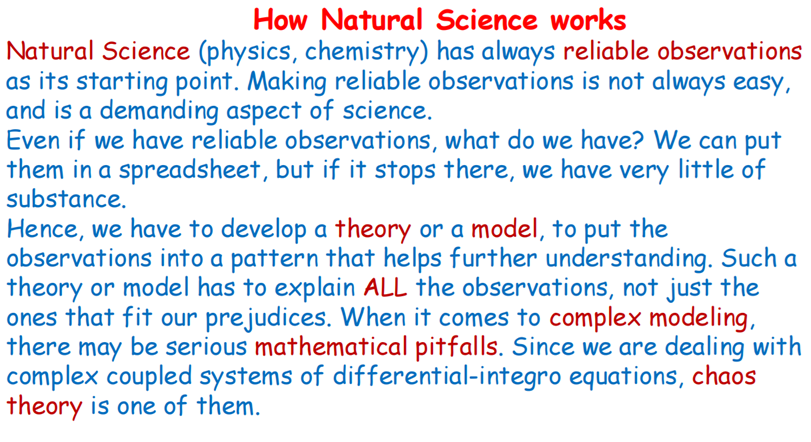
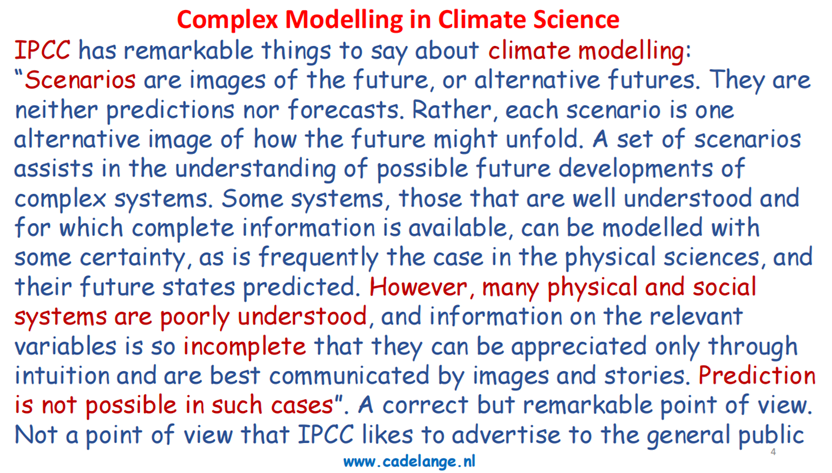
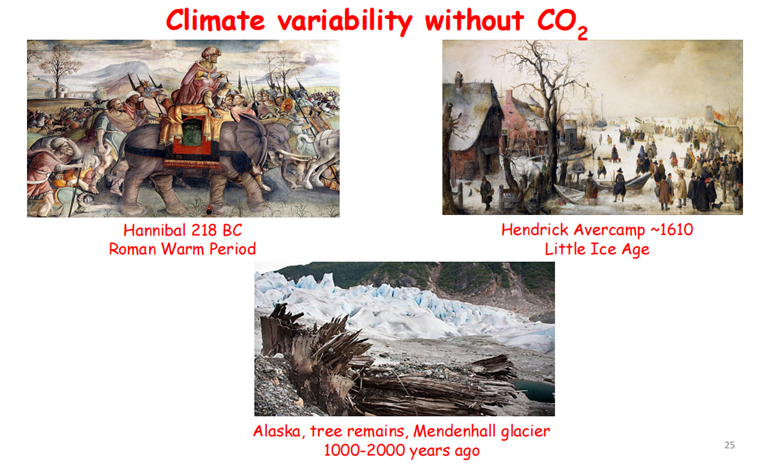
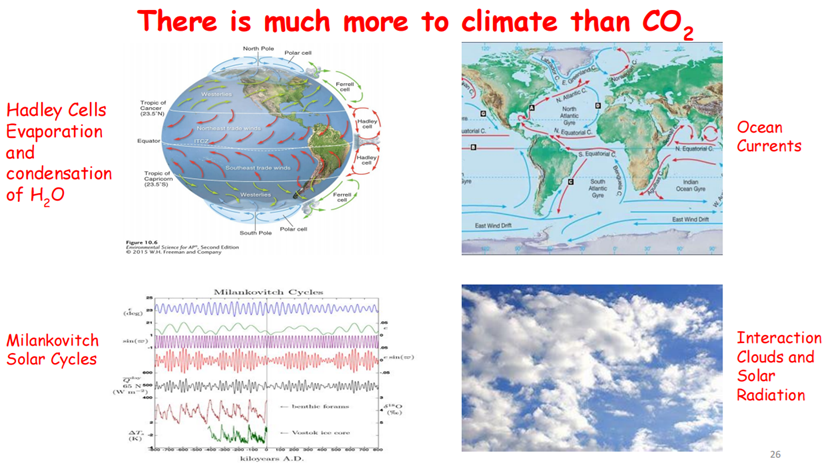
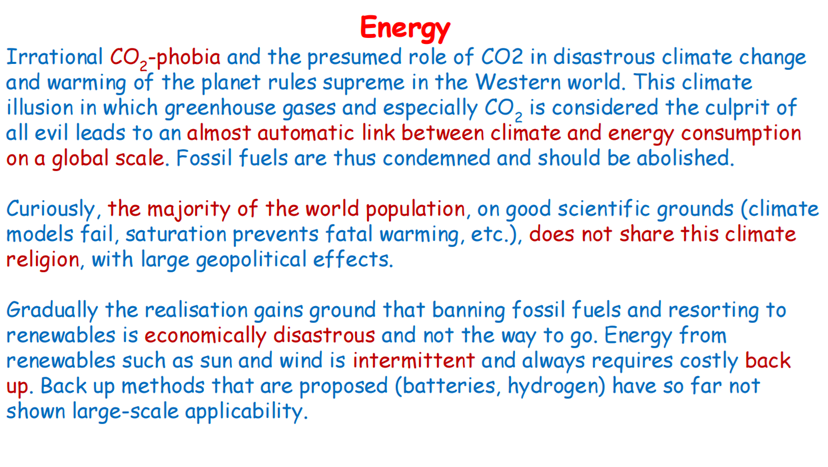
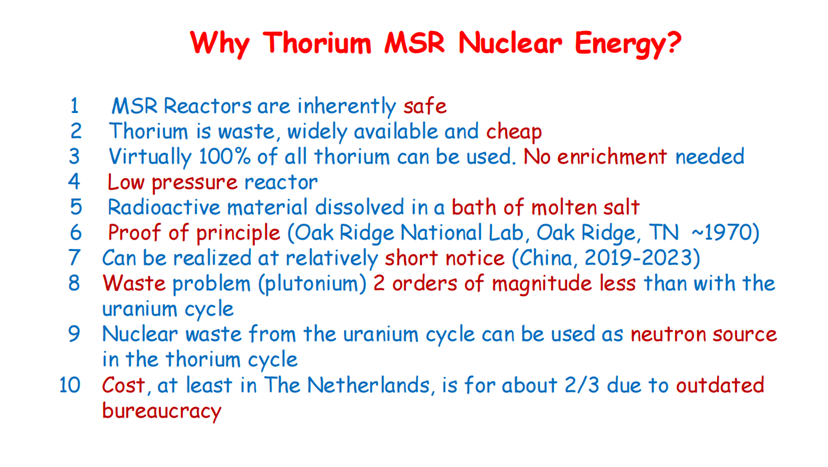
This post presents the main points and exhibits from Professor de Lange’s presentation February 26, 2025.  Most images are self explanatory, with some excerpts in italics lightly edited from captions, and some added images as well. H/T Bud Bromley.

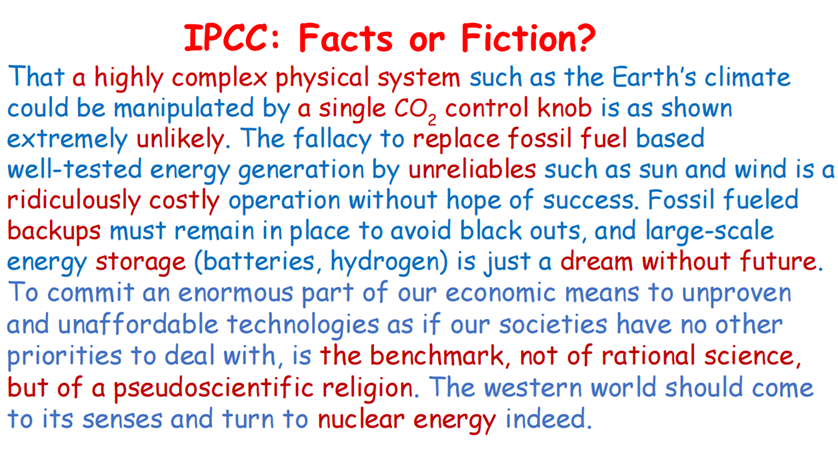
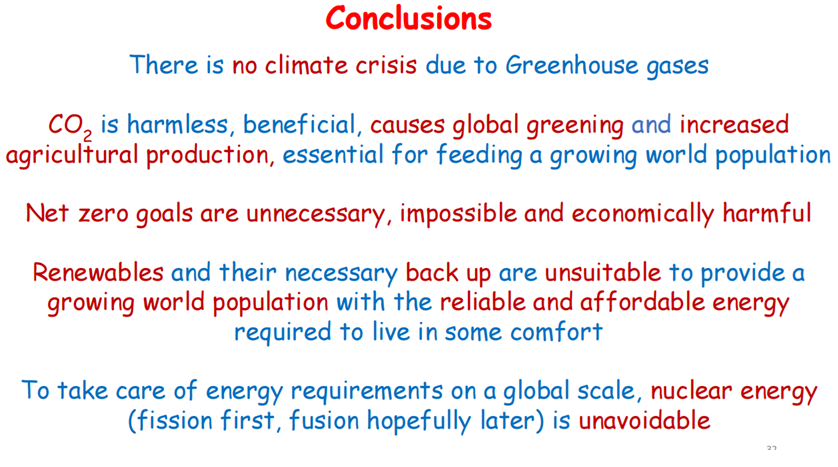
Prof de Lange demonstrates that there is no credible climate crisis, and that there is much more to climate than CO2 alone. First, he addresses the discrepancy between satellite temperature measurements and results from climate models. Second, he shows the effect of even doubling the CO2 concentration has only minor effects, while it is in fact crucial to photosynthesis. Third, he shows that how the significant lack of experimental data on cloud composition now hampers progress in climate science. Fourth, he demonstrates that there is no convincing correlation between CO2 and temperature on a geological time scale. Fifth, he addresses global future energy supply, demonstrating that renewables are “unaffordables”, just as are untested technologies (batteries, hydrogen), and he concludes that the future has to be based on nuclear power.

1.  Natural Science and Observations versus Models

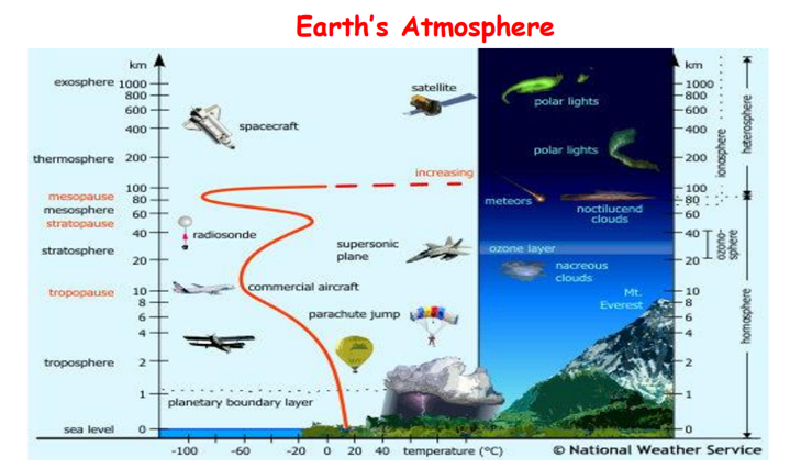
2.  Atmospheric Physics and Greenhouse Gases

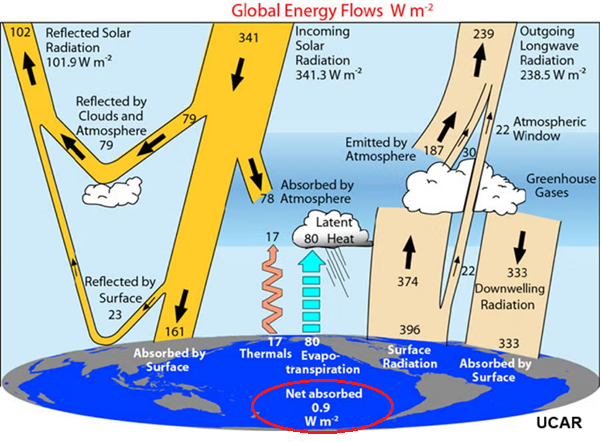
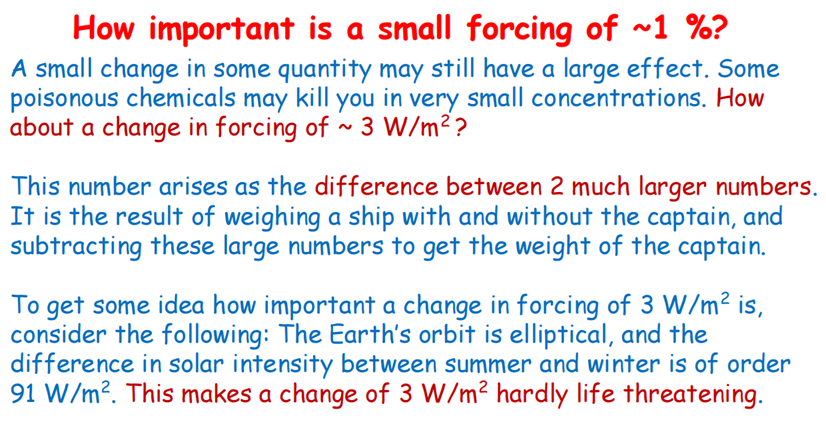
Warm Surface of the earth can be viewed as a radiator in the infrared that radiates Intensity out Into the atmosphere, and again the flow of infrared energy is not interrupted. It is absorbed by the atmosphere and that’s where the clouds turn out to be extremely important. They delay the outgoing energy into the universe. In climate science we balance the yellow incoming solar energy in watts per square meter with the outgoing radiation from the surface and atmosphere. Some is reflected and some is absorbed and emitted as long wave radiation.  The imbalance is shown at the bottom as ~1 W/m2, which is a small difference between two much larger energy flows showing hundreds of W/m2. 

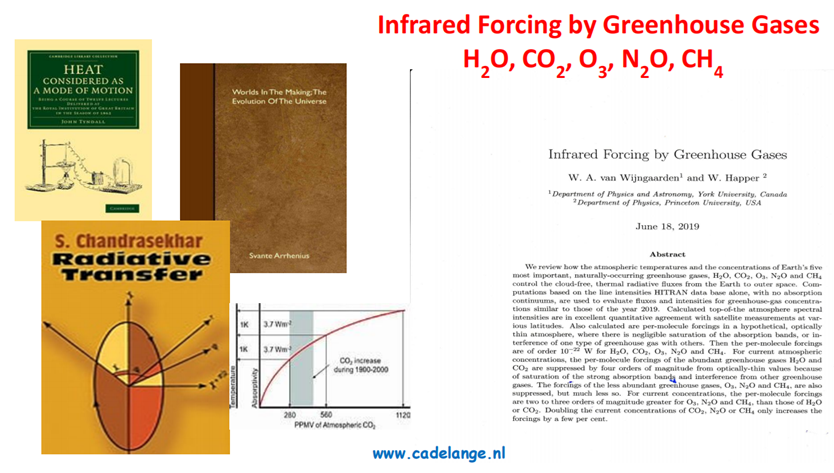
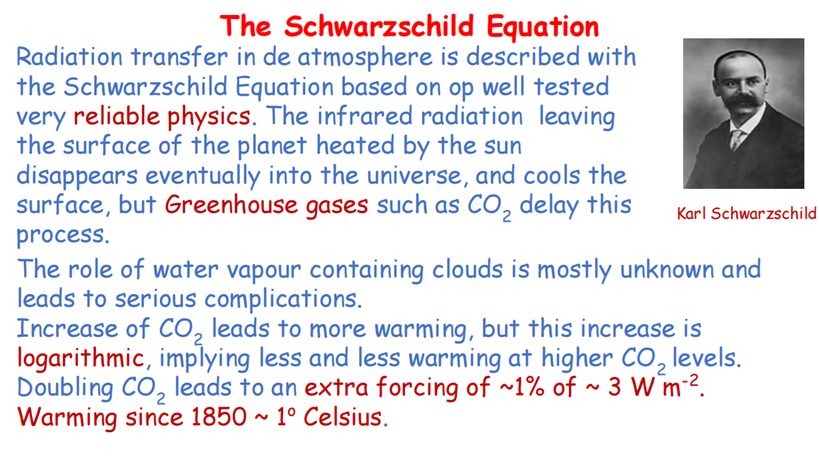
The fact that Greenhouse gases play very important role in absorbing infrared radiation in the atmosphere is already 150 years old. We shall see that dependence of the temperature of the earth due to greenhouse gases is not linear, the effect on temperature is logarithmic. This is seen in the graph on the left side.

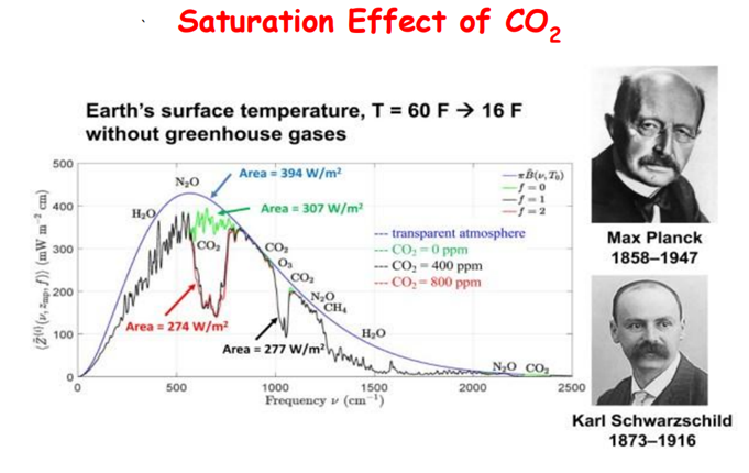
On the horizontal scale we see the frequency scale expressed in common unit in physics in wave numbers. And here we see the continuous Blue Trace results from infrared radiation that would leave the warm surface of the planet if there were no atmosphere at all. The total surface under the blue trace depends on temperature to the fourth power, very temperature dependent.

We see the effect of atmosphere greenhouse gases represented by the black line, which is a bit lower than the blue Trace. The green line shows the where the black line would be, were there to be no CO2 in the atmosphere. The red line shows that there would be little difference from doubling CO2 from 400 ppm to 800 ppm.

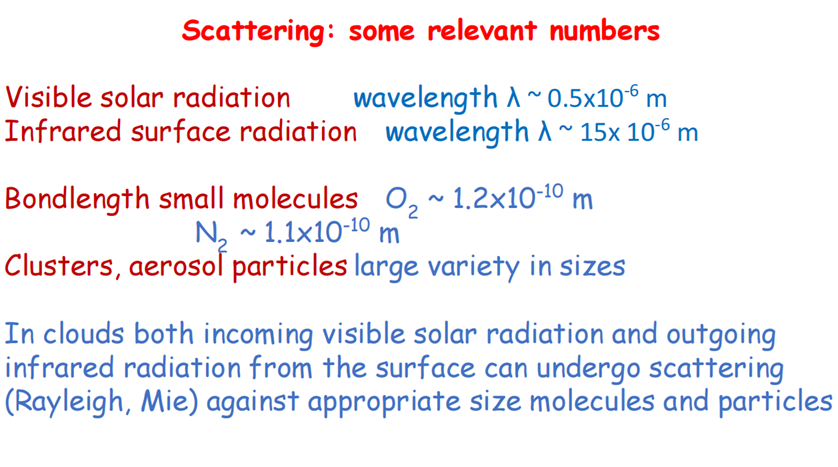
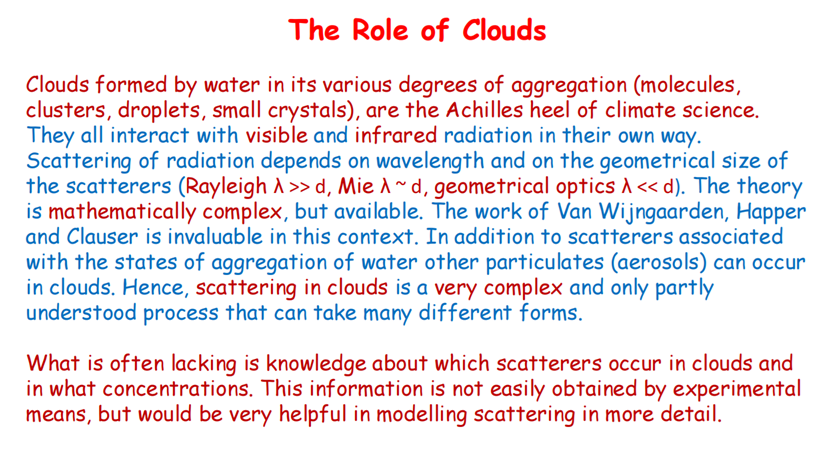
3.  Scattering in Clouds

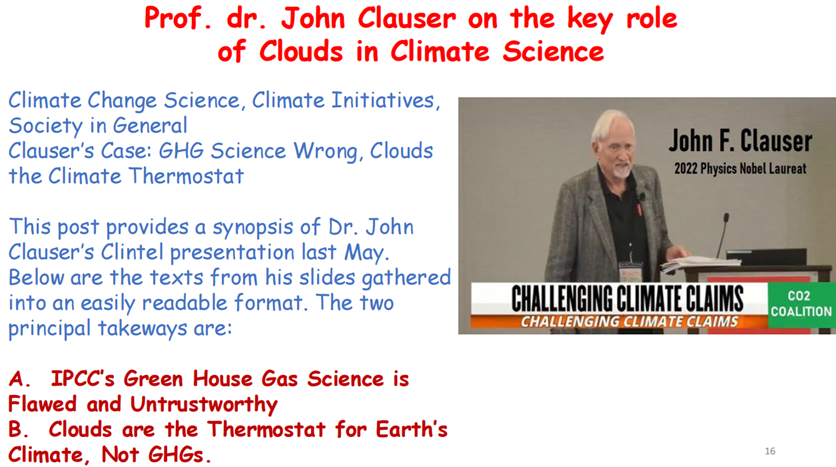
The post referenced in the exhibit is Clauser’s Case: GHG Science Wrong, Clouds the Climate Thermostat

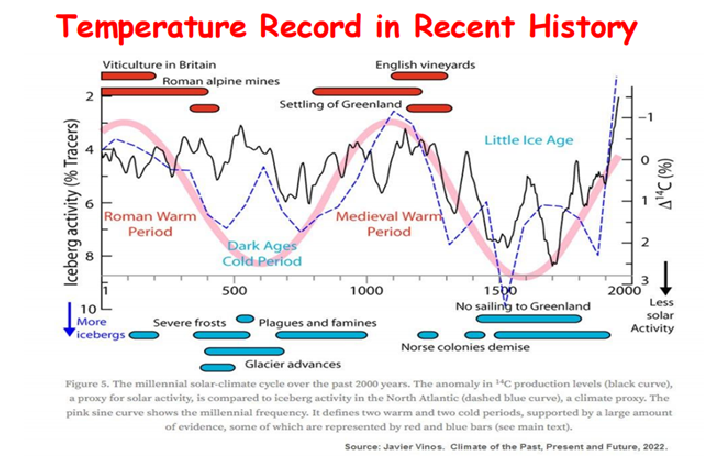
4. Is CO2 the only and most important culprit of ‘’disastrous’’ climate change, warming in particular?

5. Supplying Energy to a Growing World Population

via Science Matters

https://ift.tt/0GFCeB7

March 1, 2025 at 01:28PM

Why Isn’t the Mainstream Media Reporting that Ocean Circulation Is Doing Well?

For decades, mainstream media outlets have asserted that the Atlantic Meridional Overturning Circulation (AMOC) is on the verge of collapse, bringing catastrophic consequences to the planet. This is false. Recent research indicates that climate change has not altered the Atlantic Ocean current, despite repeated claims by the media and some supposed experts to the contrary.

The 2004 Hollywood disaster film The Day After Tomorrow showed an AMOC shutdown plunging the world into an instant Ice Age. The story was loosely based on some scientists predictions that the AMOC and the regional ocean currents that feed into it, were slowing dangerously down. The mainstream media hyped those unverified assertions, setting up the science fiction blockbuster for success.

Mainstream media outlets have periodically pushed the same doomsday narrative, warning that the AMOC is slowing, weakening, or collapsing, with dire predictions of climate chaos for each condition.

For example:

Yet, as Climate Realism has repeatedly pointed out, science debunks these claims (see here). These assertions of a declining AMOC and other large scale ocean currents which drive weather patterns and impact climate change are largely based the projections of speculative climate models rather than on real-world observations or verifiable research.

Two recent peer-reviewed studies, one from February 2025 and one from January 2025, both published in Nature, confirms what many climate realists have pointed out for years—the AMOC has remained stable for at least 60 years, displaying no significant slowing trend. Going further, the scholars who conducted the research concluded that there is no credible evidence to suggest that such a collapse is imminent or even likely in the foreseeable future. Commenting on the climate models which have forecast a collapse of the AMOC, the scientists carrying out the research concluded that climate models are flawed and overstate the risks — models’ simulations have failed to match actual measured trends.

So, where is the wall-to-wall media coverage of this reassuring news? Where are the CNN specials, the New York Times op-eds, and the breathless Guardian headlines announcing that disaster is not in the offing? They are nowhere to be found.

Now that we have two peer-reviewed studies that have determined the AMOC has been stable for at least six decades and is extremely unlikely to collapse in the foreseeable furute, the silence from mainstream media outlets is deafening. The same journalists who eagerly ran worst-case scenario stories are now unwilling to report findings that contradict their previous fearmongering.

The findings of the recent studies confirm what previous research cited at Climate Realism and Climate at a Glance: Ocean Currents have shown, ocean currents are complex, influenced by a variety of natural cycles, and not as fragile as alarmist narratives suggest.

While the mainstream media constantly admonishes the public and politicians to “follow the science,” they conveniently ignore scientific research when it cast doubt upon the narrative that climate change causes everything bad.

The Atlantic Meridional Overturning Circulation is not collapsing, is not slowing catastrophically, and is not about to trigger an Ice Age. The latest scientific research confirms what observational data has shown for decades: AMOC variations are natural, and there is no impending crisis. That’s the good news journalists and news outlets claiming to be presenters of the truth should be reporting, but we at Climate Realism won’t be holding our breaths for it.

Anthony Watts

Anthony Watts is a senior fellow for environment and climate at The Heartland Institute. Watts has been in the weather business both in front of, and behind the camera as an on-air television meteorologist since 1978, and currently does daily radio forecasts. He has created weather graphics presentation systems for television, specialized weather instrumentation, as well as co-authored peer-reviewed papers on climate issues. He operates the most viewed website in the world on climate, the award-winning website wattsupwiththat.com.

Originally posted at ClimateREALISM


Discover more from Watts Up With That?

Subscribe to get the latest posts sent to your email.

via Watts Up With That?

https://ift.tt/htFZWUN

March 1, 2025 at 12:02PM

China’s New Coal Plant Construction Highest Since 2015

By Paul Homewood


The Centre for Research on Energy and Clean Air have published their biennial of China’s coal projects, which finds that coal is still holding strong despite skyrocketing clean energy additions in 2024.

They state:

Even as China’s clean energy surged in 2024 and became a key economic driver, solar and wind utilisation dropped sharply in Q4 2024, which was not expected or explained by weather conditions, and coal remains strong, which ultimately goes against President Xi’s 2021 pledge to phase down coal over the following five years.

China approved 66.7 gigawatts (GW) of new coal-fired power capacity in 2024, with approvals picking up in the second half after a slower start to the year.  At the same time, 94.5 GW of new coal power projects started construction and 3.3 GW of suspended projects resumed construction in 2024, the highest level since 2015, signalling a substantial number of new plants will come online in the next 2-3 years, further solidifying coal’s role in the power system.

Figure – Progress of new coal power projects and retirements in China

While the clean energy sector has maintained rapid growth in recent years, emerging as a key driver of economic expansion in 2023–2024, the simultaneous large-scale expansion of coal power creates a conflicting dynamic. In 2024, China added 356 GW of wind and solar capacity – 4.5 times the EU’s additions and nearly equivalent to the total installed wind and solar capacity in the U.S. by the end of the year. This record-breaking expansion highlights China’s leadership in renewables, yet instead of replacing coal, clean energy is being layered on top of an entrenched reliance on fossil fuels.

This reality makes it increasingly difficult to achieve the principle of ‘establish before breaking’ which envisions scaling up clean energy before gradually phasing down fossil fuels. Although renewable powers have been deployed at an unprecedented pace, coal power has remained firmly in place, often limiting renewables integration and full utilisation. As a result, China’s energy strategy increasingly resembles ‘energy addition’, rather than a fundamental shift toward clean energy and away from coal. This dual-track expansion raises critical questions about how effectively renewables can reshape the power system while coal power maintains its foothold.

Key findings

  • Coal power permits and new project activity remain high despite some signs of slowing. In 2024, 66.7 GW of new coal power capacity was permitted – lower than previous years but still well above the levels seen in the first half of the year. Meanwhile, new and revived coal power proposals totalled 68.9 GW, down from 117 GW in 2023 and 146 GW in 2022, suggesting a potential cooling in project initiation.
  • Coal power construction starts reached their highest level since 2015. 94.5 GW of new coal capacity began construction, the most since 2015, highlighting continued momentum in project development despite President Xi Jinping’s pledge in 2021 to ‘strictly control coal power projects’. However, actual commissioning has slowed, with 30.5 GW coming online so far, down from 49.8 GW last year but in line with 2021 and 2022 levels.
  • China’s coal power expansion contrasts with global trends. While China continues to add new capacity, the global coal fleet outside China shrank by 9.2 GW in 2024, reinforcing China’s dominant role in shaping the future of coal power. China now accounts for 93% of global construction starts for coal power in 2024.
  • Long-term coal power contracts are reinforcing coal’s dominance at the expense of renewables. Electricity buyers locked into long-term coal power contracts face penalties if they fail to purchase contracted volumes, discouraging them from prioritising clean energy. With new coal capacity coming online, guaranteed operating hours under pre-signed agreements further limit grid space for renewables, delaying the transition to a cleaner energy mix. 
  • Coal mining companies are playing a dominant role in financing new coal power projects. In 2024, more than 75% of newly approved coal power capacity was backed by coal mining companies or energy groups with coal mining operations, artificially driving up coal demand even when market fundamentals do not justify it. This not only reinforces reliance on coal but also risks undermining central government policy targets for curbing coal consumption and accelerating the energy transition.
  • Despite policy intentions for coal power to support renewable integration, 2024 approvals show a shift away from this role, with many projects justified by local governments based on economic development and local energy security instead. While some policies promote coal power flexibility retrofits, long-term contracts and the inherent limitations of coal plants regarding low-load operation and intra-day cycling discourage coal plants from performing a true regulating function. 

https://energyandcleanair.org/publication/when-coal-wont-step-aside-the-challenge-of-scaling-clean-energy-in-china/

Being anti-coal, CREA can’t understand why China is not using renewables more. The answer is surely obvious – Too much intermittent wind and solar power is not good for the grid, especially when much of it is concentrated in certain area – solar farms in the Gobi Desert, for example. When there is too much power, it can overload the grid.

On the other side of the coin, you cannot efficiently switch coal plants on and off to suit the vagaries of the weather or time of day.

Whether the bureaucrats in Beijing know that, I don’t know. But the experts responsible for running the grid most certainly do. If they don’t provide power at all times when needed, it is their heads that will be on the chopping block, not President Xi’s.

Meanwhile AFP are reporting that China is still not meeting its Paris commitments to reduce carbon intensity, which measures emissions of planet-warming carbon dioxide per unit of GDP. They say that it is now virtually impossible for China to meet its 2030 target.

via NOT A LOT OF PEOPLE KNOW THAT

https://ift.tt/VfXnUGB

March 1, 2025 at 11:50AM