Trump: Homeland Security Not in Climate Change Business

Steve Milloy reported on X:  President Trump deports “climate change” from the Department of Homeland Security: “Top officials at the US Department of Homeland Security received a memo on Friday ordering an immediate stop to work connected to climate change and the elimination of climate-related terms across the agency. The memo instructs senior office heads to “eliminate all climate change activities and the use of climate change terminology in DHS policies and programs, to the maximum extent permitted by the law,” according to the document seen by Bloomberg News. The changes are meant to bring “alignment” with Trump’s executive orders that reverse multiple climate-related orders by former President Joe Biden, it said.”
Comment:

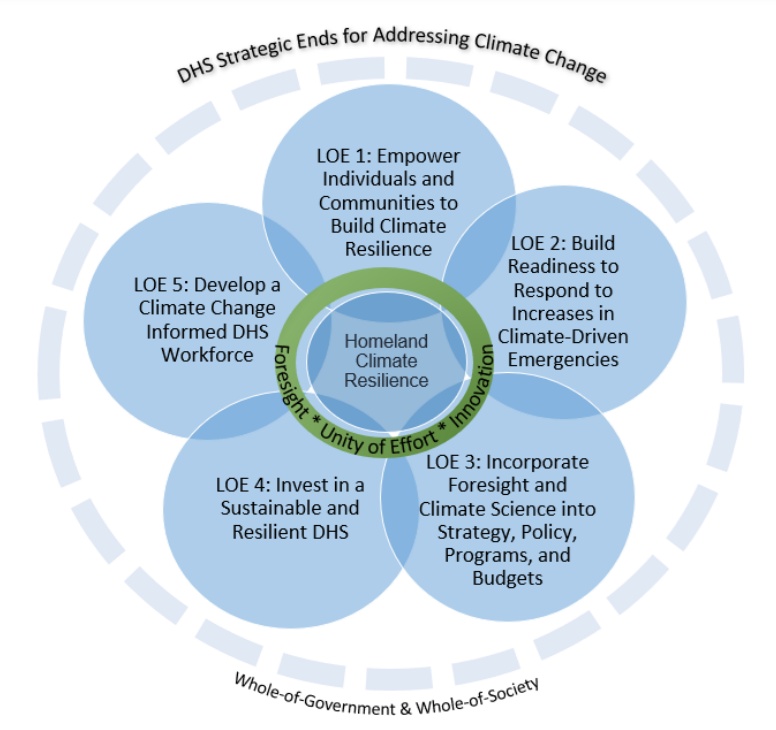
A good place to start is the DHS webpage Climate Literacy at DHS which was updated January 27, 2025, probably only adding a disclaimer “In an effort to keep DHS.gov current, the archive contains outdated information that may not reflect current policy or programs.”

Table of Contents

Climate Science Overview

The DHS Mission and Climate Change

Climate Change Adaptation, Mitigation, and Resilience

Climate Security

Climate Change and Fragility

Further Resources

Further Resources Include:

DHS Resources

Component Resources

External Resources

Climate Tools

Conclusion

DHS is still thinks it’s very much in the “Climate Change Business” and rooting it out will be an extensive process met with unwelcome resistance.

via Science Matters

https://ift.tt/xjzMkfd

February 17, 2025 at 02:58PM

The Blob out-flanked by hi-tech science nerds

By Jo Nova

“DOGE can’t be stopped because it’s a very technical team.”

Trump and Elon Musk make a killer combination — One has business and politics, the other has wildly hi-tech science (and business skills too). For decades the Blob controlled science, captured it and strangled it to make it dependent. But they crippled their own teams so badly that one man came to  achieve more than NASA. So it’s fitting that the same man came back to outflank the Blob’s technical defenses and leave them bare…

Joe Lonsdale, a tech venture capitalist who made his millions selling software to the Defence department, explains why Elon Musk and his tech expertise change everything this time. According to him, when Reagan tried to get answers from the bureaucracy, he’s didn’t have the technical help. They would ask questions but “there are so many ways of obscuring and to block these things. ” As Lonsdale describes it, “– no president has done this, ever. No President has ever had tech people around him.”

They went to the systems… and they started finding things, like “oh my goodness” and these people who work for the agencies tried to confront them, “you can’t look at the systems” “you’re getting around all our ability to block this stuff… “We thought you’d never actually get to see this stuff”. They’re freaking out.

So it’s very transparent  … they actually saw the payments, …the payments were going out to crazy s***. There were payments to people with the same social security numbers, payments to people with no social security numbers … to internews network which is training media all around the world how to have a certain point of view — it’s a very left point of view. There are payments to protestors…


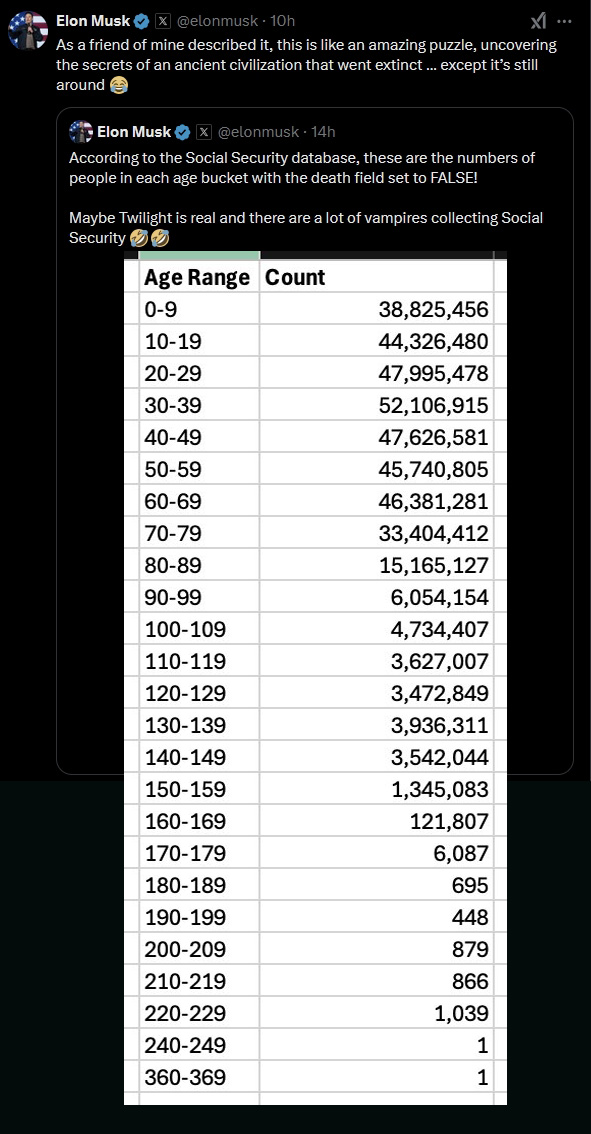
Elon Musk tweets the ages of social security recipients in the USA. The simplest of tests. The most banal of cross checks, and yet there are about four million people who are 150 years old, and 2 people still collecting checks who predate the constitution.

Elon Musk, tweets about social security vampires.

And the attacks for finding massive waste keep coming: US Senator John Fetterman attacked Musk for Rummaging through our personal s***, and Elon replied, “Bruh, if I wanted to rummage through random personal shit, I could have done that at PAYPAL. Hello???“

And where is the media? Apart from a few outlets most are reporting the legal feuds that are trying to block Trump and Musk.

The biggest expose in history of government fraud, waste and corruption is unfolding…


0 out of 10 based on 0 rating

via JoNova

https://ift.tt/BaZ4m3x

February 17, 2025 at 01:50PM

The Social Cost of Carbon: A Bureaucratic Boondoggle Exposed

Ross McKitrick’s Latest Study Shows SCC Manipulation for Political Ends

The Biden administration put in a lot hard at work inflating the Social Cost of Carbon (SCC), using exaggerated agricultural damage estimates to justify sweeping climate policies. But in a new study, economist Ross McKitrick—one of the sharpest minds in climate policy skepticism—has taken apart the foundations of these inflated numbers, revealing what happens when climate alarmism meets real data.

The Biden Administration raised its Social Cost of Carbon (SCC) estimate about fivefold based in part on global crop yield decline projections estimated on a meta-analysis data base first published in 2014. The data set contains 1722 records but half were missing at least one variable (usually the change in CO2) so only 862 were available for multivariate regression modeling. By re-examining the underlying sources I was able to recover 360 records and increase the sample size to 1222. Reanalysis on the larger data set yields very different results. While the original smaller data set implies yield declines of all crop types even at low levels of warming, on the full data set global average yield changes are zero or positive even out to 5 °C warming.

https://www.nature.com/articles/s41598-025-90254-2

Of course, the entire concept of the Social Cost of Carbon is a bureaucratic fantasy—a number conjured up by modelers who can tweak discount rates, speculative damage functions, and climate projections until they get the politically convenient answer. It’s an arbitrary metric, designed less to quantify real-world economic impacts and more to justify sweeping government interventions. That said, even within this rigged framework, McKitrick’s study exposes how the game is played: if you follow their own rules but use the full dataset, the SCC comes out far lower than the Biden administration’s sky-high estimate. In other words, if SCC were a legitimate measure (it isn’t), this paper shows they’re still doing it wrong.

McKitrick’s study, Extended Crop Yield Meta-Analysis Data Do Not Support Upward SCC Revision, exposes how bureaucrats have distorted agricultural yield projections to push for higher SCC estimates. His findings? The supposed climate-related crop damage is wildly overstated. In reality, global crop yields appear to remain stable—or even increase—under warming scenarios up to 5°C. This fundamentally undermines one of the key justifications for the massive SCC hikes driving Biden’s climate policies.

Let’s break this down.

How the SCC Got a Makeover

The SCC is supposed to measure the economic damage per ton of carbon dioxide emissions. Under the Biden administration, the Environmental Protection Agency (EPA) boosted this estimate to an eye-popping $220 per ton—a nearly fivefold increase from the first Trump administration’s EPA’s previous $51 per ton. A big chunk of this increase comes from projected agricultural losses, derived from the GIVE damage model. Nearly half of the SCC estimate ($103 per ton) is based on assumed losses in global food production due to warming.

But as McKitrick demonstrates, these assumptions are built on a foundation of bad data and flawed modeling.

The Data Problem: When Missing Numbers Become Policy Drivers

The SCC estimates for agriculture rely on two studies:

  • Challinor et al. (2014) (C14): A meta-analysis of crop yield simulations under climate change.
  • Moore et al. (2017) (M17): A re-analysis of C14, but with a much more pessimistic outlook.

C14 actually suggested that warming associated with CO2 increases could produce a moderate net benefit for crop yields. M17, using the same dataset but modifying the statistical approach, suddenly found widespread yield declines. Conveniently, this study became a primary input for the EPA’s justification of its SCC hike.

But here’s the kicker: The dataset used for these calculations was incomplete. C14 initially contained 1,722 data points, but nearly half were missing at least one crucial variable—often the change in CO2 levels. This left only 862 data points for regression modeling.

McKitrick painstakingly reconstructed the missing data, increasing the sample size by 40% to 1,222 records. The result? The apocalyptic yield declines of M17 evaporate. With the fuller dataset, global crop yields actually show zero to positive changes even with warming up to 5°C.

CO2: The Forgotten Fertilizer

One of the biggest sleights of hand in climate agriculture modeling is the tendency to ignore the well-documented benefits of CO2 fertilization. Plants need CO2 to grow, and numerous studies show that increasing CO2 enhances photosynthesis, improves water efficiency, and boosts crop yields.

M17 downplayed this by imposing a concave function on CO2 fertilization effects—essentially assuming that its benefits diminish sharply at higher levels. This assumption is questionable at best, especially when real-world evidence suggests that CO2 enrichment remains beneficial even at much higher concentrations.

McKitrick’s findings show that once CO2 fertilization is properly accounted for, the supposed catastrophic losses in food production disappear.

Bureaucratic SCC Manipulation: A Policy-Driven Fiction

The SCC is supposed to be based on objective economic analysis. Instead, it has become a politically weaponized tool, rigged to produce the “right” answer for those advocating aggressive climate policies.

The Biden EPA’s decision to increase the SCC by a factor of five wasn’t based on new empirical evidence of damage—it was driven by selective use of studies that inflated the cost of carbon while ignoring counterbalancing benefits.

McKitrick’s study reveals that when the full dataset is used, the SCC—at least in terms of agricultural impacts—should be much lower. If agricultural productivity is stable or improving, the massive projected damages vanish, bringing SCC estimates crashing down.

The Bottom Line: SCC Overestimation Means Bad Policy

Ross McKitrick’s study is a devastating blow to the bureaucratic inflation of the SCC. It demonstrates that:

  1. The Biden administration’s SCC hike was based on flawed and incomplete agricultural damage models.
  2. CO2-induced warming does not lead to catastrophic yield declines; in fact, crop yields remain stable or increase even at 5°C warming.
  3. The manipulated SCC figures are being used to justify extreme climate policies that hurt economic growth and energy security.

If we’re going to make rational policy decisions, we need an SCC that reflects reality—not one inflated to serve a political agenda. McKitrick’s work is a reminder that bad data leads to bad policy, and bad policy leads to unnecessary economic pain.

The next time you hear a bureaucrat justify draconian climate policies by citing the “high cost of carbon,” remember this: It’s all built on a foundation of smoke and mirrors.

McKitrick’s full paper can be found here.


Discover more from Watts Up With That?

Subscribe to get the latest posts sent to your email.

via Watts Up With That?

https://ift.tt/moROhHQ

February 17, 2025 at 12:07PM

Due This Week: EPA Plan for GHG Endangerment Finding

As promised, Trump on day 1 (January 20, 2025) issued an Executive Order challenging the presumption  “greenhouse gases” (GHGs) endanger public health and safety.  The pertinent text is in Section 6 reprinted below with my bolds and added images.

Executive Order 14154 of January 20, 2025 Unleashing American Energy

Sec. 6 . Prioritizing Accuracy in Environmental Analyses. (a) In all Federal permitting adjudications or regulatory processes, all agencies shall adhere to only the relevant legislated requirements for environmental considerations and any considerations beyond these requirements are eliminated. In fulfilling all such requirements, agencies shall strictly use the most robust methodologies of assessment at their disposal and shall not use methodologies that are arbitrary or ideologically motivated.

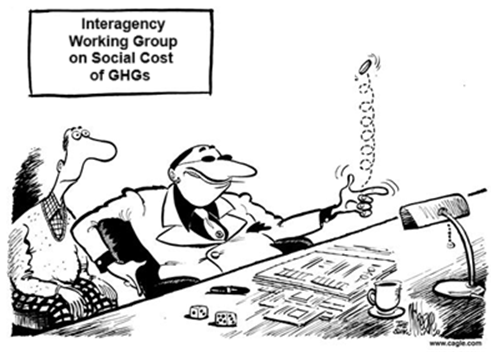
(b) The Interagency Working Group on the Social Cost of Greenhouse Gases (IWG), which was established pursuant to Executive Order 13990, is hereby disbanded, and any guidance, instruction, recommendation, or document issued by the IWG is withdrawn as no longer representative of governmental policy including:

(i) the Presidential Memorandum of January 27, 2021 (Restoring Trust in Government Through Scientific Integrity and Evidence-Based Policymaking);

(ii) the Report of the Greenhouse Gas Monitoring and Measurement Interagency Working Group of November 2023 (National Strategy to Advance an Integrated U.S. Greenhouse Gas Measurement, Monitoring, and Information System);

(iii) the Technical Support Document of February 2021 (Social Cost of Carbon, Methane, and Nitrous Oxide Interim Estimates under Executive Order 13990); and

(iv) estimates of the social cost of greenhouse gases, including the estimates for the social cost of carbon, the social cost of methane, or the social cost of nitrous oxide based, in whole or in part, on the IWG’s work or guidance.

(c) The calculation of the “social cost of carbon” is marked by logical deficiencies, a poor basis in empirical science, politicization, and the absence of a foundation in legislation. Its abuse arbitrarily slows regulatory decisions and, by rendering the United States economy internationally uncompetitive, encourages a greater human impact on the environment by affording less efficient foreign energy producers a greater share of the global energy and natural resource market. Consequently, within 60 days of the date of this order, the Administrator of the EPA shall issue guidance to address these harmful and detrimental inadequacies, including consideration of eliminating the “social cost of carbon” calculation from any Federal permitting or regulatory decision.

(d) Prior to the guidance issued pursuant to subsection (c) of this section, agencies shall ensure estimates to assess the value of changes in greenhouse gas emissions resulting from agency actions, including with respect to the consideration of domestic versus international effects and evaluating appropriate discount rates, are, to the extent permitted by law, consistent with the guidance contained in OMB Circular A-4 of September 17, 2003 (Regulatory Analysis).

(e) Furthermore, the head of each agency shall, as appropriate and consistent with applicable law, initiate a process to make such changes to any rule, regulation, policy or action as may be necessary to ensure consistency with the Regulatory Analysis.

(f) Within 30 days of the date of this order, the Administrator of the EPA, in collaboration with the heads of any other relevant agencies, shall submit joint recommendations to the Director of OMB on the legality and continuing applicability of the Administrator’s findings, “Endangerment and Cause or Contribute Findings for Greenhouse Gases Under Section 202(a) of the Clean Air Act,” Final Rule, 74 FR 66496 (December 15, 2009).

What Might Happen Next

Source E&E News : Trump set a deadline on the endangerment finding. Here’s what might happen.

The finding, issued during President Barack Obama’s first term, holds that greenhouse gas emissions “may reasonably be anticipated to endanger public health or welfare.” It’s the prerequisite for Clean Air Act rules targeting heat-trapping pollutants such as carbon dioxide and methane. The finding originally pertained to climate pollution from vehicles, but it opened the door for regulations on power plants and oil and gas infrastructure. And it could support future regulation on additional sources of climate pollution, such as landfills, refineries and industrial plants.

Getting rid of the finding would make scrapping EPA climate rules a matter of routine paperwork, an expert said. Regulations could be undone through simple, swift rulemakings. No replacement rules would be needed.

“Taking away the 2009 endangerment finding would really make it almost a virtual formality to take down all the greenhouse rules for CO2 and methane,” said Joe Goffman, EPA’s air chief under Biden.

EPA would still need to strip out sector-specific findings from rules written under a key section of the Clean Air Act — known as Section 111 — he said. But when the dust settled, EPA could regulate oil and gas facilities for ozone-forming pollutants alone, and not for methane — greatly reducing requirements for industry. And power plants that burn fossil fuels wouldn’t be regulated for carbon.

Daren Bakst, director of the energy and environment program at the conservative Competitive Enterprise Institute, a think tank that has long advocated getting rid of the endangerment finding, agreed that it would “present legal challenges.”  But he said the risk was worth taking.

“If the EPA finds there is no endangerment, and this survives in court, it would have the important effect of stopping the EPA from regulating greenhouse gases,” he said.

Regarding next week’s deadline, he said Zeldin might submit only preliminary recommendations to the Office of Management and Budget, rather than a full-blown decision to challenge the finding, or pass on it.

via Science Matters

https://ift.tt/GxDWthA

February 17, 2025 at 10:15AM