Wind Blowing Somewhere Does Not Solve the Intermittency Problem

Roger Caiazza

In October 2023 an article of mine was published here that addressed the wind is always blowing somewhere fallacy used by green energy proponents to argue that large amounts of storage and any new dispatchable emissions-free resources are not necessary in a future electric system that relies on wind and solar generating resources.  I recently discovered the US Energy Information Administration Hourly Electric Grid Monitor that provides hourly net generation by energy source for the Lower 48 states.  This article describes 2024 energy source data with an emphasis on wind energy relative to the “wind is always blowing somewhere” claim.

Wind Lulls

I don’t think anyone is claiming that extended periods of low wind and solar resources is not an issue.  In September Parker Gallant noted that industrial wind turbines (IWT) in Ontario “show up at the party, almost always, after everyone has left” in a post that described poor performance of the province’s wind turbines over a five day period in September 2024.  I evaluated the performance of New York’s 2,454 wind turbine fleet and found that there was an hour when the total generation was 0.2 MW during this September event.  David Theilen directly addressed the wind is always blowing somewhere argument with this graph using data from the US Energy Information Administration Hourly Electric Grid Monitor.

Figure 1: US Energy Information Administration Hourly Electric Grid Monitor December 2024

EIA data

I used the data dashboard at the US Energy Information Administration Hourly Electric Grid Monitor as the source of the hourly 2024 generation by energy source data used in this analysis.  EIA notes that this is “Hourly total net generation and net generation by energy source for the Lower 48 states.”   The settings widget enables a user to change the time and period albeit hourly data are only available for up to 31 days, so I had to import data by month.  There is another issue.  January generation categories included Wind, Solar, Hydro, Unknown, Other, Petroleum, Natural Gas, Coal, and Nuclear.  December generation categories changed to Battery storage, Solar with integrated battery storage, Pumped storage, Unknown energy storage, Wind, Solar, Hydro, Unknown, Other, Petroleum, Natural Gas, Coal, and Nuclear.  I made no attempt to account for the different categories when I downloaded the data.

Figure 2: US Energy Information Administration Hourly Electric Grid Monitor

I wanted to show the installed capacity for the different energy sources but I was only able to find EIA values for solar – 107,400 MW.  Figure 3 shows the Maximum Hourly Generation (MW) in 2024 for the primary energy source categories that gives an idea how much capacity is installed for each energy source.  Note the maximum solar is 75% of the EIA installed capacity.  I expect the percentage of installed wind relative to the observed maximum hourly MW would be even less.

Figure 3: US Energy Information Administration Hourly Electric Grid Monitor 2024 Maximum Hourly Generation (MW)

Figure 4 lists the US Energy Information Administration Hourly Electric Grid Monitor 2024 Total Energy (GWh).  I was frankly surprised how much wind capacity was generated on an annual basis.  However, totals and averages are not the primary planning issue – determining how much energy is needed in the worst case is a prerequisite for reliability planning.

Figure 4: US Energy Information Administration Hourly Electric Grid Monitor 2024 Total Energy (GWh)

Table 1 summarizes nationwide energy source hourly data for 2024.  Solar has the most hourly variability because it is unavailable at night.  Wind has 95% variability and petroleum that is used for peaking purposes has 99% variability.  Only nuclear has less variability than the total energy.  The distribution of wind energy hourly output is notable. 

Table 1: US Energy Information Administration Electric Grid Monitor 2024 Hourly Data Distribution

For a general idea of the variability of the wind resource across the Lower 48 consider Figure 5 graph of annual hourly data.

Figure 5: US Energy Information Administration Hourly Electric Grid Monitor 2024 Hourly Wind Energy Production (MW)

I could not find a map of wind energy facilities at the EIA website.  Synapse Energy has developed an interactive map of U.S. power plants, including wind facilities which is shown as Figure 4.

Figure 6: Synapse Energy Map of U.S. Wind Power Plants

Assuming that the EIA wind energy facilities are similar to those used by Synapse Energy it is clear that there is a wide spatial distribution across the Lower 48.   In the next step I analyzed temporal variation. 

Table 2 provides an estimate of wind lulls at different thresholds.  I evaluated the hourly data to determine the total available wind energy (GWh) available when the total available wind capacity was less than six percentile thresholds.  At the first percentile only 14,440 MW or less was generated.  This level is 15% of the maximum observed hourly wind capacity.  There were 14 episodes that met this threshold and total energy generated during those periods was 988 GWh.  From a planning standpoint the maximum duration is important.  There was a 14-hour period when all the Lower 48 wind facilities produced less than 15% of the maximum observed capacity and the total energy generated was only 29 GWh which is only 2% of the capability over that period.  At the 25th percentile, all the wind facilities produced 40% of the maximum observed capacity.  There were 180 episodes that met this threshold and total energy generated during those periods was 63,430 GWh.  For the maximum duration there was a 115-hour period when all the Lower 48 wind facilities produced less than 40% of the maximum observed capacity and the total energy generated was 2,319 GWh which is 21% of the capability over that period.

Table 2: US EIA Electric Grid Monitor 2024 Hourly Wind Lulls

Discussion

It is a stretch to try to extrapolate these data for planning purposes to determine the resource gap for a specific area.  A sophisticated analysis that addresses the location of the wind facilities, the interconnections between the facilities, and the generation from other resources on an hour-by-hour basis is required.  Nonetheless, using the data to guess the impacts is instructive.

To take advantage of the wind blowing somewhere argument it would be necessary to upgrade the transmission system.  Assuming that transmission is available there is still a clear need for backup energy.  If the entire wind energy system would need to produce 50% of the maximum observed capacity to cover both local and distant energy needs note that this analysis found that 25% of the time only 40% of the maximum was available. The worst case was a 115-hour period when all the Lower 48 wind facilities produced only b2,319 GWh of a possible 11,150 GWh.  Assuming 50% of the maximum is needed to support the system there would be an energy gap of 3,256 GWh over this 115-hour period.  At a cost of $148/kWh to $400/kWh the storage needed for this event would be $482 to $1,302 billion.

Recently, Russ Schussler (the Planning Engineer) published an article that argued that the intermittency issue addressed here might be solvable: “The long-term problems associated with wind and solar due to their intermittency could and may likely be made manageable with improved technology and decreasing costs.”  In my opinion, practically speaking it is not possible.  It would be necessary to upgrade the electric transmission system, deploy short-term storage, and develop and deploy a dispatchable emissions-free resource all to address short and infrequent periods and to somehow finance those resources with those constraints.

Importantly, even if intermittency can be addressed Schussler argues that there is a fatal flaw:

Overcoming intermittency though complex and expensive resource additions at best gets us around a molehill which will leave a huge mountain ahead. Where will grid support come from?  Wind, solar and batteries provide energy through an electronic inverter. In practice, they lean on and are supported by conventional rotating machines. Essential Reliability Services include the ability to ramp up and down, frequency support, inertia and voltage support. For more details on the real problem see this posting. “Wind and Solar Can’t Support the Grid” describes the situation and contains links to other past postings provide greater detail on the problems.

Conclusion

Green energy advocates who minimize the challenge of transitioning the electric grid to wind and solar rely on the claim that the “wind is always blowing somewhere”.   The 2024 wind energy data suggest otherwise.  I have no doubt that a proper electric reliability resource planning analysis would verify that my intermittency concerns are real and that revolving the issues would be prohibitively expensive.  Coupled with the grid support issues, the green dream of a wind and solar electric generating system is a fantasy that will never be viable.


Roger Caiazza blogs on New York energy and environmental issues at Pragmatic Environmentalist of New York.  This represents his opinion and not the opinion of any of his previous employers or any other company with which he has been associated.


Discover more from Watts Up With That?

Subscribe to get the latest posts sent to your email.

via Watts Up With That?

https://ift.tt/vnFQ6ty

February 9, 2025 at 12:03PM

Grok’s “Anecdotal” Data

The frequency of 95F (35C) days in Indiana has plummeted. Grok thinks this is anecdotal. Indiana – State Climate Summaries 2022 Perplexity is even worse.

via Real Climate Science

https://ift.tt/VN7EvB8

February 9, 2025 at 11:29AM

Ed Miliband’s Battery Blitz

By Paul Homewood

The Telegraph falls for the battery myth again!


 image

https://www.telegraph.co.uk/business/2025/02/08/battery-powered-britain-race-prevent-net-zero-blackouts/

Amongst all of Ed Miliband’s crimes against the UK, surely the deliberate desecration of the countryside is up there amongst the worst.

Not content with building hundreds of miles of pylons, plastering the countryside with wind and solar farms and wanting to destroy farming, he now wants to industrialise it with ugly and toxic battery storage factories.

The Telegraph reports on how the 800-year old village of Willingham by Stow in the Lincolnshire Wolds has fought off one such giant battery park. But many others are in the queue:

“The emerging battery park blitz will add to that pressure on the countryside, with Miliband planning a five-fold increase in the infrastructure, meaning industrial batteries will become a landscape feature across the UK.

Hundreds of acres of farmland will likely be turned into industrial sites, but those losses will also boost the UK’s ability to keep the lights on, heat our homes and even power our cars as electricity takes over from gas.

It’s part of a green revolution that ironically destroys our greenery. But the prize – and Miliband’s ultimate dream – is a power system that will run largely on free fuels such as wind and solar.”

https://www.telegraph.co.uk/business/2025/02/08/battery-powered-britain-race-prevent-net-zero-blackouts/

Sadly the Telegraph goes on to show a gross misunderstanding of what these batteries are capable of, and thus disinform its readers. The article states:

“For Tom Vernon, founder and chief executive of Statera, one of the UK’s leading battery developers, a battery-powered Britain makes huge sense.

Given the intermittent nature of renewables such as wind and solar, batteries have the potential to play a huge part in securing the net zero energy system as Britain weans itself off gas-powered generation sources.

Vernon believes that once Britain hits the Miliband target to have at least 25 gigawatts (GW) of battery capacity, there will be times, especially on cold, windless winter evenings, when batteries provide up to two-thirds of the UK’s power…..

It was Britain’s battery parks that helped save the day when, last month, one such cold, dark and windless bout of dunkelflaute stilled the nation’s turbines and threatened the UK with power shortages.”

Tom Vernon, of course, would say that – his company stands to rake in huge profits on the back of intermittent renewables. But the journalist, Jonathan Leake, clearly does not understand the difference between GW and GWH!

That 25 GW will only store enough electricity to last for an hour or two at the most. It will be absolutely useless when the wind does not blow for days and weeks on end. Even the comment about last month is not correct, because it was our full fleet of CCGT plants which kept the lights on. The real purpose of batteries is to fine tune the grid, offering instantaneous power should frequency dip, thus buying time for generators to fire up.

A good example of Leake’s misunderstanding is the example he uses of Statera’s new battery park in Manchester. Leake writes:

“An even bigger project is underway at another site. Carrington battery park in Greater Manchester will hold 680 megawatts (MW) of battery power able to support up to 2.2m homes.

“These technologies can store energy at scale – not just for hours, but across days,” says Vernon. “This capability is essential for maintaining energy security, reducing the UK’s reliance on natural gas, and ensuring we are prepared for future cold snaps and dunkelflautes as and when they occur.””

Carrington will actually store 1360 MWh, ie two hours storage. As batteries cannot be totally drained, the realistic amount of storage is less still.

The idea that plants like this will keep the grid running during dunkelflautes is dangerous nonsense.

Maybe the Telegraph should send Mr Leake on an energy training course!

via NOT A LOT OF PEOPLE KNOW THAT

https://ift.tt/kgtnUje

February 9, 2025 at 10:39AM

“Green” Agenda is Anything But

Steve Milloy explains the deceptive “Green Agenda” label in his Real Clear Wire article There Is Nothing Green About the ‘Green’ Agenda.  Excerpts in italics with my bolds and added images.

Now that the Democrats have lost their lock grip on power, what’s a green activist to do? It’s almost comical how the climate left is trying to cloak their agenda in terms they think will melt in Republicans’ ears. For example, Jennifer Granholm, energy secretary in the Biden administration recently penned an opinion piece arguing that President Trump is playing right into Communist China’s evil hands by killing off America’s green economy. 

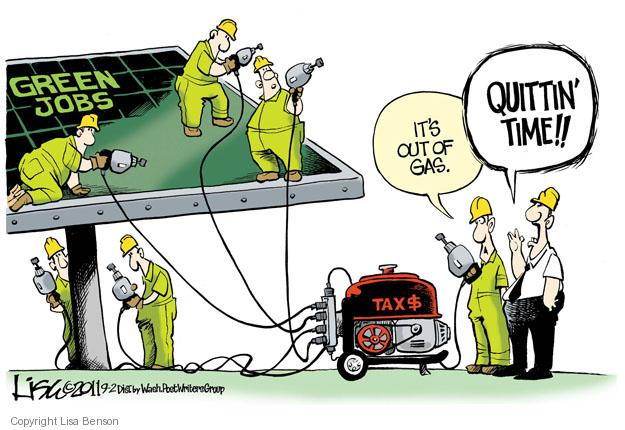
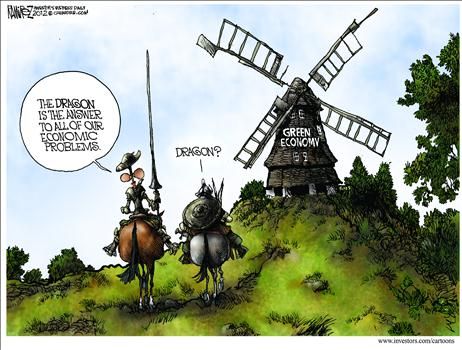
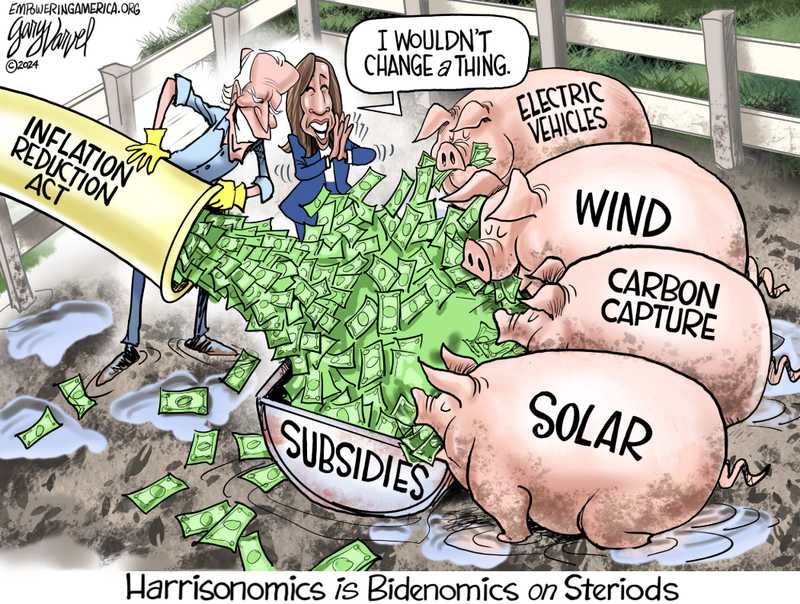
Translation: The left is furious that Trump has halted the flow of billions of taxpayers’ dollars to subsidize electric vehicles that nobody wants and only the well-off can afford. The new president is killing the “green economy,” as Granholm puts it.

There is nothing green about the climate left’s solutions. 

If the climate movement was truly sincere and intellectually honest in its desire to stop actions contributing to global environmental degradation, it would stand fast against solar panels and electric vehicles. There is nothing green about the climate left’s solutions.

There is nothing environmentally friendly about using enslaved children in the Congo to mine cobalt for lithium-ion rechargeable batteries used in EVs. They labor with crude tools and bare hands, breathing in cobalt’s toxic dust in cramped pits. Runoff infused with cobalt and other chemicals contaminate the water supply. Meanwhile, on the other side of the world, green activists sit blithely unaware or unconcerned in the comfort of their own homes. They are saving the world, they smugly assure themselves, while children suffer in an environmental hellhole.

Far removed from U.S. environmental standards, Indonesia is the center of mining and refining nickel, an essential component in EV batteries. Pea soup-thick brown emissions shroud nickel smelting operations in the Indonesian island of Sulawesi as well as the coal-fired plants that fuel them. Processing waste and chemicals potentially leach into the ground. Dust residue from both ubiquitously blanket nearby communities, while waterways tainted by mining operations have red cast.

Whatever else climate activists may try to tell us,
there is nothing green going on here.

In Brazil, near the mouth of the Amazon River, a factory refines bauxite into what eventually becomes aluminum. It had been the source of aluminum in the Ford F-150 Lightening, the company’s now cancelled all-electric pickup truck. A lawsuit alleges that toxic elements, including aluminum and other heavy metals emanating from the refinery, have been responsible for cancer, birth defects, neurological dysfunction, digestive disorders, skin conditions, and increased mortality. How can an EV be called green or good for the environment when it’s making thousands of Brazilians sick?

Elsewhere in Brazil this past Christmas season, Brazilian authorities shuttered construction of an EV factory when it was discovered that its builders were working under “slavery”-like conditions. How is that a green virtue? Perhaps green dogma holds that human worth and dignity are small sacrifices that must be made for the common good.

Solar energy, long the prize pig of the climate crowd, isn’t green either.

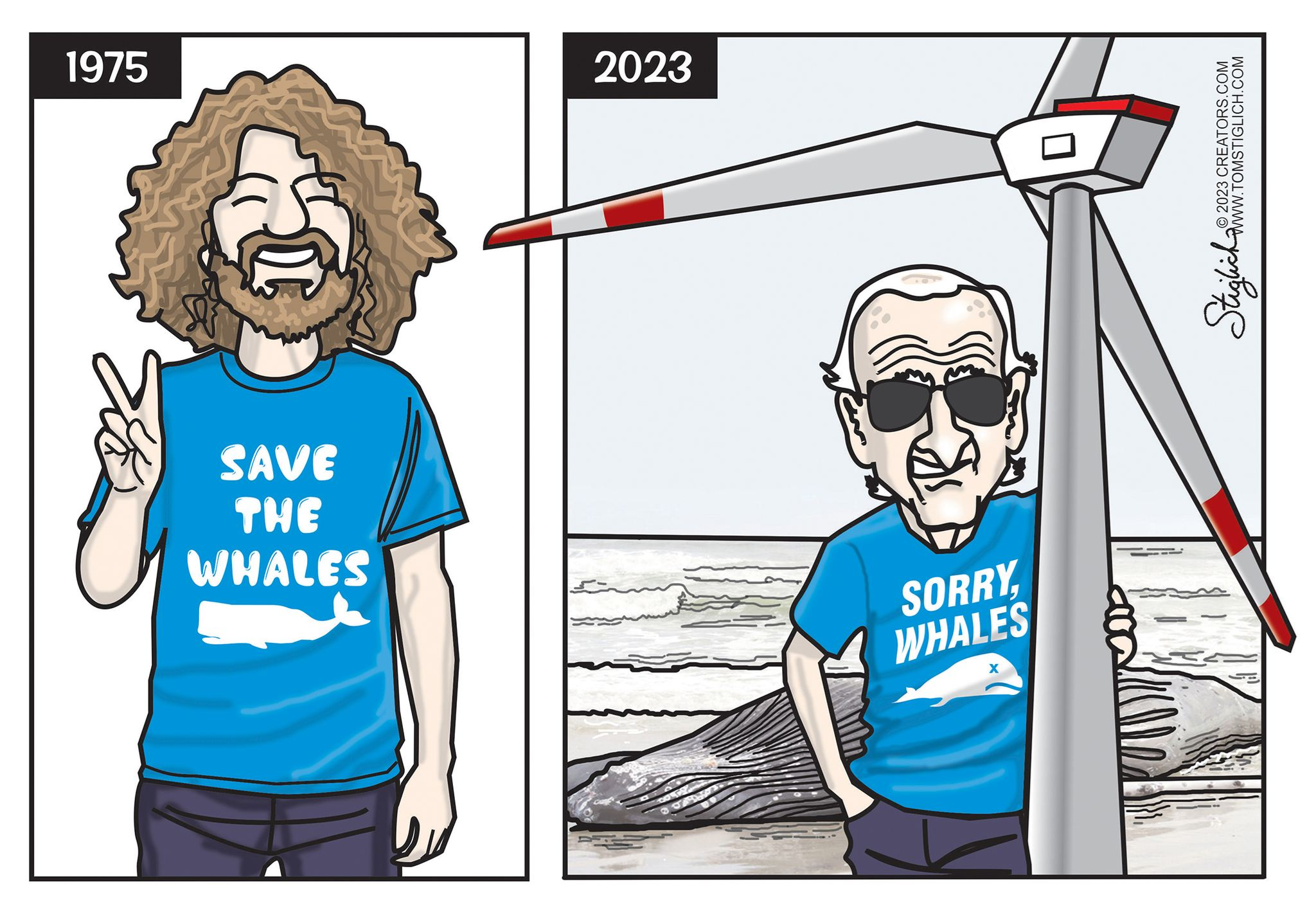
The fact that destroying forest land for solar arrays is bad for the environment should be obvious. Studies have found “the loss of carbon-dioxide gobbling forests for solar installations results in a net increase in greenhouse gas emissions.” Nor should wind farms be considered remotely green when wildlife is being killed and habitats are being disrupted. The same is true offshore, with a number of whale deaths associated with mammoth wind operations.

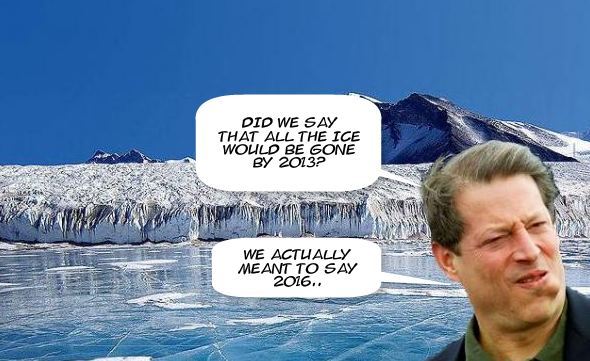
The same folks pushing “green” have been disingenuous from the start. In 1970, they assured us that human activity would cause an ice age by the 21st century and that we’d be under food rationing by 1980. Acid rain was a crisis until it wasn’t. Then global warming became the crisis, with much of New York City to be underwater by 2019. In 2008, Al Gore prophesized that the North polar cap would be gone in five years. It wasn’t. In 2009, UK Prime Minister Gordon Brown proclaimed,” We have fewer than 50 days to save our planet from catastrophe. Spoiler alert: We’re still here and thriving.

Their seemingly endless lies have been accompanied by Orwellian word games, moving from “global warming” to “change.” Now the Newspeak has shifted to “extreme weather and “overheating.

The truth is there is no green energy. No energy is clean. No energy is dirty. There are only challenges, solutions and tradeoffs. At the time of already high energy costs, choosing reliable, fossil fuel-backed energy is of paramount importance. Word sophistry from our friends on the left won’t change that.


via Science Matters

https://ift.tt/PJnCYiq

February 9, 2025 at 08:32AM