Month: June 2018

Upcoming Research Will Buck The ‘Consensus’ And Show Antarctica Is Still Gaining Ice

By Paul Homewood


I mentioned a new study the other day, which claimed that Antarctica is losing more and more ice.

This was in total contrast to the study by Jay Zwally in 2015, which showed that the continent was gaining ice.

It appears that Zwally has a new paper on its way, which will corroborate his original findings:


image

Is Antarctica melting or is it gaining ice? A recent paper claims Antarctica’s net ice loss has dramatically increased in recent years, but forthcoming research will challenge that claim.

NASA glaciologist Jay Zwally first challenged the “consensus” on Antarctica in 2015 when he published a paper showing ice sheet growth in eastern Antarctica outweighed the losses in the western ice sheet.

Zwally will again challenge the prevailing narrative of how global warming is affecting the South Pole. Zwally said his new study will show, once again, the eastern Antarctic ice sheet is gaining enough ice to offset losses in the west.

Much like in 2015, Zwally’s upcoming study will run up against the so-called “consensus,” including a paper published by a team of 80 scientists in the journal Nature on Wednesday. The paper estimates that Antarctic is losing, on net, more than 200 gigatons of ice a year, adding 0.02 inches to annual sea level rise.

“Basically, we agree about West Antarctica,” Zwally told The Daily Caller News Foundation. “East Antarctica is still gaining mass. That’s where we disagree.”

Reported ice melt mostly driven by instability in the western Antarctic ice sheet, which is being eaten away from below by warm ocean water. Scientists tend to agree ice loss has increased in western Antarctica and the Antarctic Peninsula has increased.

Measurements of the eastern ice sheet, however, are subject to high levels of uncertainty. That’s where disagreements are. (RELATED: Earth’s Largest Ice Sheet Was Stable For Millions Of Years During A Past Warm Period)

“In our study East Antarctic remains the least certain part of Antarctica for sure,” Andrew Shepherd, the study’s lead author and professor at the University of Leeds, told TheDCNF.

“Although there is relatively large variability over shorter periods, we don’t detect any significant long-term trend over 25 years,” Shepherd said.

However, Zwally’s working on a paper that will show the eastern ice sheet is expanding at a rate that’s enough to at least offset increased losses the west.

The ice sheets are “very close to balance right now,” Zwally said. He added that balance could change to net melting in the future with more warming.

So, why is there such a big difference between Zwally’s research and what 80 scientists recently published in the journal Nature?

There are several reasons for the disagreement, but the biggest is how researchers make what’s called a glacial isostatic adjustment (GIA), which takes into account the movement of the Earth under ice sheets.

Scientists use models to measure the movement of land mass in response to changes the ice sheet sitting on top. For example, Zwally said eastern Antarctica’s land mass has been going down in response to ice sheet mass gains.

That land movement effects ice sheet data, especially in Antarctica where small errors in GIA can yield big changes ice sheet mass balance — whether ice is growing or shrinking. There are also differences in how researchers model firn compaction and snowfall accumulation.

“It needs to be known accurately,” Zwally said. “It’s an error of being able to model. These are models that estimate the motions of the Earth under the ice.”

Zwally’s 2015 study said an isostatic adjustment of 1.6 millimeters was needed to bring satellite “gravimetry and altimetry” measurements into agreement with one another.

Shepherd’s paper cites Zwally’s 2015 study several times, but only estimates eastern Antarctic mass gains to be 5 gigatons a year — yet this estimate comes with a margin of error of 46 gigatons.

Zwally, on the other hand, claims ice sheet growth is anywhere from 50 gigatons to 200 gigatons a year.

Shepherd’s recently published paper found Antarctica lost 219 billion tons of ice from 2012 to 2017, about triple what annual ice mass loss was in the previous decade.

“There are several potential reasons for the remaining disagreement among the various satellite techniques, such as the models we use to account for snowfall and glacial isostatic adjustment,” Shepherd told The DCNF.

“But the ice losses we detect in West Antarctica are highly accurate, and outstrip by far the signal or uncertainty in East Antarctica,” he said.

Zwally said the ice sheets are reacting to climate warming, the question is when receding started and how far it would go.

http://dailycaller.com/2018/06/15/antarctica-ice-sheets


As I pointed out previously, nobody really has the first idea what is happening. Measurements are fraught with difficulties, not least how to calculate GIA.

The best methodology we have is to monitor tide gauges, which continue to show no acceleration in sea level rise, which is increasing at a similar rate to the 1920s to 50s.

via NOT A LOT OF PEOPLE KNOW THAT

https://ift.tt/2JXMpF2

June 17, 2018 at 11:34AM

Week in review – science edition

by Judith Curry

A few things that caught my eye this past week.

Antartica’s ice melt has accelerated [link]

Upcoming research by Jay Zwalley will buck the consensus and show Antartica is still gaining ice [link]

Antarctica’s Ice May Be More Durable Than We Thought [link]

Steve McIntyre: about 2.5 years ago, I did a thorough parsing of Antarctic ice mass loss, observing,that contribution of the glacio-isostatic adjustment (GIA) was more or less equal to the reported ice mass loss and HUGE discrepancies in GIA [link]

New study questions long-held assumption that surface melt in Antarctica is confined to summer | [link]

Large scale climate oscillation impacts on temperature, precipitation and land surface phenology in Central Asia (open access) [link]

Article on statistics of CO2, including cascading uncertainties [link]

New paper by Craig Loehle: Disequilibrium and relaxation times for species responses to climate change [link]

Ice core evidence for decoupling between mid-latitude atmospheric water cycle and Greenland temperature during the last deglaciation [link]

Atmospheric Methane over the Past 2000 Years from a Sub-tropical Ice Core, Central Himalayas [link]

increasing precipitation whiplash in California, including analysis on the rising risk of an 1862-like flood: [link]

Drought, Heat, and the Carbon Cycle: a Review [link]

“Pre-industrial T have been more variable than previously thought…currently used reference level [for preindustrial] represents end of the Little Ice Age, the coldest phase of the entire last 10,000 years” [link]

Paper relating the internal variability of climate models to their sensitivity is out in this month’s Journal of Climate: [link]

Temperature extremes in Alaska: temporal variability and circulation background [link]

Cycles in oceanic teleconnections and global temperature change [link]

On the Cause of Recent Variations in Lower Stratospheric Ozone [link]

Difference between the North Atlantic and Pacific meridional overturning circulation in response to the uplift of the Tibetan Plateau [link]

Predictability of the European heat and cold waves [link]

Now in NatureClimate – Perspective: Climate reddening increases the chance of critical transitions [link]

How the ice age shaped New York [link]

´Practice and philosophy of climate model tuning across six US modeling centers´ [link]

Atlantic-Pacific Asymmetry in Deep Water Formation [link]

The Effects of Younger Dryas Orbital Parameter and Atmospheric pCO2 Changes on Radiative Forcing and African Monsoonal Circulation [link]

Model tropical Atlantic biases underpin diminished Pacific decadal variability [link]

A new angle on climate model uncertainty: changing the order in which different climate processes are computed can vary climate feedback parameter by half the full CMIP5 spread in climate feedback. [link]

Hurricane Harvey Links to Ocean Heat Content and Climate Change Adaptation (open access) [link]

Ocean Carbon Cycle Feedbacks Under Negative Emissions [link]

Decreasing Indian summer monsoon on the northern Indian sub-continent during the last 180 years: evidence from five tree-ring cellulose oxygen isotope chronologies [link]

New paper on “radiative feedbacks from stochastic variability in surface temperature and radiative imbalance” [link]

An Energy Balance Model for Paleoclimate Transitions [link]

A decade later, the most recent US AMOC Science Team report captures progress the community of researchers has made on the Atlantic Meridional Overturning Circulation [link]

“A multi-approach strategy in climate attribution studies: Is it possible to apply a robustness framework?” [link]

Social science and policy

Nuclear power won’t survive without a government handout [link]

Pielke Jr: Scientists as both experts and political myth-makers [link]

Massive climate funding by wealthy foundations [link]

Sucking CO2 from air is cheaper than thought [link]

Pirates and Climate Change: A Dispatch From the Bangladeshi Sundarbans [link]

Economically robust protection against 21st century sea-level rise [link]

“Coastal flood damage and adaptation costs under 21st century sea-level rise” [link]

Philanthropy, group think and climate change [link]

About science and scientists

How a belief in beauty has triggered a crisis in physics [link]

Fellows of the Royal Geological Society push back over climate position [link]

Bret Stephens: They Dying Art of Disagreement  [link]

Two years ago, NASA dismissed and mocked an amateur’s criticisms of its asteroids database. Now Nathan Myhrvold is back, and his papers have passed peer review. [link]

Questioning truth, reality and the role of science [link]


via Climate Etc.

https://ift.tt/2t34Y4o

June 17, 2018 at 11:32AM

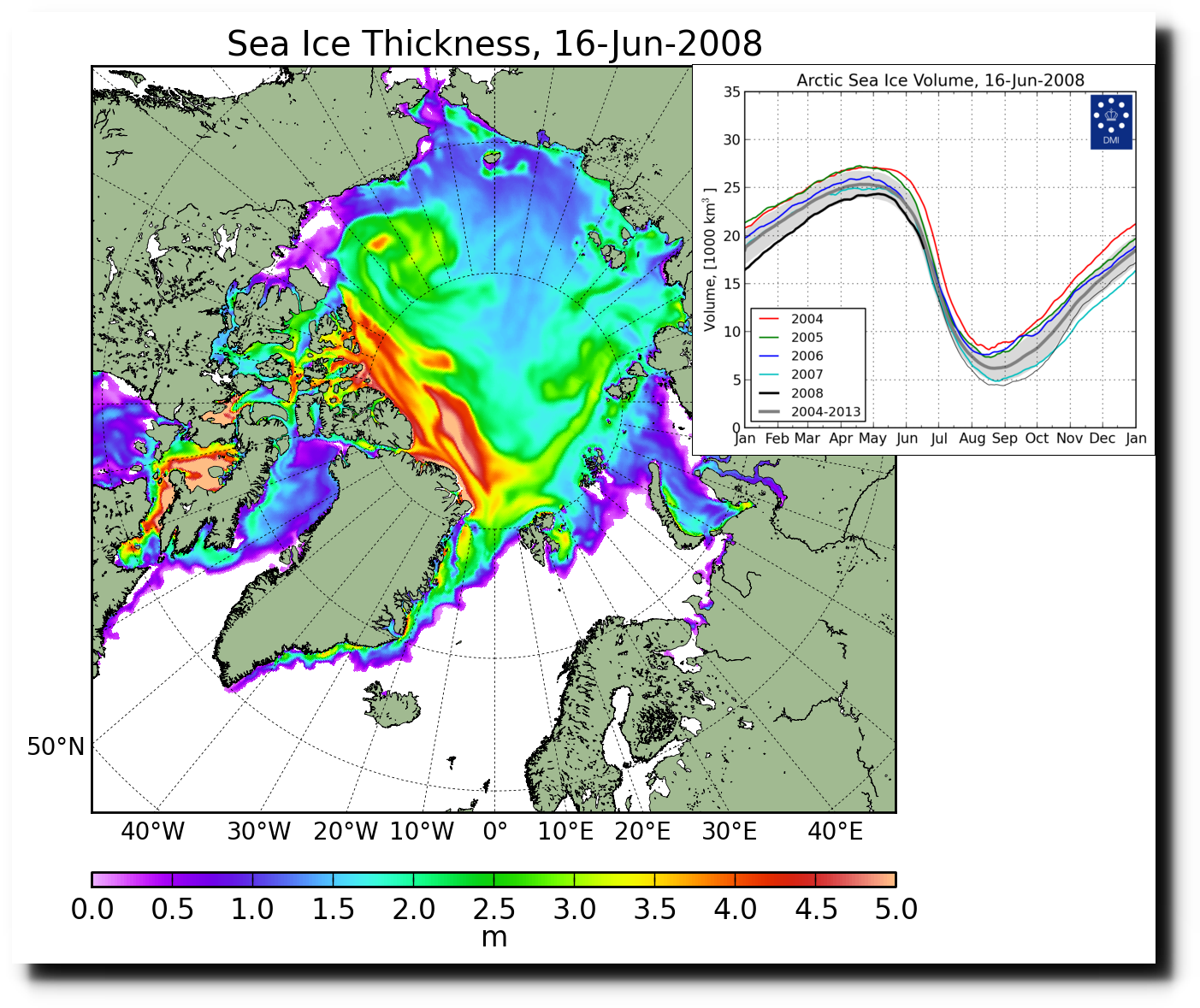
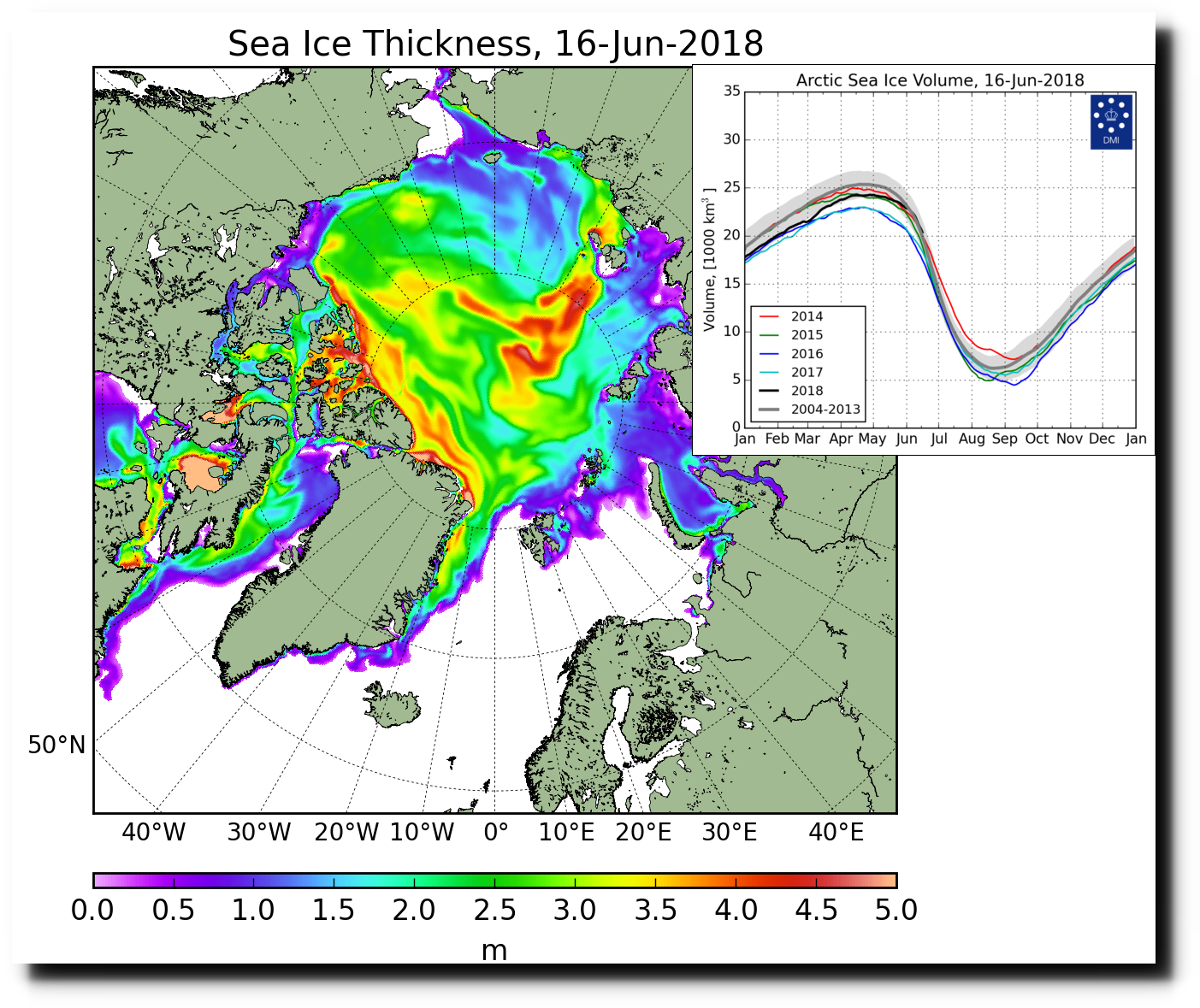
North Pole Ice Twice As Thick As Ten Years Ago

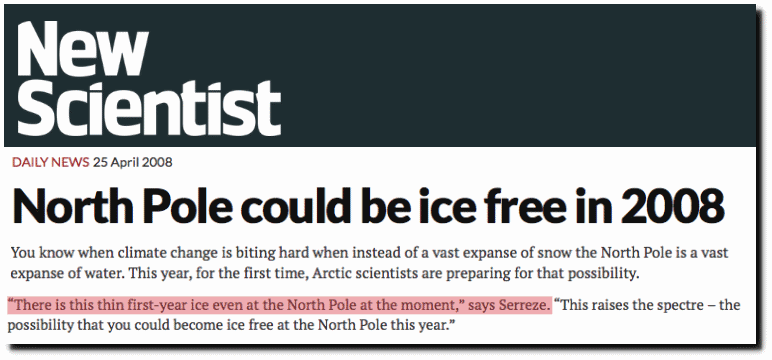
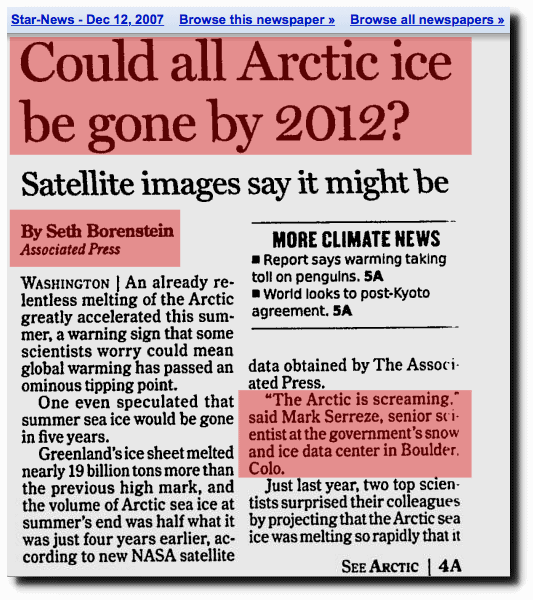
Ten years ago, Arctic sea ice was very thin and our top climate scientists announced the ice was screaming and was about to disappear.

North Pole could be ice free in 2008 | New Scientist

Star-News – Google News Archive Search

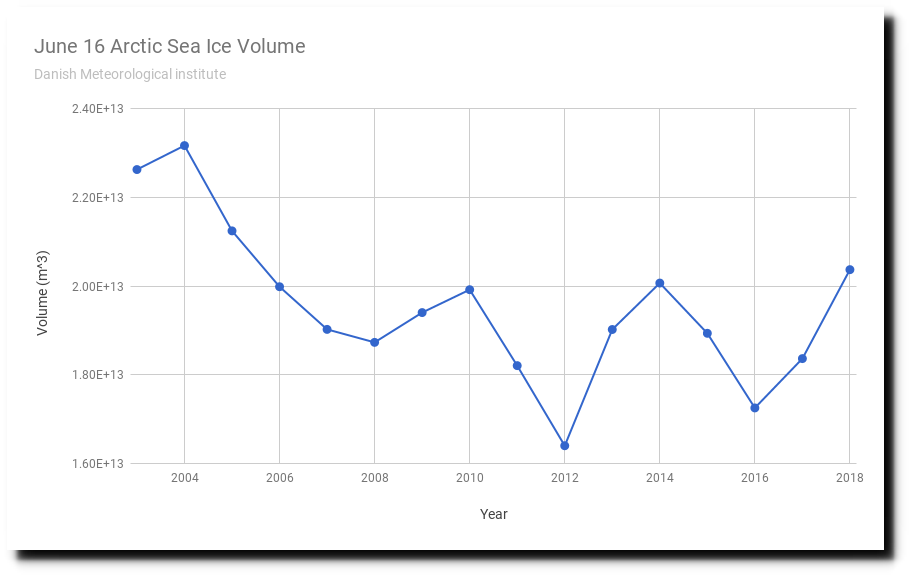
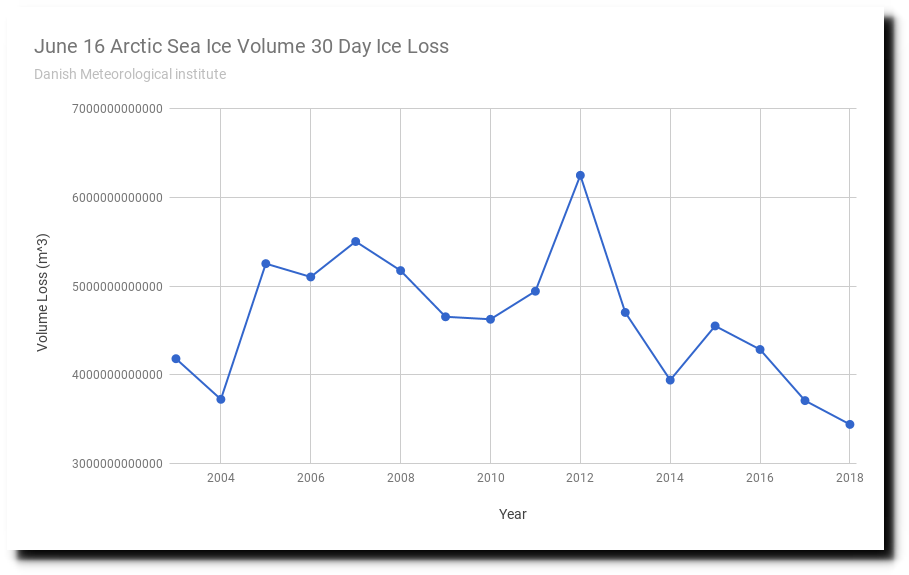
Ice near the pole has doubled in thickness since then, ice volume is the highest in thirteen years, and is melting the slowest on record.

Spreadsheet    Data

FullSize_CICE_combine_thick_SM_EN_20080616.png (1337×1113)

FullSize_CICE_combine_thick_SM_EN_20180616.png (1337×1113)

Climate scientists have absolutely no clue what they are talking about, but if you reject their junk science, you are an evil denier.

In a letter to the Washington Post, Sherwood Boehlert, a retired Republican congressman who once headed the house science committee, wrote: “I call on my fellow Republicans to open their minds to rethinking what has largely become our party’s line: denying that climate change and global warming are occurring and that they are largely due to human activities.”

US climate scientists fight back after year of scepticism | Environment | The Guardian

via The Deplorable Climate Science Blog

https://ift.tt/2My4dsf

June 17, 2018 at 10:48AM

NASA Confirms Gravity Interpretations Are Junk Science

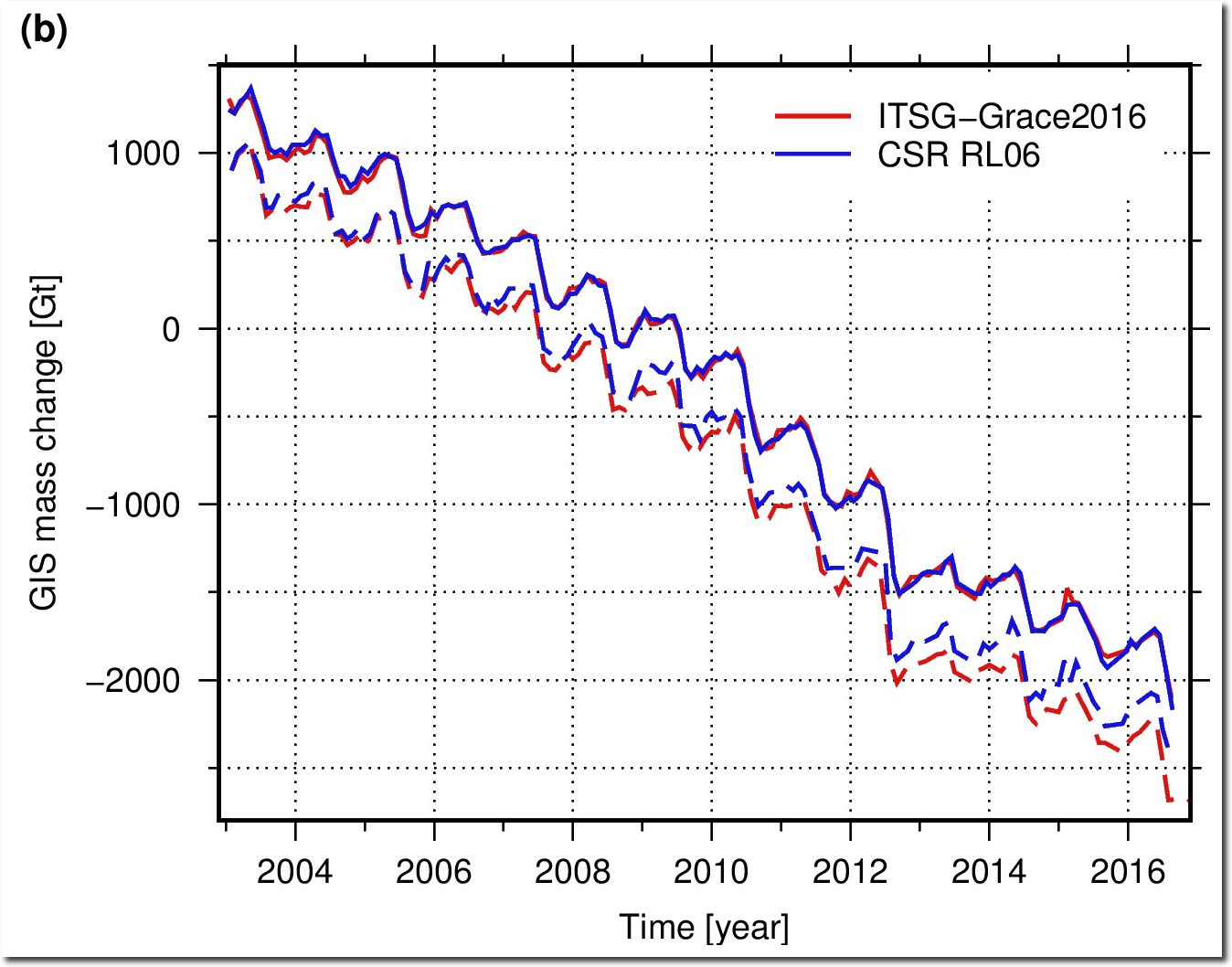
As I have been saying for most of the last decade (including two days ago) climate scientists are incompetent hacks who have no clue how to interpret gravity data.

NASA glaciologist Jay Zwally first challenged the “consensus” on Antarctica in 2015 when he published a paper showing ice sheet growth in eastern Antarctica outweighed the losses in the western ice sheet.

Zwally will again challenge the prevailing narrative of how global warming is affecting the South Pole. Zwally said his new study will show, once again, the eastern Antarctic ice sheet is gaining enough ice to offset losses in the west.

So, why is there such a big difference between Zwally’s research and what 80 scientists recently published in the journal Nature?

There are several reasons for the disagreement, but the biggest is how researchers make what’s called a glacial isostatic adjustment (GIA), which takes into account the movement of the Earth under ice sheets.

Scientists use models to measure the movement of land mass in response to changes the ice sheet sitting on top. For example, Zwally said eastern Antarctica’s land mass has been going down in response to ice sheet mass gains.

That land movement effects ice sheet data, especially in Antarctica where small errors in GIA can yield big changes ice sheet mass balance — whether ice is growing or shrinking. There are also differences in how researchers model firn compaction and snowfall accumulation.

“It needs to be known accurately,” Zwally said. “It’s an error of being able to model. These are models that estimate the motions of the Earth under the ice.”

Zwally’s 2015 study said an isostatic adjustment of 1.6 millimeters was needed to bring satellite “gravimetry and altimetry” measurements into agreement with one another.

Shepherd’s paper cites Zwally’s 2015 study several times, but only estimates eastern Antarctic mass gains to be 5 gigatons a year — yet this estimate comes with a margin of error of 46 gigatons.

Zwally, on the other hand, claims ice sheet growth is anywhere from 50 gigatons to 200 gigatons a year.

Upcoming Research Will Buck The ‘Consensus’ And Show Antarctica Is Still Gaining Ice | The Daily Caller

I find it incredible that anyone would be stupid enough to report precision ten times greater than their error, but nothing from these incompetent hacks known as climate scientists surprises me any more.  Nobody knows what is going on under the ice sheet, and claiming they can detect gravity changes in a two mile thick low density ice sheet sitting on top of five thousand miles of dynamic high density rock – is beyond the pale.

And the same problem also applies to fake Greenland graphs like the one below. People who make these graphs have absolutely no clue what they are doing, other than defrauding the public.

via The Deplorable Climate Science Blog

https://ift.tt/2JVwcAy

June 17, 2018 at 10:48AM