
Reef building hard corals in the order Scleractinia are animals that could be mistaken for plants. One of the most common such corals at the Great Barrier Reef is Acropora hyacinthus.
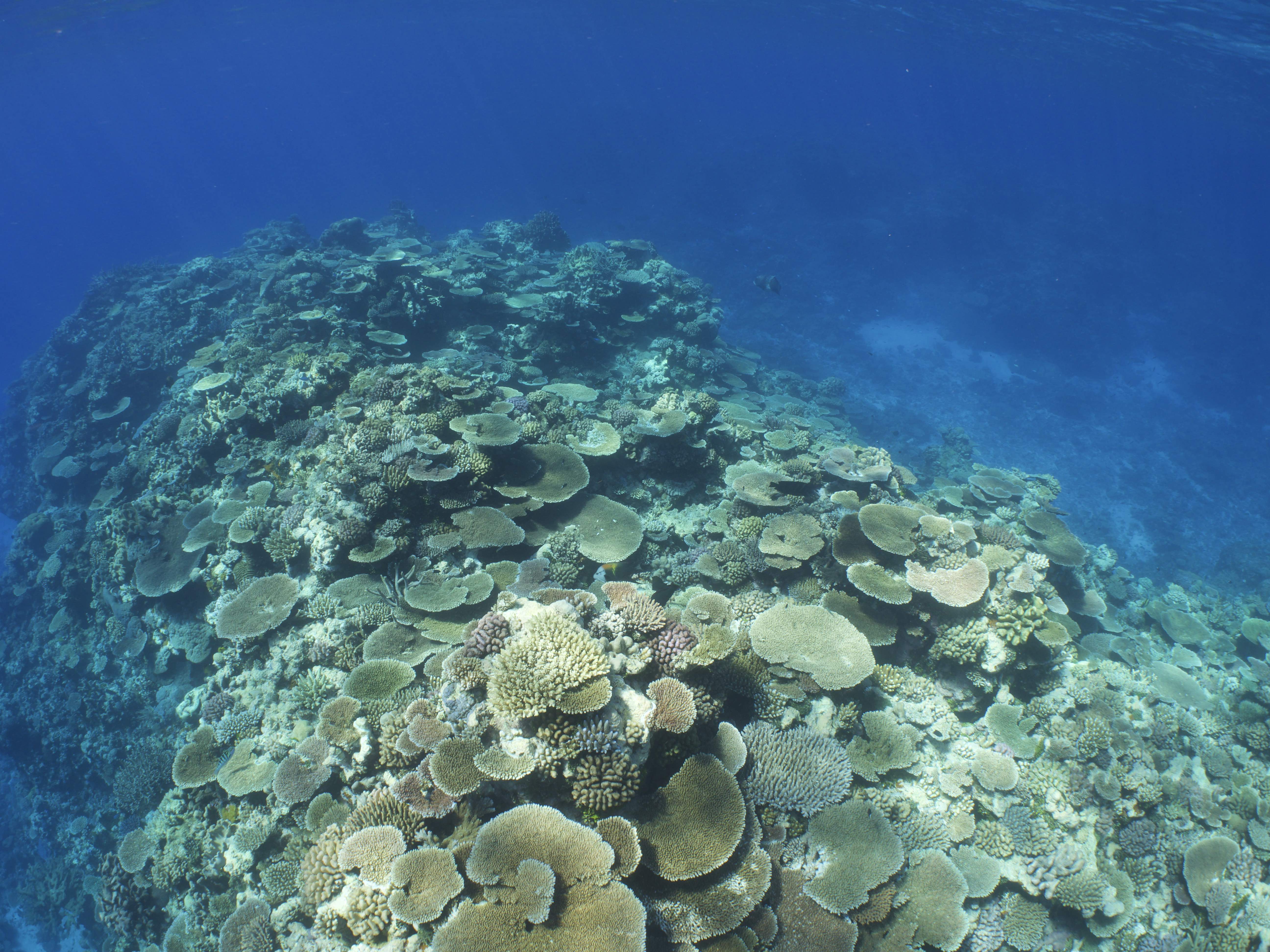
At Myrmidon reef last December, we found ridges replete with these plates in various colours but particularly green.

It was in the back lagoon at Russell Island two months later that I took photographs of this coral species, including of brown plate corals that close-up could be mistaken for a bouquet of pretty yellow buds. These are the axial corallites on the ends of upward projecting branchlets. The individual coral polyps are sitting in the cup-shaped radial corallites along the branchlet.
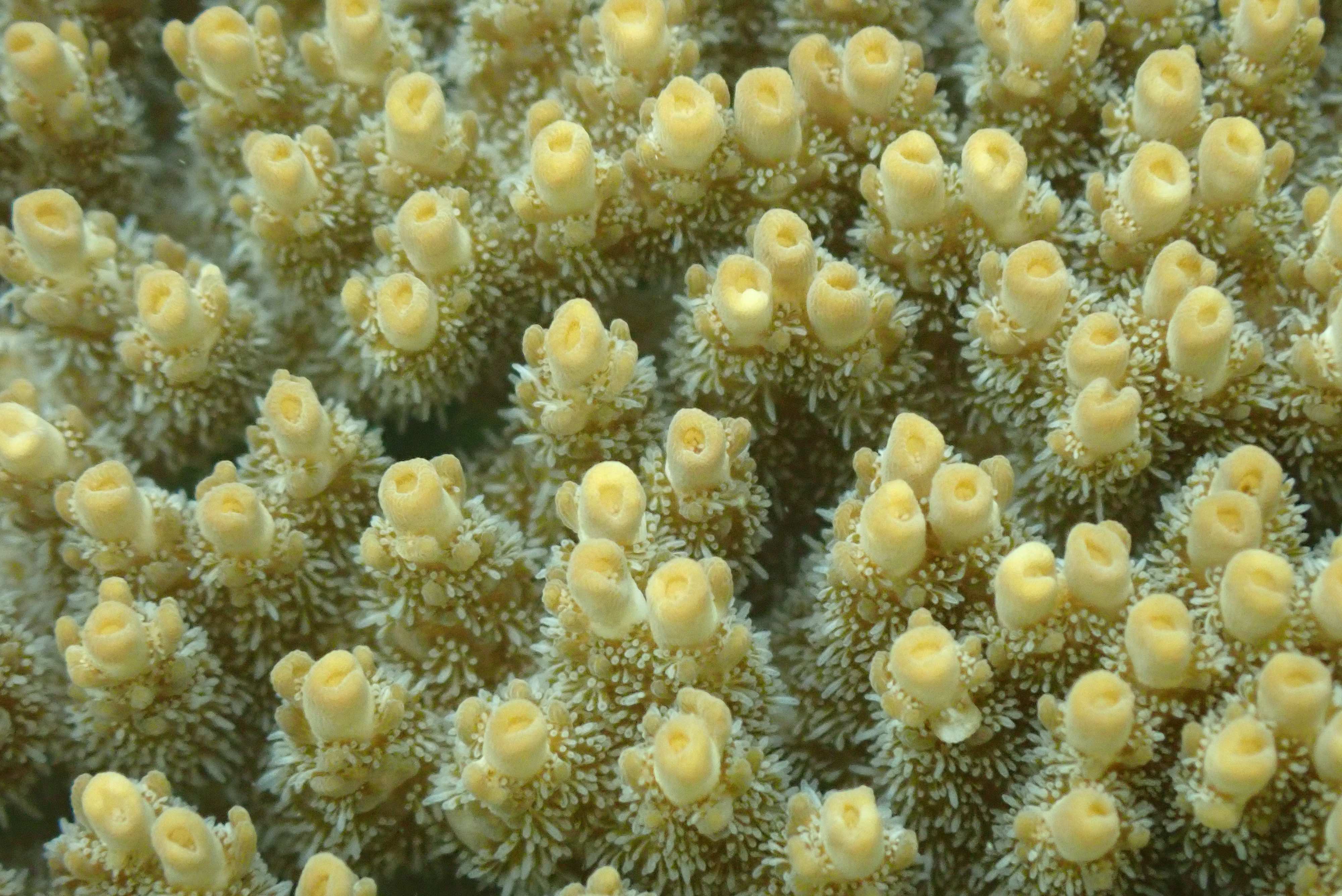
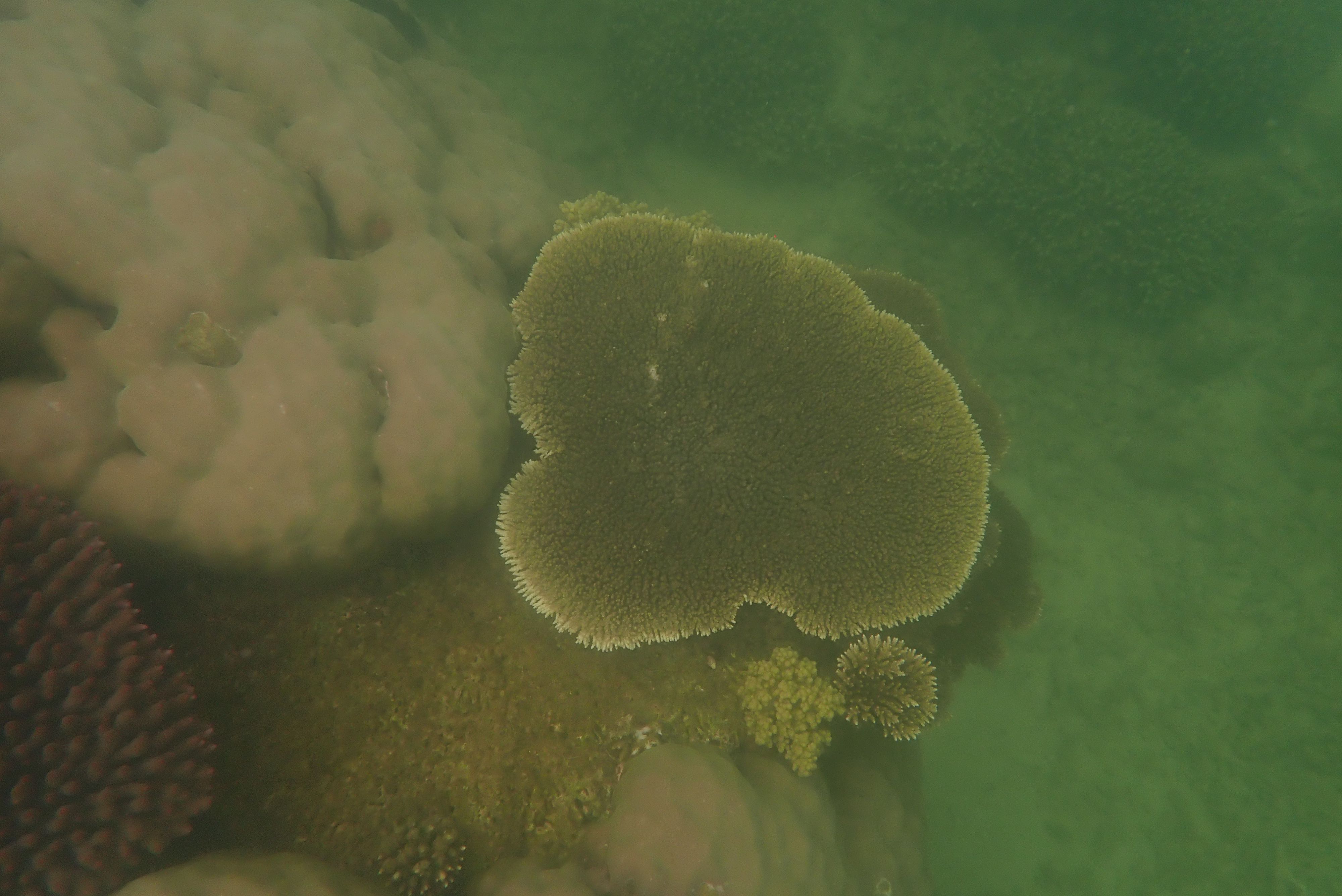
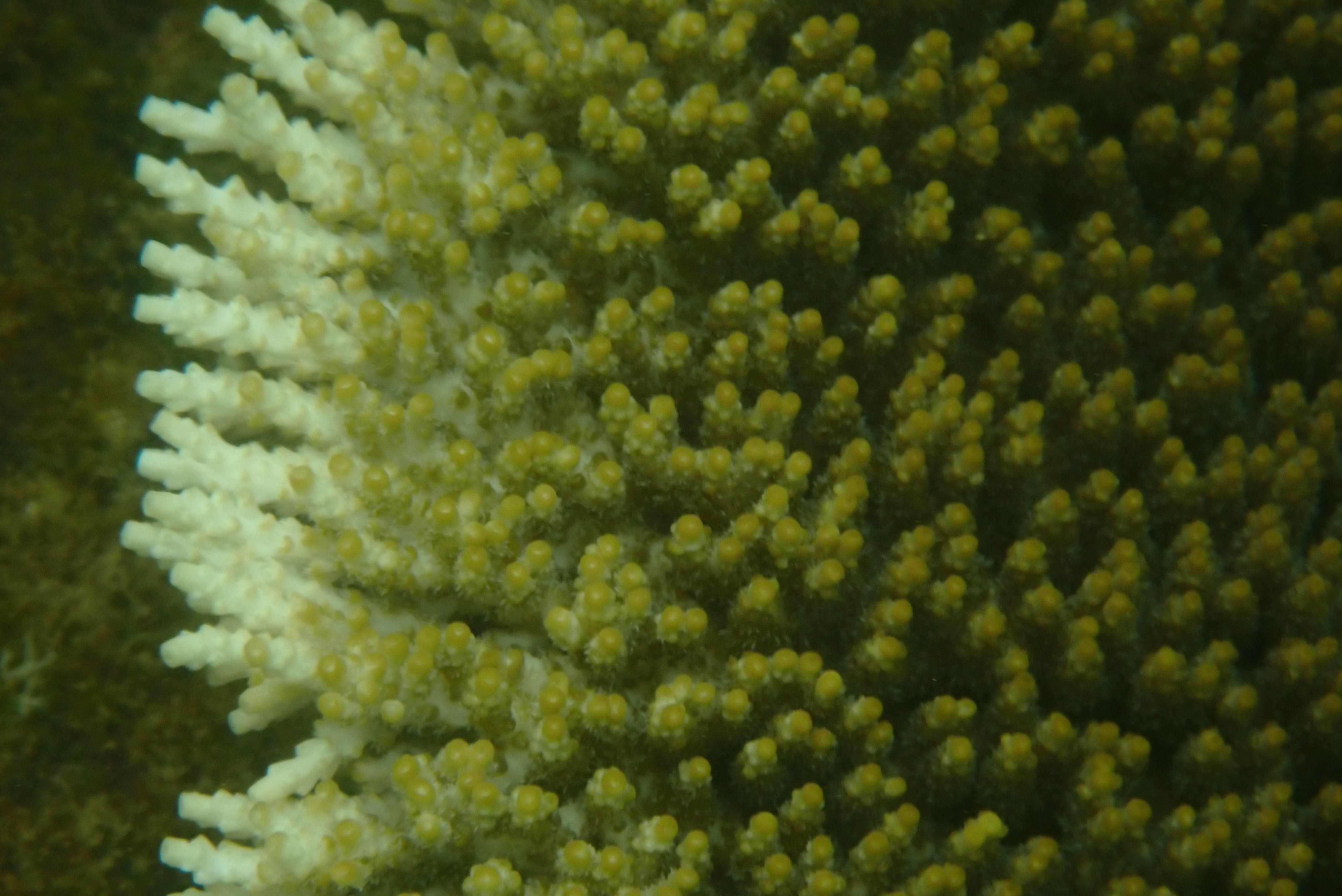
These corals do look like plants, particularly when viewed so close-up. But like all corals each of the polyps (within the radial corallites along the branchlets) has animal features: a mouth surrounded by tentacles that can be extended and retracted.
In the case of plate corals, the branchlets extend up from branches that extend vertically. With age the branches that extend vertically fuse together creating the plates.
Underwater photographer Leonard Lim took 355* photographs along transects at Pixie Reef on 22 and 24th February 2021. Many of the photographs from the habitat that I’ve designated ‘crest’ include plate corals of this species, Acropora hyacinthus.
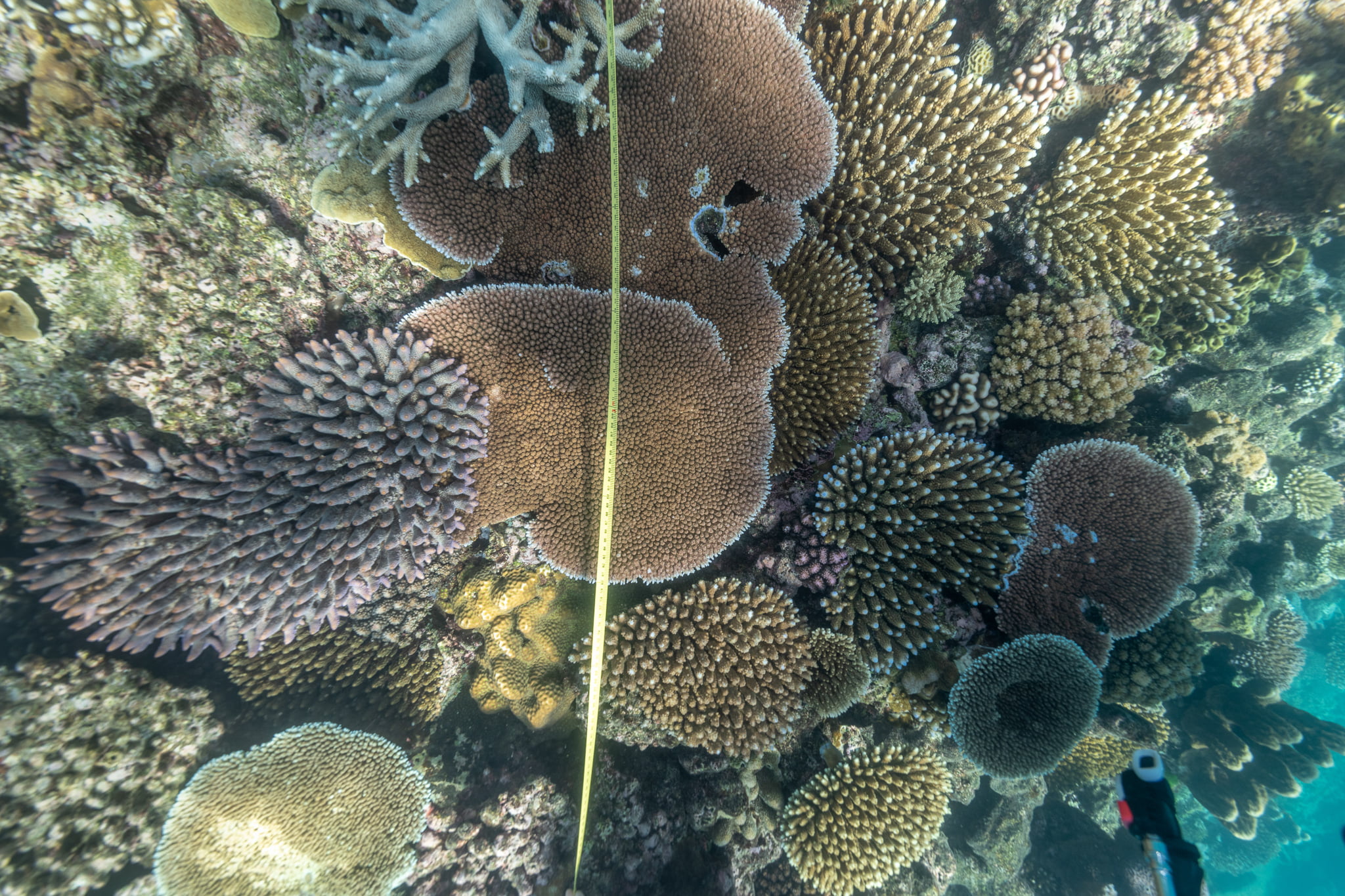
I posted the first two transects photographs at my Facebook page recently (https://www.facebook.com/JenniferMarohasyOfficialPage/ go to 22nd and 23rd March), and I will be posting more in coming weeks. I am going to quantify not only percentage coral cover from these photographs, but also the percentage of live plate coral in the genus Acropora.
I have complained previously that many of our expert marine biologists are making the most cursory of observations and extrapolating from these to arrive at the direst predictions for the entire Great Barrier Reef. One of my issues is that global perceptions of the state of the Great Barrier Reef are now based largely on aerial surveys, specifically from 150 metres from a plane window. I flew my drone at a much lower altitude to film Stuart filming plate corals, but still it is impossible to see the corals from above the water.
**********
*There are 360 photographs in the set, with five taken by Stuart Ireland, can you spot these five that are different at the Pixie Reef Data Page? https://jennifermarohasy.com/coralreefs/pixie2021/
The feature image (at the top of this blog post) is of Shaun and Stuart snorkelling at Myrmidon, they were actually searching for Porites spp., while finding plates. We did do scuba, but these were exploratory snorkels to save our air tanks for when we found what we were looking for … old Porites.
via Jennifer Marohasy
April 4, 2021 at 03:25AM

