Month: June 2024

AI Doublespeak

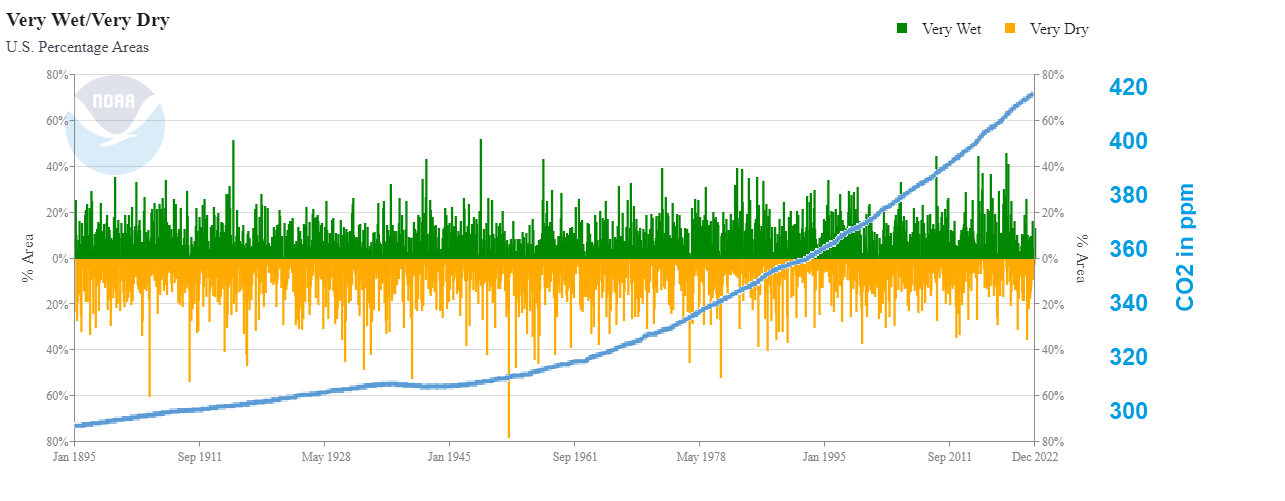
AI is only as good as its training, and has no problem with regurgitating mutually exclusive ideas about climate.

About Tony Heller

Just having fun

This entry was posted in Uncategorized. Bookmark the permalink.

via Real Climate Science

https://ift.tt/HTvZWFk

June 14, 2024 at 01:28PM

£300 Million Down The Drain For Trafford Storage–And Guess Who Pays?

By Paul Homewood


More money down the drain!


.image.

UK Infrastructure Bank and British Gas-owner Centrica are the primary funders for Highview Power’s proposed liquid air energy storage plant next to the former Carrington Power Station off Manchester Road.

This would be the first commercial-scale liquid air energy storage plant in the UK, according to Highview. Constructing the facility will support more than 700 jobs both directly and in the supply chain, the company added.

The cryogenic energy storage plans have already received approval from Greater Manchester Mayor Andy Burnham.

“My vision is for Greater Manchester to be a leader in the green transition – and Highview Power’s decision to build one of the world’s largest long-duration energy storage facilities at Carrington is a huge boost for the region,” Burnham said.

“This new plant will deliver renewable energy to homes and businesses across our region and bring world-leading technology, jobs, skills, and investment to Greater Manchester.”

With the £300m secured, work is set to start “imminently” on the plant, according to a press release. When operational in early 2026, the facility should be able to store 300MWh of energy and distribute 50MWs per hour every for six hours.

Highview’s cryogenic energy storage facility would compress excess energy from solar and wind farms into air. This would then be liquified and frozen so that it can be stored for several weeks. When the energy is needed again, the liquid air is warmed up so it becomes a gas once more and, in the process, drives a generator-connected turbine – thus making the energy usable by the grid.

The plant would have an operational lifespan of at least 30 years, according to a planning statement from RSK in 2022 – which is when Trafford Council gave the project the go-ahead. You can view that planning application by searching reference number 108006/FUL/22 on the local authority’s planning portal.

Highview has spent the past 17 years creating the technology that makes the cryogenic energy storage plant possible. The company said that its energy storage programme is now capable of being deployed across the country at scale.

It is already planning four facilities that will be even larger than the one at Carrington. These would be capable of storing 2.5Gwh of energy. Building them would require an investment of £3bn.

https://www.placenorthwest.co.uk/300m-secured-for-trafford-cryogenic-energy-storage/

If it was not for intermittent wind and solar power, we would not need to be wasting all of this money.

And for what? Six hours worth of power. That is hardly likely to keep the grid going for days on end when the wind stops blowing.

And it will, of course, be funded via our energy bills, one way or another. Why else would Centrica want to splash out hundreds of millions?

Even the 2.5 GWh mooted at a cost of £3bn would only keep the grid going for a couple of minutes. £3 billion pounds just for that?

via NOT A LOT OF PEOPLE KNOW THAT

https://ift.tt/n1J20Zz

June 14, 2024 at 01:17PM

The Shakedown That Is Vermont’s New Climate Superfund Law

By Jonathan Lesser

June 12, 2024

Long viewed as a playground for environmentalists, Vermont has jumped the climate change shark with its new Climate Superfund law. If not halted by judges who reject its dubious legal basis, this shark promises to deliver a severe blow to the state’s economy that will harm the “ordinary Vermonters” proponents claim the law will help.

The new law is modeled after the Comprehensive Environmental Response, Compensation, and Liability Act of 1980, which created a “Superfund” to clean up hazardous waste sites. Under the original Superfund law, companies and any predecessors that dumped hazardous wastes are required to pay the actual cleanup costs for those sites. 

In contrast, under the Vermont law, U.S. fossil fuel producers and their successors—companies that mined coal, produced natural gas, and extracted and refined crude oil over the 30-year period between 1995 and the end of this year, and whose carbon-equivalent emissions are estimated to have been over one billion metric tons over that period—will be required to pay into a state-administered fund for the climate “damages” caused by those fuels’ ultimate consumers. Had this same logic applied to the original Superfund law, the government would have forced chemical manufacturers to pay the cleanup costs, rather than the companies that dumped them.  

Once the damages are determined, the liability from each company’s fossil fuel production will be apportioned based on the company’s share of total world emissions. To take a simple example, if between 1995 and 2024 a company refined crude oil that, when combusted, emitted one billion tons of carbon dioxide, and over the same period total world carbon dioxide emissions totaled 800 billion tons, then the company would be allocated 1/800th of the total estimated damages to Vermont. 

In addition to placing liability on U.S. energy producers, rather than end users, there are two fundamental problems with the law.  First, it is impossible to determine that “climate change” caused any individual weather-related events. For example, last summer, Montpelier, the state capital, was devastated by a flood, which proponents of the new Vermont law claim was caused by climate change.  Yet, the town was similarly devastated almost a century ago, in 1927. Was that the result of climate change, too? In fact, a 1964 publication by the U.S. Geological Survey chronicles hundreds of New England floods between 1620 and 1955, including the 1927 one. Were these all caused by climate change, too?  If not, then when did those New England floods begin to be caused by climate change?

This same cause-and-effect problem applies to other alleged damages, whether a poor maple syrup season, lousy snow at the state’s ski areas, or even a summer when the black flies are especially hungry. None can be credibly attributed to burning fossil fuels.  Moreover, how will natural variability be accounted for? Will burning fossil fuels, for example, be “credited” if a maple syrup season was better than average or if Vermont ski areas had an especially good year?

Despite the impossibility of attributing specific events to burning fossil fuels, the State Treasurer’s office will be required to issue a report in January 2026 that estimates the alleged damages climate change caused the state over the 30-year period and estimates future damages. This leads to the second fundamental problem: How will the Treasurer’s office credibly estimate those damages? 

Curiously, the state’s bond issuances, which the Treasurer’s office also oversees, make no mention of damages from climate change posing an economic risk to the state that could limit future repayments. Even the most recent bond issuance in September 2023, which discusses the economic risks posed by recovery from the Covid pandemic, does not mention any financial risks posed by climate change.  Yet, just four months later, the Climate Superfund bill was introduced, with much fanfare about how climate change has already devastated the state.

The nonsensical estimates of climate-related damages to Vermont belie the real economic damages that will be done to the state’s economy. The first consequence will be higher energy prices. Fossil fuel producers will recoup their costs through higher prices, which sellers (e.g., gasoline stations, heating oil wholesalers, natural gas distribution companies) will recover from consumers. Unlike the presumed damages to the state from climate change, higher energy prices will have immediate and destructive impacts on the state’s economy and beyond.

Other states are looking hungrily at the law, hoping to enact similar legislation. But imagine if the entire country enacted similar legislation, as many environmentalists want. Last year, U.S. energy-related CO2 emissions were about 5 billion metric tons. Using the Environmental Protection Agency’s most recent SCC value, about $200/ton, the resulting “damages” are $1 trillion.  Over the past 30 years, the damages would have been around $30 trillion. If, over that time, the U.S. emitted an average of about one-fourth of world CO2—it’s down to about 15% because China’s emissions have increased rapidly–then U.S. energy companies collectively would owe over $7 trillion. 

No company could pay its share of that amount because it would all be bankrupt if it tried, and no companies would purchase the assets because then they would be liable. The entire scheme would soon collapse. And if fossil fuel producers actually stopped producing fossil fuels, as some environmentalists demand, the U.S. economy—and modern life as we know it—would be wrecked.

Vermont’s new law ought to be viewed for what it is: a shakedown to benefit the state’s favored constituents at the expense of the public. 

Jonathan Lesser is a senior fellow with the National Center for Energy Analytics and the president of Continental Economics. 

This article was originally published by RealClearEnergy and made available via RealClearWire.

via Watts Up With That?

https://ift.tt/6rWQVDX

June 14, 2024 at 01:01PM

Extreme Talk About Weather Events

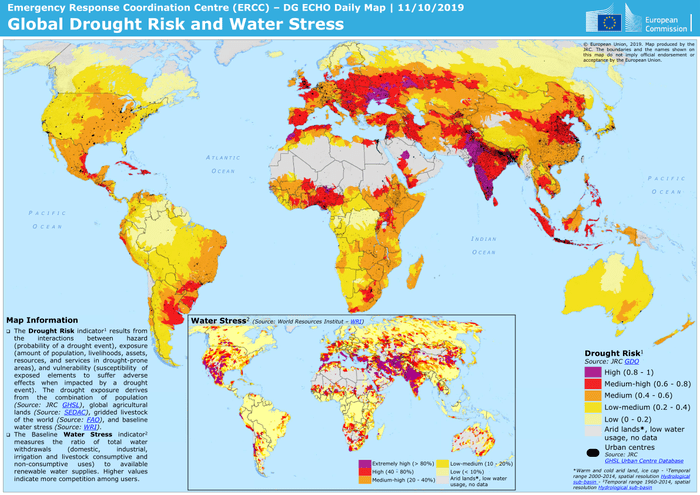
Brian Sussman ovethrows the prevailing climatist narrative blaming human energy choices for extreme weather events.  His American Thinker article is Climate BS from the Wall Street Journal. Excerpts in italics with my bolds and added images.

My publisher contacted me this week, drawing attention to a Wall Street Journal article claiming climate change is producing shortages of “the finer things in life,” like wine, coffee, cocoa, and olive oil. The implication was clear: your carbon footprint is causing the price of these commodities to sharply rise.

“Total bull-bleep,” I replied.

Specifically, the story speaks of the recent drought in West Africa, which has resulted in a cocoa shortage; dry spells in Vietnam, which have reduced coffee harvests; and parched Italian olive groves and grape vineyards recently destroyed by wildfires.

None of these meteorological events has anything to do with
the use of fossil fuels and the subsequent release of carbon dioxide
into the atmosphere. The truth is that these regions of the world are historically
well known for witnessing wild swings in otherwise natural weather patterns
.

As I explain repeatedly in my new book Climate Cult: Exposing and Defeating Their War on Life, Liberty, and Property, such misinformation feeds into an elaborate propaganda campaign designed to frighten the developed world into demanding a carbon-neutral energy grid that would be about as reliable North Korea’s.

Let’s begin with West Africa, where the climate periodically exhibits large spatial and temporal variabilities that allow for recurrent droughts, some lasting hundreds of years. In fact, the past couple years of dry weather pales in comparison to the West African droughts in the 1970s and 80s. As for the cocoa production, a reality missing from the discussion is that global consumers are demanding more cocoa than ever, so a blip in production impacts retail price and availability like never before.

The recent drought in Vietnam is quite serious, but I’m
happy to report it’s not being caused by your SUV.

While the lack of rain in parts of Southeast Asia is the worst since the 1930s (a decade which remains the hottest on record throughout much of the world), the drought is associated with an El Nino weather pattern. El Nino, and its sister La Nina, are ancient occurrences that possess the dynamics to both enhance or diminish precipitation, depending on a variety of quite ordinary atmospheric circumstances.


Wildfires feeding on extremely dry vegetation have certainly taken a recent toll on olive groves in Italy and drought has impacted wine production there as well. The journal Nature recently published a study, claiming, “Climate change is affecting grape yield, composition and wine quality. As a result, the geography of wine production is changing.” However, the publication’s editorial bias seems to have caused them to ignore the historical record. The worst drought in modern Italy occurred in the 1920s. However, going back further, that region’s most catastrophic precipitation deficiency began in the 1530s and lasted the better part of a decade. It was so extreme that Protestant reformer Martin Luther wondered if it was a sign of the end times. Clergy in Germany, Italy, and England urged the people to beg God for forgiveness and pray for the deliverance of rain.

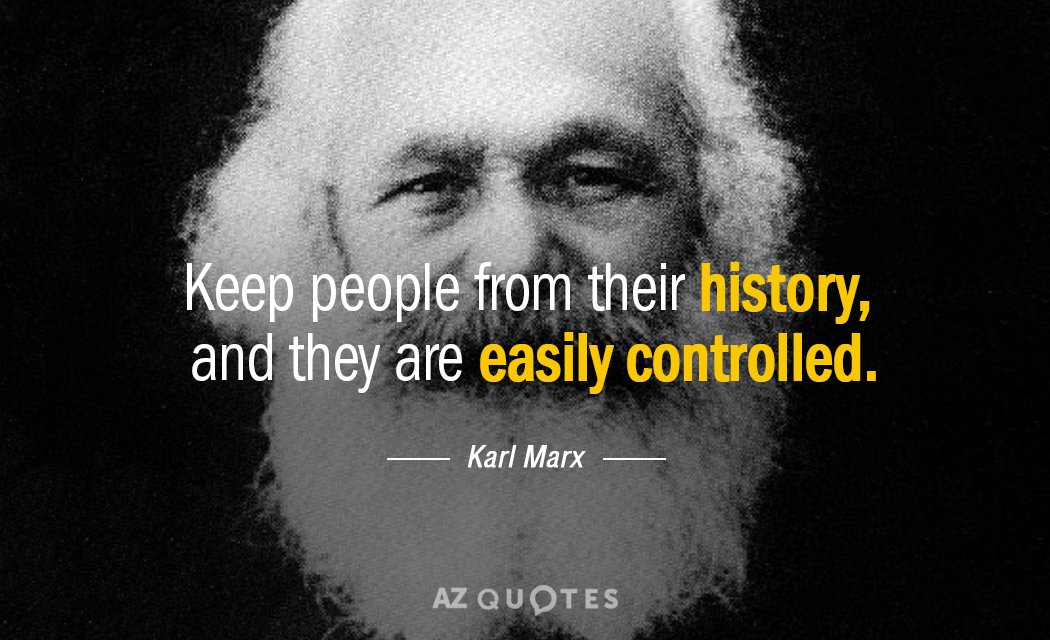
As I explain in my book, those pushing the climate agenda employ ad hominem arguments that appeal to raw emotions rather than intellect. And, as I also detail, those on the left aren’t fond of examining history. For them, Karl Marx stated it best in his 1844 book, The Holy Family: “History does nothing; it possesses no immense wealth; it wages no battles.” [Marx also said:


Brian Sussman is a meteorologist, author, and podcaster.

via Science Matters

https://ift.tt/vOPL9o6

June 14, 2024 at 12:55PM