
What impact do volcanoes have on the weather?
via CFACT
August 27, 2024 at 11:04PM
What impact do volcanoes have on the weather?
via CFACT
August 27, 2024 at 11:04PM
By Robert Bradley Jr.
“It takes bits and pieces from leading establishment environmentalists to make the ecological case against climate alarmism and forced energy transformation. But taken together, the problems of wind, solar, and batteries are substantial and call for a mid-course correction from look-the-other-way, mention-and-run, wish-and-hope Big Green.”
Yes, she is a climate alarmist and supports forced (governmental) energy transformation to inferior, anti-ecological energies. But she has presented some common-sense observations about the climate crusade and agenda that offer hope about a mid-course correction toward human and ecological betterment.
Consider this recent article at the Canadian Broadcasting Corporation which was brought to my attention on LinkedIn (via Ian McCoy), “Climate warrior Jane Goodall isn’t sold on carbon taxes and electric vehicles.” (April 13, 2024). Quotations from the CBC article follow in two areas: a carbon dioxide (CO2) tax and electric vehicles (EVs).
Carbon Dioxide Tax
World-renowned primatologist and climate activist Jane Goodall says carbon pricing schemes like the one Canada has deployed aren’t a silver bullet to solve the pressing threat of climate change…. Goodall said the jury’s out on whether levying a consumer price on emissions will meaningfully improve the climate picture over the long term.
Goodall, who just turned 90, said a carbon tax can seem punitive to consumers — making a measure to fight climate change seem like a costly chore. She said she also worries that the fight against climate change has been “politicized … causing people just not to listen” ….
“The problem with a climate tax is that … it doesn’t get to the root cause, which is fossil fuel emissions, emissions of methane from industrial farming,” she said. “So, in that sense, it’s not something I endorse.”….
Electric Vehicles
But she added she’s worried about the current crop of electric vehicles, which largely rely on lithium batteries. She welcomes EVs as a concept but said she fears that the global scramble to mine lithium is ruining parts of the natural environment.
“Huge areas are now being destroyed by mining for lithium,” she said. “It scars the natural world.”
Pointing to Serbia, where the prospect of lithium mining prompted anger from local activists, Goodall said there’s a risk that the rush to exploit the world’s lithium supply will damage the “pristine environment” and spark a backlash.
She also said the lithium mining and refining process requires “lots of water,” which is “tough in places where there’s not that much fresh water.”
“To me, that’s one of the big problems of electric vehicles,” Goodall said. “Apparently there are other ways of sourcing batteries other than lithium and that needs to be developed.”….
Final Comment
It takes bits and pieces from leading establishment environmentalists to make the ecological case against climate alarmism and forced energy transformation. But taken together, the problems of wind, solar, and batteries are substantial and call for a mid-course correction from look-the-other-way, mention-and-run, wish-and-hope Big Green. Jane Goodall, just as James Hansen, the father of the climate alarm, recently provided just this.
via Watts Up With That?
August 27, 2024 at 08:06PM
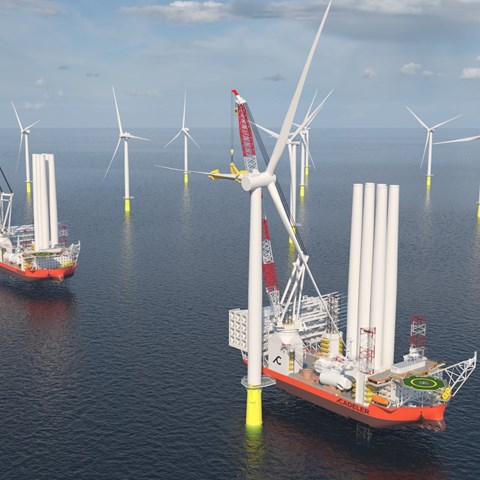
Cadeler’s brand new X-class vessels will install Sofia’s 100 turbines (June 2021)
By Jo Nova
John Constable puts some numbers on The terrifying scale of the green revolution in The Spectator this week.
Ponder just the scale of the Sophia Offshore industrial wind plant being built off the UK. The wind is free, but to collect enough of it to power 2% of the country, the UK will have to build 100 wind turbines, some 200 kilometers out in the North Sea. Each blade is 108m long and weighs 65 tons, or about as much as a semi-trailer. When the wind blows hard enough, about 200 tons of matter will rotate above the ocean. The box holding all the spinning parts together weighs another 500 tons and needs to be suspended 140 meters up in the air over the waves and during storms.
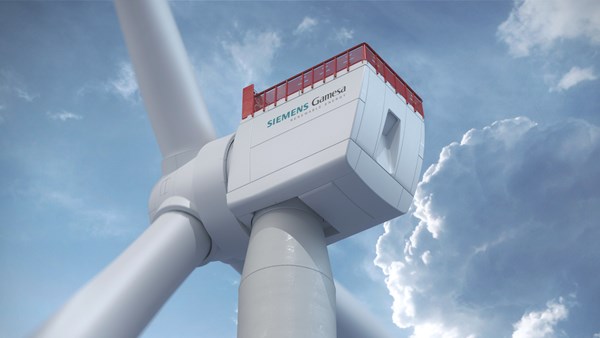 Each of the 100 turbines will reach 250 meters high, which is “only 60m short of Britain’s tallest building”.
To make sure the whole thing doesn’t fall in the drink with the first stiff breeze, the turbines need to be weighed down with more than a thousand tons of concrete embedded in the sea floor.
The blades will be “recyclable” they say, but who will clean that concrete out of the wilderness 30 years from now I wonder? Let’s ask Greenpeace!
All up, each windmill weighs around 3,000 tons, and the entire farm-that-grows-nothing will consume 300,000 tons of industrial material and cover 600 square kilometers.
All this to make just a random 2% of the UK’s electricity, not necessarily when it’s needed, either, so even if the UK built 50 plants just like it, they’d still need to build an entire functioning generation network as back up.
The Sophia plant will cost about £3 billion, and won’t last very long (compared to a normal power plant). But it will kill some whales and eagles, confuse Air Force and shipping radars and hypnotize some crabs. It may deafen a few porpoises too, not that they will complain. (Where are the Greens?)
Two whole converter stations will also be built — one at sea and one onshore — to collect and convert the green electrons so they can be squeezed through the 200 kilometer long subsea cable. These decks (below) were made in Indonesia, where they still have affordable electricity.
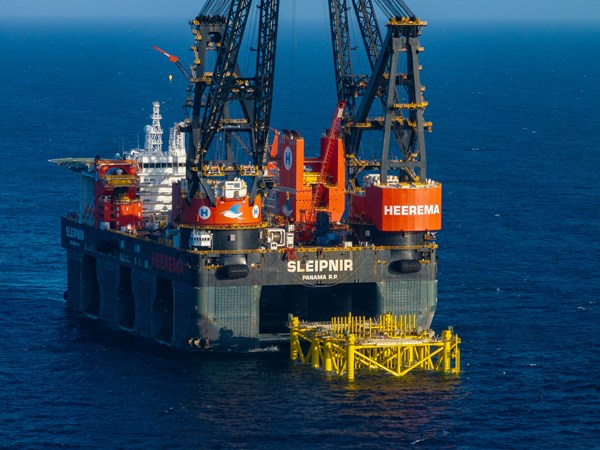
The Sleipnir semi-submersible crane vessel and installed jacket for the offshore converter platform ahead of the top side being installed. Sofia offshore wind farm, North Sea, August 12th 2024
If President Xi wanted to knock out the entire power station, by the way, he wouldn’t need to fire any missiles or send in a SWAT team. A Chinese cargo ship could just accidentally drag its anchor across the 200 kilometer cable somewhere. It’s been known to happen.
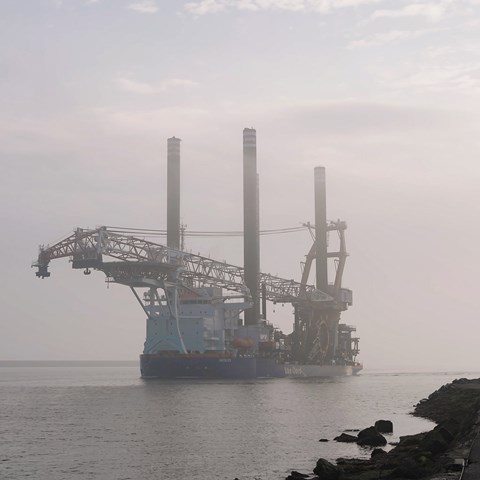
Vessel Aeolus arriving at Port of Tyne (May 2024)
As John Constable says, the 30 year old Sizewell B nuclear plant uses half a square kilometer and still makes 10TWh of reliable electricity. The Sophia wind plant uses 600 square kilometers to make 6 TWh of random power.
The wind plant afflicts 3,000 times as much of the surface of Earth as a nuclear plant does, yet the Greens cheer it on.
Read it all at The Spectator.
Photos from the Sophia gallery.
0 out of 10 based on 0 rating
via JoNova
August 27, 2024 at 04:12PM
By David Wojick
The State of Maine just got a very strange offshore wind lease from the Feds. They call it a research lease as opposed to a commercial development lease. It has some mysterious features that are worth pondering.
There may even be a many billion-dollar trick here. We consider that at the end, after briefly explaining the mysteries.
To begin with, the lease is for a 144 MW “research array” of turbines, as it is called. Well, 144 MW is huge for research. The South Fork Wind site (fixed, not floating) that is already running is a 12-turbine, 132 MW commercial facility, so this array will be bigger than commercial.
It could cost $3 billion-plus the cost of the factory to make the dozen or so floaters. Different websites suggest different turbine sizes from 10 to 12 MW. Of course, if this is really research, they might use a variety of sizes, but the total is still huge.
Why so big is the first mystery, and the official explanations are far too vague to justify it. They mostly talk about research into things like efficiency, supply chain, and even jobs.
They also say the research results will feed into the commercial floating wind developments, which are pegged at 15,000 MW in the Gulf of Maine. But this seems unlikely because research takes time.
The commercial leases for the Gulf are due to be sold in the next few months (The Biden-Harris folks want to get as much leased before the election as possible, lest Trump win.) the research array has to go through the same permitting processes as the commercial sites.
The commercial site developments and the research array development are starting at the same time and going through the same steps. So it is hard to see how the commercial sites might benefit from the research, especially since the research is likely to slow down the array development. Research done after the array is running will be even later after the commercial facilities are up and running. Thus, who would benefit from this multi-billion dollar research is the second mystery.
Who pays these billions seems to be clear, as the developer is supposed to negotiate a power purchase agreement (PPA) with one or more of the big Maine utilities. The developer looks to be Diamond Offshore Wind, which is owned by Mitsubishi Corporation. They have been actively involved with the University of Maine’s patented floating wind technology for a good while.
Here, things get truly murky. First, if a PPA is supposed to pay for the array, plus profit, then it is very much a commercial development. Second, research is expensive and unpredictable so how can there be an advance PPA to pay for it?
There is no mention of the research being funded separately from the array, which would be complicated, to say the least. For that matter, who decides what research to do as things progress? Diamond, the University, or the State of Maine? It looks like Diamond works for Maine, but it needs to make money on the deal, which makes things very strange.
All that said, there is another possibility. This project is not about research it is about building the floater factory and demonstrating the University technology.
There is a monster wild card in the floating wind game, and that is the factory. Fixed bottom wind is very simple onshore. All you need is a good dock, a big crane, and a place to sit the components until they are taken to the site and installed. There are just a few simple components — monopile, tower, turbine, and blades. It is all made elsewhere.
Floating wind is made from scratch onshore then towed as a whole to the offshore site. The Uni-patented technology uses concrete floaters which might weigh 15,000 tons or more and are complex structures. Factory construction of floaters will be a huge job.
This fact about floating wind is seldom mentioned, and when it is, the language is usually deceptive. The industry talks about “ports,” not factories, and the Maine floater factory is called a port. See my. note that the factory will be operated by Diamond.
So here is what might happen. As part of the “research” Maine builds the floater factory and enough floaters to demonstrate that the patented Uni- technology works. Developers of the 15,000 MW of commercial Gulf wind have to choose technologies for their various sites. If they choose any other technology, out of over a hundred candidates, they will have to build the factory to make it.
That the Uni-tech factory already exists is a powerful incentive to use that technology. We are talking about maybe $100 billion in floaters or more. Under this scenario Diamond makes a huge amount of money, and so does the University of Maine and the State of Maine. So do all the suppliers and workers. Whether this is all legal is a question since demonstrating a patented floater technology is not research.
Mind you I am not claiming this is what is going on, but it certainly makes sense out of this supposed research array. The primary obstacle is that the Uni-technology has never been built at 10-12 MW scale and it might not be feasible. Also, the factory design that I have seen does not work, but that is a separate issue.
Watching this two hundred billion dollar floater game unfold will be very interesting indeed.
via Watts Up With That?
August 27, 2024 at 04:01PM
 Iowa Climate Science Education